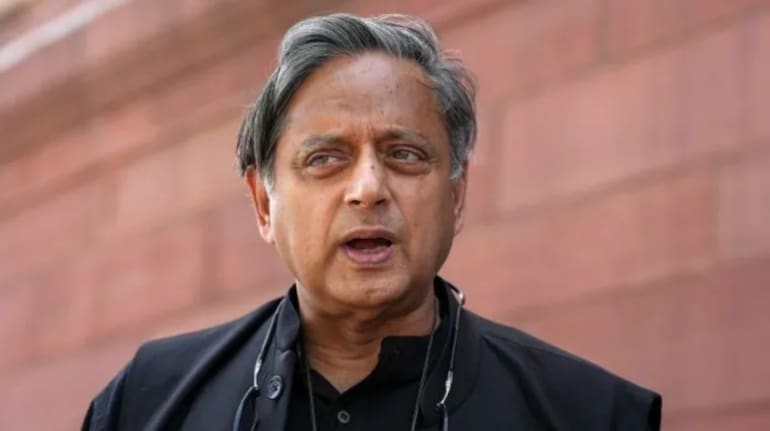
In a sharp call for introspection and reform, Shashi Tharoor urged India’s corporate and political leaders to shed the illusion of heroism and adopt inclusive, people-first leadership models as the country navigates an AI-led future.
Speaking at the TechHR India 2025 conference at Yashobhoomi, Tharoor addressed a packed room of business leaders, HR professionals, and technology strategists, highlighting a deep disconnect between emerging technologies and the human systems meant to harness them.
“India needs a leader who is less demanding—someone who listens, collaborates, and uplifts,” Tharoor said, framing empathy and listening as the defining traits of effective modern leadership.
Reimagining Leadership in a Post-AI Era
Drawing parallels from the cricket field to the corporate boardroom, Tharoor referenced Ajinkya Rahane’s understated leadership during India’s 2021 Test victory in Australia, positioning it as a blueprint for the kind of collective, ego-free approach India urgently needs.
He criticized the country's overreliance on charismatic, centralized figures, suggesting that true transformation will only occur when leaders enable others rather than dominate them.
“We have to move from command-and-control to connect-and-empower,” he told the audience, calling on HR leaders to build workplace cultures where employees feel valued and seen.
This message comes at a time when leadership development is under the microscope. A People Matters SHRPA 2025 report highlighted that nearly 1 in 5 HR leaders are dissatisfied with efforts to equip mid-level managers to handle multigenerational, distributed teams—making Tharoor’s remarks both timely and relevant.
The Skilling Imperative: Turning India’s Population into a Powerhouse
As the conversation pivoted to skilling, Tharoor pointed out a harsh truth: India adds 10 million job seekers to its economy every year, yet lacks the frameworks to absorb or prepare them.
He proposed a bold policy intervention—mandating large companies to run skilling centres for rural youth and school dropouts. These centres, he argued, would offer not just job prospects but dignity and empowerment.
“They could train with the best. If they aren’t hired, at least they leave with a diploma that opens doors elsewhere,” he said.
According to SHRPA 2025 data, upskilling ranks among the top three investment priorities for HR leaders this year—indicating a shift in awareness. But Tharoor cautioned that ambition must be matched by execution.
More Than Optics: Rebuilding 'Brand India' from Within
While acknowledging India’s transformation from “snake charmers to UPI,” Tharoor emphasized the need to balance infrastructure-led growth with deeper human development.
“We’ve nailed the hardware—airports, convention centres, tech stacks. But the software still lags: education, sanitation, poverty alleviation.”
He underscored the importance of “smart power”—a balance between hard (infrastructure, military, economic strength) and soft (values, culture, human capital) power.
“Soft power without hard power is weakness. Hard power without soft power is bullying,” he remarked.
AI, Equity, and India's Future
Closing his keynote, Tharoor addressed the elephant in the room: AI’s transformative potential—and its risks. While technology promises exponential change, he warned against a future where innovation is the privilege of a few, while the majority is left behind.
“India’s true competitive edge lies not just in tech, but in people who are equipped to use it,” he concluded. “Our real challenge isn’t AI or branding or infrastructure—it’s ensuring our people feel heard, skilled, and empowered.”
Discover the latest Business News, Sensex, and Nifty updates. Obtain Personal Finance insights, tax queries, and expert opinions on Moneycontrol or download the Moneycontrol App to stay updated!
Find the best of Al News in one place, specially curated for you every weekend.
Stay on top of the latest tech trends and biggest startup news.