






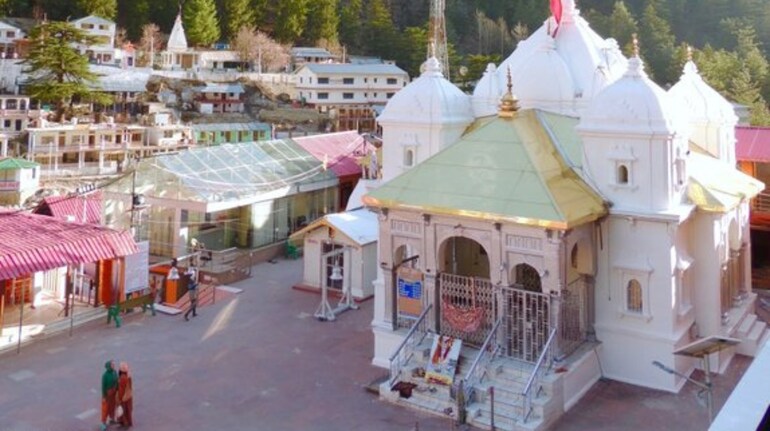

A series of proposals to restrict access for non-Hindus at some of country’s most revered pilgrimage sites in Uttarakhand is sparking debate over religious tradition, constitutional rights and the nature of sacred spaces.
Following a move at Gangotri, similar restrictions are now under consideration for the Char Dham shrines and key ghats in Haridwar, prompting questions about the future of these historically visited locations.
What specific restrictions are being proposed?
The developments are occurring at multiple levels across the state’s religious infrastructure.
First, the Shri Gangotri Temple Committee has already taken a definitive step. At a meeting held on Sunday, the committee unanimously decided to strictly prohibit the entry of non-Hindus into Gangotri Dham and its auxiliary site, Mukhba. This ban is now officially in force.
Second, and more broadly, the Badrinath Kedarnath Temple Committee (BKTC), which administers the major Char Dham shrines of Badrinath and Kedarnath along with 47 other temples, is preparing a similar proposal.
BKTC Chairman Hemant Dwivedi confirmed the proposal, rooted in "long-standing tradition," is expected to be placed before the committee’s board soon. Reports indicate it has the support of most stakeholders. The restriction would apply to both the Badrinath and Kedarnath shrines and all temples under the committee’s purview.
Third, parallel to the temple actions, the Uttarakhand state government is weighing a separate but related measure. It is considering a ban on the entry of non-Hindus at 105 ghats across Haridwar, an area spanning 120 square kilometres. This is in response to requests from certain seers and the Ganga Sabha, the authority responsible for the prominent Har-ki-Pauri ghat. The process for this could begin with the upcoming Haridwar Ardh Kumbh, scheduled from January 14, 2027.
Additionally, the state is reportedly planning to designate both Haridwar and Rishikesh as 'sanatan pavitra shehar' or holy cities.
What is the justification given for these bans?
Proponents cite religious tradition, management rights and the need to preserve the sanctity of the sites from perceived disrespect.
BKTC Chairman Hemant Dwivedi framed the move as a preservation of historical practice, stating that the tradition had been followed since the time of Adi Shankaracharya and that the committee saw nothing wrong in preserving religious traditions. He added that entry for non-Hindus had historically been restricted at the shrines.
He sought to clarify the term "non-Hindus," suggesting the bans are not about exclusion per se but about faith. "Those who respect our faith are welcome. The dhams are centres of faith, not tourism," he told reporters.
The legal argument hinges on constitutional provisions. Dwivedi cited Article 26 of the Constitution, which grants religious denominations the right to manage their own affairs, asserting the committee was well within its rights to take such a decision. For the ghats in Haridwar, authorities may draw upon provisions of a 1916 agreement involving Ganga Sabha founder Madan Mohan Malviya.
Political support has also been voiced. Bharatiya Janata Party (BJP) MLA from the Kedarnath constituency, Asha Nautiyal, demanded in March that "non-Hindu people be banned" from entering the temple premises. She alleged that incidents which "may malign the image of Kedarnath Dham" were being caused by non-Hindus.
"They are definitely non-Hindus who come there and are involved in such activities which defame the Dham," Nautiyal claimed to ANI.
How do these bans fit into a broader context?
The proposals in Uttarakhand do not exist in isolation. They come close on the heels of the initial proposal to restrict non-Hindu entry at the 105 ghats in the Kumbh area at Haridwar, indicating a coordinated or cascading pattern of policy consideration across different managing bodies in the state.
The potential designation of Haridwar and Rishikesh as holy cities suggests an administrative framework that could formalise such access restrictions more widely.
The moves also reignite a longstanding, sensitive debate in India about the balance between the rights of religious bodies to autonomy and the principles of equal access and non-discrimination in public spaces, especially for sites that are also major tourist and economic hubs.
What happens next?
The situation remains in flux. While the Gangotri ban is immediate, the proposals for the Char Dham shrines and the Haridwar ghats are still under consideration. The BKTC board meeting will be a key deciding point for Badrinath and Kedarnath.
The state government’s deliberations on the ghats and the "holy city" designations will also be closely watched, particularly with the high-profile Ardh Kumbh gathering imminent. These developments will likely prompt further legal and public discourse on the interplay of faith, tradition and access in India's diverse spiritual landscape.
Discover the latest Business News, Sensex, and Nifty updates. Obtain Personal Finance insights, tax queries, and expert opinions on Moneycontrol or download the Moneycontrol App to stay updated!
Find the best of Al News in one place, specially curated for you every weekend.
Stay on top of the latest tech trends and biggest startup news.





