






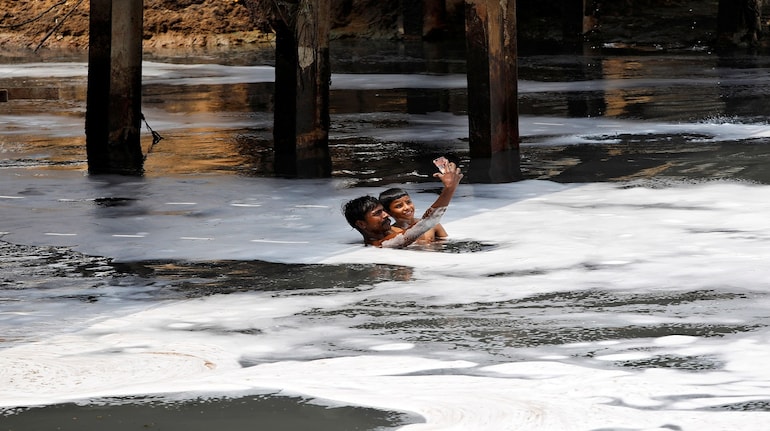
Water quality data for the Yamuna river and Delhi's sewage and effluent treatment infrastructure has not been updated for over three months, raising concerns over transparency and monitoring, Hindustan Times has reported.
Monthly data on the Yamuna, sewage treatment plants (STPs), common effluent treatment plants (CETPs) and major drains-mandated by the National Green Tribunal (NGT) to be published regularly-has not been uploaded since September in the case of STPs, CETPs and drains, while the most recent Yamuna report available on the Delhi Pollution Control Committee (DPCC) website dates back to October.
Queries sent by Hindustan Times to officials from the DPCC and the Delhi government on whether water sampling had been halted or why reports were not being published went unanswered.
The absence of updated data comes at a critical time. The lean winter months, marked by lower river flow and reduced temperatures, are typically associated with worsening water quality and increased frothing in the Yamuna, the report noted.
The NGT, in a 2019 order, had directed the DPCC to maintain and publicly disclose monthly water quality data to ensure accountability. Since then, regular reports were available-from January 2013 for the Yamuna and from 2019 for drains and treatment plants-until the recent gap highlighted by Hindustan Times.
Water quality testing involves collecting samples from eight points along the Yamuna's stretch in Delhi, from Palla to Asgarpur. Parameters tested include biological oxygen demand (BOD), dissolved oxygen, chemical oxygen demand, pH levels and faecal coliform counts. Similar assessments are carried out for more than 25 major drains across the capital.
The last available report, dated October 25, showed worrying trends, Hindustan Times reported. BOD levels reached 25 mg/l-more than eight times the acceptable limit of 3 mg/l-even after increased water releases from the Hathnikund barrage ahead of Chhath Puja. Faecal coliform levels stood at 8,000 MPN per 100 ml, far exceeding the standard limit of 2,500.
An earlier October report showed even more severe pollution, with BOD touching 33 mg/l and faecal coliform levels rising to 21,000 MPN. For comparison, data from December last year showed BOD levels as high as 70 mg/l, while faecal coliform counts had spiked to an alarming 8.4 million MPN, the report added.
Experts emphasised that timely disclosure of data is crucial during winter, when the river is most vulnerable. Pankaj Kumar, a Yamuna activist known on X as Earth Warrior, told Hindustan Times that it remains unclear whether samples were not collected in November and December or whether the data is simply not being shared. He also pointed to the widespread use of defoamers in the river since October, noting that their impact on overall water quality remains unknown.
Environmental activists and researchers warned that missing data hampers efforts to assess the river's health and track year-on-year changes. Bhim Singh Rawat, a Yamuna activist and member of the South Asia Network on Dams, Rivers and People (SANDRP), told Hindustan Times that winter data is critical for evaluating whether pollution levels are improving or deteriorating, adding that gaps in reporting set a poor precedent for river governance.
Discover the latest Business News, Sensex, and Nifty updates. Obtain Personal Finance insights, tax queries, and expert opinions on Moneycontrol or download the Moneycontrol App to stay updated!
Find the best of Al News in one place, specially curated for you every weekend.
Stay on top of the latest tech trends and biggest startup news.




