






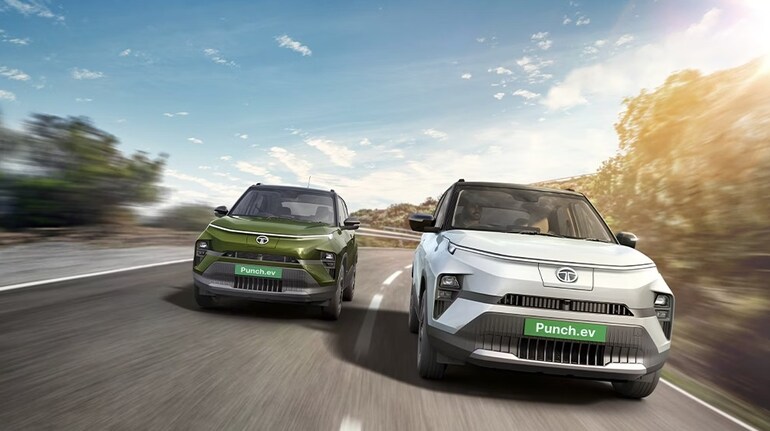

Tata Motors has urged the government to consider targeted incentives for entry-level electric vehicles (EVs) and extend support to electric cars used in fleet operations under the PM E-DRIVE scheme in the upcoming Union Budget, citing sustained pressure on affordable EVs despite an overall recovery in the passenger vehicle (PV) market.
In an interaction with news agency PTI, Tata Motors Passenger Vehicles Managing Director and CEO Shailesh Chandra acknowledged that recent government interventions have helped revive demand in the broader auto sector but said the entry-level EV segment continues to struggle.
“I would like to really appreciate the government for reviving the PV industry and the electric vehicle side as well. Two things which can be considered (in the Budget). One there is a lot of pressure on the entry segment on the EV side and if the government would like to consider some level of incentives,” Chandra said.
He explained that GST reforms have led to a reduction in petrol car prices, increasing competitive pressure on entry-level electric models.
“The government last year took significant steps. The big one has been the GST 2.0 but apart from that, there has been repo rate reduction, tax regime change and all. So I think the government has done a significant intervention to spruce up the demand for the overall PV industry,” he noted.
Highlighting the importance of fleet electrification, Chandra said EVs used in fleet operations make up just about 7 per cent of total passenger vehicle sales but account for nearly 33–35 per cent of passenger kilometres travelled.
He pointed out that while fleet EVs were supported under the earlier FAME-II scheme, they are currently not covered under the PM E-DRIVE programme.
“A fleet car runs five times more than a passenger car. So therefore, the support that you give to the segment has a multiplier impact at an environmental level, right in terms of particulate matter or zero emissions and on the import of oil. This is one segment which was identified in the FAME scheme, government may consider it for PM E-Drive inclusion,” Chandra said.
On pricing, Chandra indicated that rising commodity costs and foreign exchange pressures have affected the company’s margins, adding that these factors have had a nearly 2 per cent impact on revenues, much of which has not yet been passed on to customers.
“Certain levels of cost reduction we have been able to do, but in the coming days, we will decide when and how much we are going to increase the price. It will get announced in the coming days,” he added.
Several automakers have already announced vehicle price hikes in recent weeks, citing higher input costs and currency-related pressures.
*With Agency InputsDiscover the latest Business News, Sensex, and Nifty updates. Obtain Personal Finance insights, tax queries, and expert opinions on Moneycontrol or download the Moneycontrol App to stay updated!
Find the best of Al News in one place, specially curated for you every weekend.
Stay on top of the latest tech trends and biggest startup news.





