




Book Extract
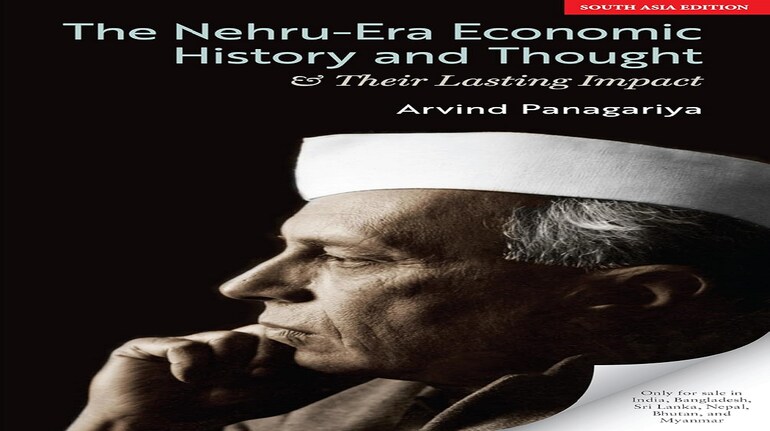
Excerpted with permission from The Nehru-Era Economic History and Thought & Their Lasting Impact by Arvind Panagariya, published by Oxford University Press India.
The Nehru Development Model
The economic policy framework India adopted after independence carried an indelible mark of Nehru’s thinking. Given that nearly all of the critical elements of this framework were due to him, it is wholly appropriate to characterize it as the Nehru Development Model. Past authors have generally not used this term because Nehru expounded his ideas informally, often in his speeches. Nevertheless, underlying these ideas was a core that meets the economist’s definition of a formal model.
Nehru had crystallized and firmed up nearly all of his economic ideas except those on agriculture by the time India became independent. For a pragmatic leader whose thinking was otherwise constantly evolving, it is remarkable how little these ideas changed in essentials during his seventeen-year-long unbroken tenure as prime minister.
In the 1960s his opponents often attacked his strategy, but he remained firm in his belief that his chosen path was right and the only realistic one available to India. As it turned out, his development model survived for at least a quarter-century after he died in 1964. Indeed, even after India had switched course and embraced pro-market reforms, his ideas continued influencing the thinking of many political leaders, bureaucrats, and intellectuals, slowing the movement away from socialism.
The Nehruvian socialism played a critical role in shaping the objectives, strategy, and instruments that define what I have called the Nehru Development Model. To be sure, Nehru himself did not draw a sharp distinction across these three elements of the model. For instance, socialism, heavy industry, and growth could appear as objectives, strategies, or instruments in his speeches, depending on the context. Nevertheless, the distinction is both conceptually valid and helpful in understanding the logic of the economic edifice he created.
Objectives
In 1950, when Nehru appointed the Planning Commission, he chose to serve as its chairman himself. In this capacity, he was India’s chief economic planner. However, he was also the country’s prime minister. Therefore, it is not surprising that his goals included not merely economic but also political considerations. Though he and his fellow planners did not realize it, these goals were only partially consistent with each other. As a result, they were to result in serious adverse consequences, especially for economic efficiency and growth and hence poverty outcomes. These consequences became particularly damaging after his daughter, Prime Minister Indira Gandhi,pushed the policy toward a far more rapid expansion of public ownership of the means of production and tighter government control of private economic activity.
The National Planning Committee and planners of post-independence India had set for themselves two central objectives: removal of poverty and economic self-sufficiency. At the time, almost no one saw a conflict between these objectives, perhaps because the Soviet Union, whose example Nehru had been following, had seemingly pursued them successfully. However, in hindsight, the example was a red herring. The Soviet Union had paid a heavy price in human sacrifice to get to where it had gotten by the 1940s. As a democracy, India could not exact a similar price from its citizens.3 Moreover, in the long run, the conflict between the two objectives caught up with even the authoritarian Soviet Union, leading to its disintegration by 1991. Massive economic inefficiencies, resulting from economic isolationism and state in- terventionism, played a critical role in the economic implosion that eventually led to the disintegration.
A third objective of the Nehru model was socialism. At a personal level, this objective was fundamental to Nehru’s thinking in that poverty eradication and self-sufficiency were rooted in his socialist thought. While the National Planning Committee never adopted socialism as an explicit goal, it was very much present in the background throughout its discussions. “Constituted as we were, not only in our Committee but in the larger field of India,” wrote Nehru, “we could not then plan for socialism as such. Yet it became clear to me that our plan, as it developed, was inevitably leading us towards establishing some of the fundamentals of the socialist structure.
Removal of Poverty
Removal of poverty is an essential objective of policy in every welfare state, whether it is socialist or not. For a country committed to socialism, it is a definite given. Nehru had viewed even the freedom movement principally as an instrument of ridding India of its extreme poverty. In his influential article Whither India, written in 1933, he had stated, “We cannot escape having to answer the question, now or later, for the freedom of which class or classes in India are we especially striving for [sic]? Do we place the masses, the peasants and workers, first, or some other small class at the head of our list?” Then, taking a dig at right-wing members of the Congress who refused to acknowledge the economic dimension of the freedom movement and insisted on casting it in purely political terms, he added, “To say that we shall not answer that question now is itself an answer and taking of sides, for it means that we stand by the existing order, the status quo.”
He further stated, “The form of government is after all a means to an end; even freedom itself is a means, the end being human well-being, human growth, the ending of poverty and disease and suffering and the opportunity for every one to live the ‘good life,’ physically and mentally.”5 Further down the article, he asserted, “The whole basis and urge of the national movement came from a desire for economic betterment, to throw off the burdens that crushed the masses and to end the exploitation of the Indian people.”
Later, when the National Planning Committee began deliberations, it adopted pov- erty eradication as the central objective of planning. Nehru noted in The Discovery of India,
“Obviously we could not consider any problem, much less plan, without some definite aim and social objective. That aim was declared to be to ensure an adequate standard of living for the masses, in other words, to get rid of the appalling poverty of the people.”7
In defining the objective precisely, the committee explicitly set a poverty line or what Nehru called an “irreducible minimum” at Rs. 15 to Rs. 25 per month at pre-war prices. Noting that the estimated per capita income at the time was Rs. 65 per month nationwide and just Rs. 30 per month in rural areas, Nehru stated,
“These figures bring home the terrible poverty of the people and the destitute con- dition of the masses. There was lack of food, of clothing, of housing, and of every other essential requirement of human existence.”
To its credit, when thinking about eradicating poverty, the committee did not merely consider income. Instead, its thinking extended to poverty’s numerous manifestations, which we today describe as multidimensional poverty. In addition to the minimum income of Rs. 15 to Rs. 25 per month for all citizens, the committee set specific nutrition, clothing, and shelter targets. For nutrition, it proposed a balanced diet with calorie intake between 2,400 and 2,800 units per adult worker per day; for clothing, it aimed to raise the availability of cloth from fifteen to thirty yards per capita per annum; and for shelter, it called for space of 100 square feet per person.
Removal of poverty as the objective and growth and redistribution as joint instruments to achieve it remained integral to Nehru’s thinking throughout his tenure as prime minister. Planners, in turn, incorporated this thinking into India’s five-year plans. For instance, Chapter 1 of the First Five Year Plan, which spanned fiscal years 1951–52 to 1955–56, states, “The urge to economic and social change . .. comes from the fact of poverty and inequality of income . . . The elimination of poverty cannot, obviously, be achieved merely by redistributing existing wealth.
Nor can a program aiming only at raising production remove existing inequalities. The two have to be considered together.”9 The plan discusses at length other social objectives such as literacy, universal free education for children, raising life expectancy, reducing infant, child, and maternal mortality, provision of tap water and sanitation, control of malaria, and preventive health care of the rural population through health services for mothers and children. Subsequent five-year plans continued to echo these themes.
When occasion demanded, Nehru returned to the theme of poverty and growth in his speeches in the parliament and elsewhere. One such occasion arose during the presentation of the Draft Outline of the Third Five-Year Plan in August 1960 in Lok Sabha. Challenging the skeptics who had argued that growth had bypassed the poor, he stated, “The national income over the First and Second Plans has gone up by 42 percent and the per capita income by 20 percent. A legitimate query is made; where has this gone? To some extent, of course, you can see where it has gone. I address large gatherings in the villages and I can see that people are better fed, better clothed, they build brick houses and they are generally better.”
Self-Sufficiency
Self-sufficiency as an objective of policy commonly emerges from an extreme sense of nationalism or belief in protectionism as the means to promote domestic industry. However, In Nehru’s thinking, it once again originated in socialism. He saw imperialism as the instrument capitalist nations used to gain access to the sources of raw materials and markets for finished products in their colonies.11 In the specific context of India, Nehru wrote in Whither India, “In this growth of capitalism, dominion over India was of vital importance to England. India’s gold, in the early stages, helped in the further industrialization of England. And then India became a great producer of raw material to feed the factories of England and a huge market to consume the goods made in these factories.” This reasoning led Nehru to equate any form of international trade with imperialism, against which he had waged the national freedom movement alongside Gandhi.
Once again, Nehru makes an explicit reference to this objective in The Discovery of India when reporting on the deliberations among the members of the National Planning Committee. He writes, “The objective for the country as a whole was the attainment, as far as possible, of national self-sufficiency. International trade was certainly not excluded, but we were anxious to avoid being drawn into the whirlpool of economic imperialism. We wanted neither to be victims of an imperialist power nor to develop such tendencies ourselves.” He adds, “The first charge on the country’s produce should be to meet the domestic needs of food, raw materials, and manufactured goods. Surplus production would not be dumped abroad but used in exchange for such commodities as we might require. To base our national economy on export markets might lead to conflicts with other nations and to sudden upsets when those markets were closed to us.”
In principle, self-sufficiency can be achieved almost instantly by banning all international trade. This policy would deny the citizens access to all foreign products, forcing them to consume exclusively domestically produced products. However, Nehru did not consider this kind of protectionism in advocating self-sufficiency. Indeed, he rarely spoke or wrote about erecting trade barriers to achieve self- sufficiency. Instead, he wanted to plan the economy so that the production basket would adjust to the citizens’ consumption needs, thereby eliminating the need for international trade in due course.
An excellent example of how Nehru viewed self-sufficiency is found in his address at the 60th session of the Congress at Avadi, delivered on January 22, 1955. In this address, he stated, “The conception of planning today is . . . to measure the physical needs, that is to say, how much of food the people want, how much of clothes they want, how much of housing they want, how much of education they want, how much of health services they want, how much of work and employment they want, and so on.
Once we do that, we can set about increasing production and fulfilling these needs.” He later added, “What is really important is drawing up the physical needs of the people and then working to produce things which will fulfill such needs.”
Given this conception, it is not surprising that we find hardly any discussion of a need for protectionist measures in the otherwise wide-ranging discussions of policy around the Second Five-Year Plan under the auspices of the Planning Commission. Though the government maintained tariffs and import licensing inherited at independence, it rarely chose to raise trade barriers as a part of the planning exercise during the 1950s. Only the adoption of foreign-exchange control in response to a balance of payments crisis in 1957 led to the tightening of import restrictions along the more traditional, protectionist lines.
Socialism
Participation in the International Congress Against Colonial Oppression and Imperialism held in Brussels in February 1927 had converted Nehru into a radical socialist. From then on, socialism became a central feature of his political and economic thinking. Some broad tenets of socialism, such as equitable distribution of material resources of the community and lack of concentration of wealth and means of production, were included in the constitution. Later, as India embarked upon economic development and planning, the objective manifested itself in an assault on the most visible institutions of social inequity, such as the Zamindari system, princely privileges, and concentration of wealth as well as partial state ownership of the means of production.
**********
Arvind Panagariya The Nehru-Era Economic History and Thought & Their Lasting Impact Oxford University Press India, 2025. Hb. Pp.352
India's economic model underwent transformational change following independence in 1947. The country's first Prime Minister, Jawaharlal Nehru, embarked upon two foundational projects to build modern India: a political project aimed at establishing democracy with universal suffrage, and an economic one aimed at ending poverty. Three-quarters of a century later, his political project is a resounding success, but the opposite is true of the economic one as per the author.
The Nehru-Era Economic History and Thought & Their Lasting Impact examines the evolution of Nehru's economic philosophy with socialism, self-sufficiency, and heavy-industry development at its core. Through extensive archival research, Arvind Panagariya reconstructs and reinterprets this history, paying particular attention to the administrative processes deployed to implement policies, contemporary economic thought, and important historical events not adequately covered in the existing literature. He assesses the evolution of Nehru's own political beliefs and the construction of the Nehru development model, the resulting regime and exclusionary nature of economic growth, and the lasting intellectual legacy of the Nehru-era socialism on politicians, civil servants, policy analysts, and businesspeople in the six decades since Nehru's death.
Arvind Panagariya is the Jagdish Bhagwati Professor of Indian Political Economy at Columbia University and the Director of Deepak and Neera Raj Center on Indian Economic Policies at School of International and Public Affairs at Columbia University in New York City. He was the first Vice Chairman of the NITI Aayog (January 2015 and August 2017), Government of India, in the rank of a cabinet minister. He is the chairman of 16th Finance Commission. He is a former Chief Economist of the Asian Development Bank. In 2012, the Government of India awarded him with Padma Bhushan, its third highest honor in any field.
He has served as a member of International Advisory Board, Securities and Exchange Board of India (SEBI). He served as a Member of Board of Governors of Indian Council for Research on International Economic Relations (ICRIER). He was also a member of Committee on the Center on Advanced Financial Research and Learning (CAFRL) appointed by the Governor, Reserve bank of India (RBI).
He is currently the Chancellor of the modern Nalanda University at Rajgir, Bihar; established as a successor to the historic Nalanda University by the Nalanda University Act, 2010. He has published widely on free trade as well as on the development of the Indian economy. He has authored more than 20 books, published professional articles in all the top Economics journals, and written for Foreign Affairs, Foreign Policy, and the WSJ.
Discover the latest Business News, Sensex, and Nifty updates. Obtain Personal Finance insights, tax queries, and expert opinions on Moneycontrol or download the Moneycontrol App to stay updated!
Find the best of Al News in one place, specially curated for you every weekend.
Stay on top of the latest tech trends and biggest startup news.