






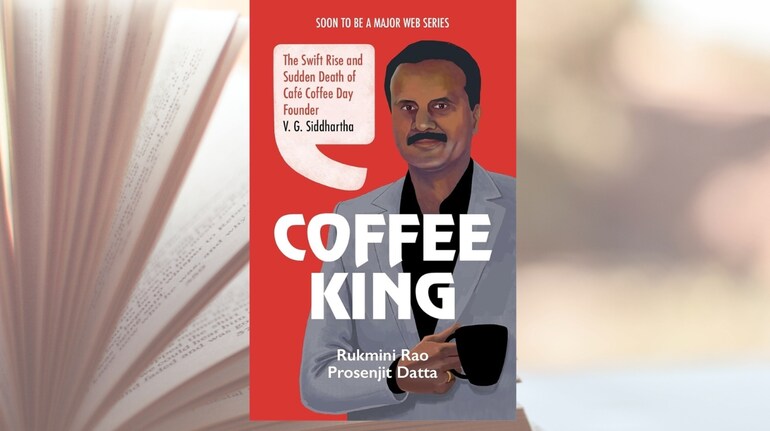
Excerpted with permission from the publisher Coffee King: The Swift Rise and Sudden Death of Café Coffee Day Founder V. G. Siddhartha Rukmini Rao & Prosenjit Datta, published by Pan Macmillan India.
***
In mid-2014, a BJP-led government with Prime Minister Narendra Modi at the helm came to power. However, more than the new government, it was the new RBI governor, Raghuram Rajan, who went after the rot in the system. Rajan took over from Dr Duvvuri Subbarao in 2013. In April 2015, he decided to act against the practice of evergreening loans by banks. From the banks’ perspective, evergreening ensured that they could avoid reporting low non-performing assets (NPAs), or bad loans. In simple terms, the banks allowed borrowers who were struggling to repay an earlier loan to borrow more and settle the old loan. The borrowers would not be shown as defaulters, and the banks could pretend that they had fewer bad loans.
In April 2014, the RBI created a database of borrowers – the Central Repository of Information of Large Credits (CRILC) – to track all data of large loans and NPAs of banks. In February of 2014, the RBI had already constituted the Joint Lenders Forum so that banks could take coordinated action against a large borrower who had taken loans from all of them. In April 2015, the logical next step was to initiate an asset quality recognition exercise which forced banks to own up to the total bad loans or NPAs they had on their books.
Rajan started an Asset Quality Review (AQR) of banks in April 2015 to ensure that they acted proactively to clean up their balance sheets. This would make banks own up to the NPAs, which they were trying to hide by giving fresh loans to the same borrowers to repay the older ones.
The immediate effect of this was that banks became more cautious about the balance sheets and cash positions of companies seeking loans. Weaker borrowers found it more difficult to raise money at good rates. More importantly, evergreening became difficult. It was still possible, though, if one group company took a loan and then loaned it to another group company to pay off a loan the latter was finding difficult to service. Related-party transactions, while not illegal, are not particularly liked by investors or lenders. While many related-party investments happen when a group company with a strong balance sheet and plenty of cash lends to a weaker or newer company in the group at lower than market rates, that was not the case with CDEL and Siddhartha.
Except for CDGL, and to an extent the coffee trading business, none of Siddhartha’s ventures were doing well. Some of them had plenty of assets – like the coffee estates or land banks meant for IT parks – but the revenues, profits and cash flows were weak. The cost of raising finance shot up for Siddhartha. In 2015, CDEL’s IPO had helped raise cash, but by the end of 2016, he needed to raise fresh debt. The lenders had become more cautious, but he still had a fairly good reputation for paying back more or less on time. CDEL continued loading debt on its books. Siddhartha found himself pledging more promoter shares – not just his shares in CDEL and Mindtree, but also those in his wife and parents’ name, as well as other subsidiaries and privately held companies – to raise fresh debt.
Raising debt based on just CDEL’s balance sheet and cash flow had been impossible for a long time. Siddhartha had disclosed in the draft red herring prospectus at the time of the IPO that some promoter shares had been pledged to raise resources, so this was a path he had been on for some time.
In 2017, Siddhartha found himself in fresh trouble, this time with the Income Tax department. Earlier that year, the department had raided thirty-nine properties of D. K. Shivakumar in Karnataka and other places, who at that time was the energy minister in the state. According to members of the Congress party, the raid happened because Shivakumar was playing host to forty-two Congress MLAs from Gujarat in a resort outside Bengaluru, safeguarding them until they voted for Ahmed Patel, a senior Congress leader who was standing for re-election to the Rajya Sabha.
According to sources at the Income Tax department, the main reason to probe CDEL was the outcome of the investigation into Shivakumar. The department’s operation on his properties and offices led them to Rajnish Gopinath. Allegedly, about ₹1.2 crore in cash was found during the search and seizure operation, which Gopinath claimed belonged to Siddhartha.
Rajnish Gopinath was the brother of Munish Gopinath, CFO of the Coffee Day group. Siddhartha was a close friend of Shivakumar, too. According to sources in the Income Tax department, as a part of the inquiry into D. K. Shivakumar, they had found messages indicating hawala dealings on Rajnish Gopinath’s phone but could not find evidence of Shivakumar’s deal. They had also found evidence that Siddhartha had transferred ₹20 crore to Shivakumar’s daughter through a layered transaction. Two months after its operation on Shivakumar’s properties, the Income Tax department raided Siddhartha’s headquarters in Bengaluru and attached some of his assets. They claimed to have found plenty of incriminating evidence, including undisclosed income of ₹650 crore. However, after the raid on Siddhartha, the department could not find any evidence to link Shivakumar with any illegality.
Siddhartha did not buckle under pressure from the Income Tax department, which kept reiterating that these were routine raids to identify undeclared income. Siddhartha insisted that it was harassment; that he had done nothing wrong. Meanwhile, as the country entered 2018, storm clouds gathered on the horizon.
The financial markets in Mumbai were buzzing with rumours that Infrastructure Leasing & Financial Services Ltd (IL&FS), which was among the biggest lenders and executors of infrastructure projects in the country, was in trouble. In June 2018, IL&FS had defaulted on some intercorporate deposits. Ravi Parathasarthy, who had been the chairman of IL&FS since 2006 stepped down in July 2018 because of cancer. In August, the credit rating agency ICRA had downgraded the rating of IL&FS long term debentures from AAA to AA+ (a slightly lower credit rating, indicating more risk). Finally, in September 2018, IL&FS defaulted on ₹1,000 crore of short-term debentures issued to SIDBI. This would trigger a crisis in the entire Indian financial ecosystem.
IL&FS had been set up to finance infrastructure projects (where it acted as a contractor) and was promoted by UTI, Central Bank and HDFC, among others. It was the brainchild of M. J. Pherwani, former chairman of UTI and National Housing Bank, who had been implicated in the Harshad Mehta scandal. While several chairmen came and went in IL&FS’s early days, the credit for building it into a behemoth, and later creating a crisis that nearly took down the Indian financial markets, goes to Ravi Parthasarathy, who took charge as the CEO in 1989 and then became chairman in 2006.
Over four decades, Parthasarathy turned IL&FS into a financial powerhouse that many thought was a government body. It was labelled a systemically important institution by the RBI, which in layman’s terms meant it was too important to fail. If it ran into trouble, it could shake the Indian financial sector. It was essentially an NBFC that raised money and lent it out at higher interest rates to infrastructure companies. It also built several roads by bidding directly.
Infrastructure lending is fraught with problems. NBFCs raised money through short- and medium-term loans, which was lent for very long tenures to infrastructure companies that build roads, ports, etc. IL&FS seemed to have figured out how to make this difficult business profitable, until it turned out that it was in serious trouble that had been concealed for long.
The default sent shockwaves through the Indian financial market, which froze to a large extent. Lenders turned skittish and refused to give even overnight credit to companies. They also started asking borrowers to repay loans quickly. Several of the term loans that CDEL had availed from different financial institutions required on-demand payment, which meant the lender could recall them at any time.
By now, Siddhartha’s operations were at a point where he needed to raise fresh debt constantly to keep his businesses from collapsing. His loan repayment record was still good, but most lenders had started suspecting an underlying weakness.
However, he still managed to secure loans as he was charismatic and spent time building relationships with bankers. For instance, when he came to know that one of the bank executives he was negotiating with for a loan was getting married, he insisted that the nuptials be held at one of the Serai resorts. Instances like these led to lenders giving him more leeway than other borrowers. Some bankers were particularly sympathetic to him, even though they knew that he moved money around and shifted it to his private companies. As long as he could evergreen his loans, Siddhartha was prompt with repaying old loans.
The IL&FS default, however, made it almost impossible for him to raise fresh debt, that too when some repayments were coming up. Apart from banks and NBFCs, Siddhartha had raised debt from some of his PE investors, too. It is also rumoured that he had borrowed from moneylenders, many of whom recalled their loans to CDEL and Siddhartha at this point.
After Siddhartha’s death, his board members insisted that they knew nothing about the reality of his financial situation. This is hard to believe given that several financiers in the market had heard rumours about him being in trouble. He was not alone though. Severa businessmen were in the same position because of the nervousness in the financial markets after the IL&FS trouble. The scandal had a domino effect that took down another house of cards – Dewan Housing Finance Ltd (DHFL), run by the Wadhwas. It roiled other NBFCs, too, and hit multiple small enterprises by making it difficult for them to borrow money.
Of course, Siddhartha was not the first businessman who borrowed heavily and found it impossible to repay his debts. Far bigger empires have collapsed because of debt and wrong business decisions. The three rounds of economic stimulus the government had given after 2008 had made many businessmen load up on debt, which they were unable to service after a point because their projections went awry or they had siphoned off money. The National Company Law Tribunal (NCLT) has had to deal with bankruptcies that involved companies with tens of thousands of crores as debt.
The company’s annual report for FY 2018–19, filed in late November 2019, revealed the extent of its financial strain. Of the 32.75 per cent stake that Siddhartha personally held in the company, nearly 22.89 per cent was already pledged as collateral. Similarly, out of the 53.4 per cent held by the promoter and promoter group companies, 38.7 per cent was encumbered. Finance costs were also rising sharply. CDEL’s net debt on 31 March 2019 was ₹4,796 crore, almost ₹1,500 crore higher than the previous year.
The notes to the financial statements also showed how demanding the borrowing terms were. For example, NCDs issued to Credit Opportunities II Pte Ltd and India Special Situations Scheme I required Siddhartha to pledge CDGL shares worth 2.5 times the loan amount. Loans from NBFCs like Aditya Birla Finance came with interest rates as high as 15 per cent, and any delay in repayment could attract penal interest of up to 24 per cent per year. On the other hand, the borrowings backed by Siddhartha’s personal guarantee had fallen to ₹355 crore by 31 March 2019, compared to ₹1,026.2 crore the previous year.
The sheer size of CDEL and its market capitalization (the total value of its shares) made the company even more vulnerable. If the share price fell, Siddhartha was required to pledge even more collateral to maintain the 1.5 to 2.5 times coverage that lenders demanded under the terms of their contracts.
Many businessmen who had too much debt and not enough cash flow chose to flee India for a good life overseas. They often siphoned off money and stashed it abroad. Others simply allowed their lenders to declare their companies bankrupt after the Insolvency and Bankruptcy Code (IBC) was enacted in 2016.
Siddhartha did neither, perhaps because he was too proud of his family’s reputation and not thick-skinned enough to see it through. He had cultivated a reputation as a businessman who worked to improve the condition of the poor in his community; someone who offered jobs to youth from the Chikkamagaluru district. However, what happened over the next year and a half, leading up to his death before the company could announce its financial results for 2018–19, threw up some serious questions about his intent and money handling.
**********
Rukmini Rao & Prosenjit Datta, Coffee King: The Swift Rise and Sudden Death of Café Coffee Day Founder V. G. Siddhartha, Pan Macmillan India, 2025. Hb. Pp.210
An exhaustive investigation into the meteoric rise and tragic collapse of a visionary entrepreneur.
The news of V. G. Siddhartha’s tragic death in July 2019 sent shockwaves across India and raised some unsettling questions: Was his death truly an accident? What immense pressures drove a successful and influential entrepreneur to such desperation?
V. G. Siddhartha was more than the visionary founder of the ubiquitous Café Coffee Day chain – he was a titan of Indian entrepreneurship. From his humble roots in a Karnataka coffee plantation, Siddhartha built an empire that transcended coffee, venturing into finance, logistics and hospitality. With a starting capital of just ₹30,000, his company grew into India’s largest coffee curing plant, culminating in the creation of the beloved Café Coffee Day chain, with an astonishing 1,700 outlets across the country at its peak. In his remarkable thirty-three-year career, Siddhartha strategically invested in a diverse portfolio of companies, including industry giants like Infosys and Mindtree, and rubbed shoulders with top industrialists, tech pioneers and powerful politicians. At the zenith of his success in 2018, Sidhartha’s net worth was estimated at over ₹3,000 crore. Beneath this gleaming façade, however, lay a convoluted and ultimately unsustainable reality – a web of over fifty companies burdened by an ever-mounting debt of over ₹5,000 crore.
The first cracks in this meticulously constructed edifice appeared after income tax raids, followed by relentless pressure from angry lenders and investors. Through scrupulous reporting and extensive research, business journalists Rukmini Rao and Prosenjit Datta undertake an exhaustive investigation into how Siddhartha’s mega enterprise began its inexorable descent into collapse to pose essential questions about the cost of ambition and the perils of relentless growth.
This investigative reporting was done despite not being given access to those who knew V. G. Siddhartha well except for his mother. As Prosenjit Datta writes in his introduction:
“Writing a biography in India, unless it is a commissioned hagiography, is very difficult. People do not want to speak on the record. If they do, they offer you the barest and most politically correct version. In Siddhartha’s case, writing a biography turned out to be particularly hard because there was simply no one who could add anything beyond the fact that he was a very nice man and a sincere, hard-working entrepreneur. Several people who were purportedly close to Siddhartha, including Nandan Nilekani and Subroto Bagchi, refused to speak or offer any insights. Some old business and personal associates of Siddhartha who agreed to talk to us seemed puzzled by Siddhartha’s actions. Even those who knew him well and had met him a few days before he took the final step had detected no hint of stress or unusual behaviour.
The company and the family refused to cooperate despite multiple efforts to reach out to them. Rukmini manages to get an interview with Siddhartha’s mother, Vasanthi, who gave her a clear picture of the family’s history and Siddhartha’s years growing up, but she did not have any inkling about his business problems. Siddhartha’s widow, Malavika, politely declined to comment. The chairman and the directors also proved to be reticent.
Some former employees of Coffee Day Global Limited (CDGL, the coffee retail chain) and Coffee Day Enterprises Limited (CDEL, the listed holding company which, apart from the coffee chain business, also included their logistics, hospitality, technology and investment businesses0 spoke, but they had little knowledge about the business as a while. Most of them knew certain parts, limited to specific timeframes. As a result, putting together a detailed picture proved to be difficult.
As we dug in — going through reams of financial results, annual reports, news clippings and court cases in which Siddhartha’s name figured — we discovered interesting nuggets. He had been involved in scandals earlier as well, which the book will dive into, though most of them did not affect his reputation in the long run.
Despite the size of the empire he had cobbled together, it was strictly a one-man show. In the initial years, the group, especially his coffee business, was run professionally. In the later years, as his ambition grew, Siddhartha’s decisions become more autocratic.
Siddhartha had created a web of companies and money constantly moving between them. He took new loans to pay off older ones. Most of his businesses were not making much profit. His reputation outsized the expanse of the empire he had created. He might have even got away with his operations indefinitely had it not been for a confluence of a few events, namely the IL&FS crisis in 2018 and an income tax raid in early 2019.”
Rukmini Rao is a financial journalist who has reported extensively on Karnataka-based businesses for over a decade for both print and television media. A former lawyer, her journalism career spans over thirteen years, during which time she has worked with Business Today, CNBC TV-18, Bloomberg TV India and Times Now. She is the co-winner of the 2019 Polestar Award for Best Feature in Business Journalism. A coffee aficionado, she has been tracking Café Coffee Day for many years. Rukmini lives in Bengaluru.
Prosenjit Datta is a veteran business journalist with over three and a half decades of experience. He has previously worked with Economic Times and Business Standard and covered financial markets, big corporations, technology trends and the macro economy. He later went on to become Editor of Businessworld and Business Today, where he built award-winning teams that garnered every prize in business journalism in India and several international ones. He is currently a columnist for Business Standard, New Indian Express and moneycontrol.com. Prosenjit lives in Delhi.
Discover the latest Business News, Sensex, and Nifty updates. Obtain Personal Finance insights, tax queries, and expert opinions on Moneycontrol or download the Moneycontrol App to stay updated!
Find the best of Al News in one place, specially curated for you every weekend.
Stay on top of the latest tech trends and biggest startup news.




