






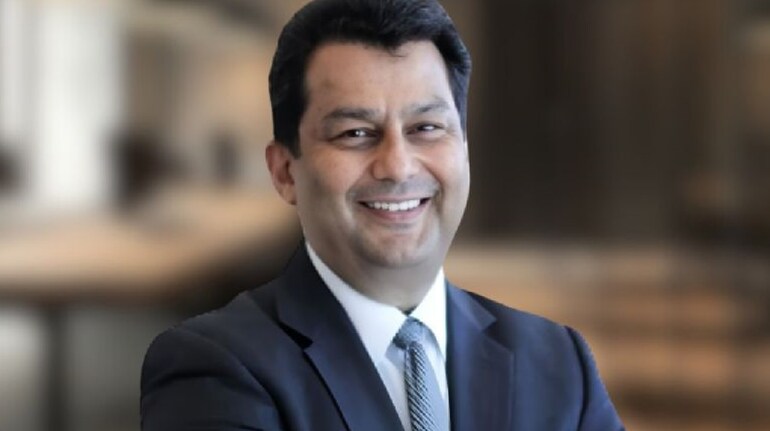

Vikram Sahu, the new India CEO and country executive, Bank of America has his priorities set: to scale in India significantly, but in the businesses where the bank has globally chosen to compete at scale. For Sahu, this is his first major brush with India’s business landscape. The compelling momentum in the country, which to him, is visible in the boardrooms of India Inc, the data points and on ground, motivated him to return to India when an opportunity presented itself. In an interview to Moneycontrol, Sahu explained that every piece of business should grow, whether corporate debt, debt capital market, equity capital market or deals. Adding that India is of strategic priority to Bank of America, the vision for India is aligned with the bank’s global priorities. Edited excerpts:
As a senior banker returning to the country after many years, how are you reading the pulse of the market right now? What are the bright spots in India?
India today feels confident, growth oriented, and fundamentally more ambitious. The energy, I sense, here is very distinct. The momentum is unmistakable, and it is translating potential into real outcomes. The shift is visible in the data, in boardrooms, and on the ground. Hence, when the opportunity arrived, I voted with my feet and chose to return.
Structural reforms, demographic advantage, and digital transformation position the Indian economy for sustained expansion. A series of structural reforms over the last decade has strengthened the business ecosystem and strengthened the country's long-term competitiveness. The young, skilled, and aspirational population is driving both consumption and productivity. The rise of a confident middle class is expanding the demand base, while the country's demographic depth is creating a talent pipeline that few economies can match. India's digital and financial infrastructure stands out as a defining strength. It delivers efficiency at scale, supports rapid innovation across financial services, and has become a critical driver of inclusive growth. So, while external headwinds warrant caution, the medium to long-term outlook on India is firmly positive.
At Bank of America, how are you planning to capitalize on these macro advantages?
Our international business, under the leadership of Bernard Mensah, has been a growth engine for the firm and India has been an important contributor to that growth. We operate in 37 countries, which collectively represent more than 80% of global GDP outside the US. India has been, and continues to be, a strategic priority for the firm.
Our vision for India is aligned with our global priorities. We have a simple yet ambitious objective of delivering consistently and growing sustainably in a manner that creates value for our clients, our shareholders, and the communities we serve. We go where there is GDP growth and economic dynamism, and India is the fastest growing large economy in the world. We also go where our clients want us to be. Increasingly, our clients, both domestic and global, see India critical to their strategies and expect us to support them here.
These factors have made India a natural and essential priority for us, and the intention is to grow our business here. We continue to scale in India significantly, but we are doing so in the businesses where we have chosen globally to compete at scale.
Can you take us through your experience with some of your key clients in terms of how they are viewing these advantages and how they would like to deepen their engagements with Bank of America?
Global investors and corporations are drawn to India because it combines scale with momentum, a large economy delivering sustained, high-quality growth and offering opportunities for expansion. The intrinsic strength of this market is undeniable. At the same time, several Indian firms are or have plans to expand globally. They are acquiring businesses, building global supply chains and entering new markets across the world. Where our differentiation becomes most visible is when clients go beyond a single market. Competing with major domestic banks purely for local business is not our model. The moment a company aspires to become global, whether an Indian firm expanding oversees or a multinational deepening its commitment to India, they need a bank that can travel with them, align capital and liquidity seamlessly across jurisdictions, and provide a consistent platform in the world's major financial centres. Very few banks can travel with clients seamlessly across the globe. We can, and we do this every day.
India’s pace of growth has been outperforming the world steadily since the pandemic. In a situation like this, are there any aspects where you would like to take a step back or be cautious about?
India has been remarkably resilient, yet it is still connected to a world where interest‑rate cycles, geopolitical tensions, and supply‑chain shifts can influence capital flows and investment decisions. We will need to keep an eye on global volatility and help our clients navigate this landscape with clarity.
You have taken charge at time when foreign banks are upping their strategy in India. There is new interest from Japan and Middle East. Do you see banking getting redefined in India by foreign players?
In my view, Indian banks will continue to remain dominant for local business.
But at the same time, I see increased competition in India from global banks as a fundamentally positive development. A growing financial‑services landscape reflects a growing economy, and that is good for the country, and good for us. It also plays directly to our strengths.
Many of the multinational institutions expanding into India operate at global scale. We are a dollar‑based institution with one of the world's most extensive global markets capabilities, which positions us uniquely to support cross‑border growth, trade, financing, and treasury operations for both Indian companies going abroad and global companies coming in. But even as we operate on a global scale, we are deeply local. We have been present in India for more than six decades. That depth of footprint matters. Our people are embedded in the community, our leadership is anchored here, and we invest meaningfully in local capability. That local presence with global reach is what differentiates us, and it is why clients consistently ask us to do more with them as they expand their footprint.
How would you target to grow in India in the next three years?
India is a strategic priority for the firm, and our aspirations are anchored in Responsible Growth. We will continue to strengthen our presence and capabilities here. We expect to be larger and more impactful than we are today, not just in scale, but in the value, we deliver to clients and the opportunities we create for our people. The direction of travel is clear: India is and will remain a driver of our global growth strategy.
The period between mid-2024 to mid-2025 has been one charecterised as a massive reset phase for BofA in India. Under your leadership what efforts would be taken to strengthen processes and compliance?
Last November, we hosted an Investor Day where our CEO, Brian Moynihan, along with the senior management team, outlined our firm's long-term vision. At that session, the firm reaffirmed its commitment to the principle of growing responsibly and sustainably. Our vision for India is aligned with our global priorities.
The bank had to take a step back during this period on the capital market business. Do you see the firm regaining its footing in 2026? Can you please share a few steps taken to do so?
If you look beyond the numbers, many of which we don't disclose publicly, the best indicator of our commitment to India is the caliber of leadership and resources we have in our investment banking team here. We have significantly strengthened our investment banking and equity capital markets (ECM) capabilities in India. Over the past year, we have enhanced leadership and deepened our bench across investment banking and ECM, ensuring we have the right expertise to advise clients on complex transactions. You don't make appointments of this scale unless you believe deeply in the trajectory of the market and have confidence in the business. This investment reflects our confidence in the growth of India's M&A and capital markets and our commitment to being a trusted partner for clients navigating these opportunities.
Which of the two would be your driving strategy – corporate lending including debt placements or ECM and M&A, to propel growth for BofA in India?
I would say, all of our businesses in India, are priority for us. One of the advantages of being a universal bank is the ability to operate across a broad spectrum of businesses. Market conditions may favour one line of business at a given time while another experiences a softer phase, but this diversification smooths out volatility and allows us to invest consistently. Our equities business is a strong pillar, as is fixed income, and our corporate and investment banking franchise is equally robust. Each plays a critical role in serving clients and driving growth. Cycles will come and go, but our strategy is to stay invested across the board because we know the tide always turns. That is our strength as a universal bank.

Discover the latest Business News, Sensex, and Nifty updates. Obtain Personal Finance insights, tax queries, and expert opinions on Moneycontrol or download the Moneycontrol App to stay updated!
Find the best of Al News in one place, specially curated for you every weekend.
Stay on top of the latest tech trends and biggest startup news.





