India's draft Corporate Average Fuel Efficiency (CAFE) 3 regulations have triggered extensive discussion within the automotive industry on how lightweight vehicles should be treated under the upcoming norms. The new standards will apply from April 1, 2027 and remain in force until March 31, 2032. A key provision allows eligible vehicles weighing up to 909 kg, with engine capacity up to 1,200 cc and length up to 4 metres, to receive a 3 g/km reduction in manufacturer-declared carbon dioxide (CO2) emissions for fleet-average calculations, with a maximum total reduction of 9 g/km per model per reporting period.
The CAFE 2 standard requires original equipment manufacturers (OEMs) to meet a fleet-average target of about 113 g/km of CO2. In the draft CAFE 3 document (September 2025), this fixed figure is replaced by an annual fuel-consumption formula linked to average fleet weight, with the resulting limits falling well below the Phase 2 benchmark depending on a company's portfolio mass. An earlier draft, issued in June 2024, had proposed a fixed cap of 91.7 g/km of CO2, which was later dropped in favour of a weight-based system that tightens each year.
Although the draft's lightweight vehicle mechanism is part of a broader regulatory structure, carmakers differ in their interpretation of its implications. Much of the ongoing debate now centres on whether the allowance aligns with global practice and how it interacts with India's current market mix.
CAFE compliance in India is assessed at the fleet level, meaning individual models do not have separate targets under the proposed CAFE 3 norms. OEMs are evaluated on the sales-weighted performance of their overall portfolio, and the regulation does not classify any particular model as compliant or non-compliant on its own. The framework is technology-neutral and is designed to improve average fuel efficiency and reduce emissions across all vehicle categories rather than promote or discourage specific types of cars.
Maruti Suzuki India has expressed support for recognising the characteristics of lightweight vehicles within efficiency regulations. In a recent media interaction, the company's Senior Executive Officer for Corporate Affairs, Rahul Bharti, said that some incorrect facts and narratives are being pushed in a very irresponsible manner by "the makers of some large gas-guzzlers to take away attention from their large gas-guzzlers".
Bharti also drew on global reference points to describe the prevalence of weight-linked considerations in international markets. "More than 90% of the world's automobile market provides structured relaxations for small cars. China does it at about 1,090 kg, Europe actually relaxes targets below 1,115 kg, Korea at 1,100 kg, Japan follows a continuous parabolic curve where the delta in target keeps on reducing with weight," he said.
While Maruti Suzuki has supported the idea of concessions for small cars under the proposed CAFE 3 framework, Tata Motors Passenger Vehicles (TMPV), Mahindra & Mahindra, Hyundai Motor India and JSW MG Motor India have expressed a different view. These companies have written to various government ministries requesting that a special weight-based category not be created for the purpose of granting concessions under CAFE 3. Moneycontrol has reviewed the correspondence.
At the Q2 FY26 earnings call, TMPV MD and CEO Shailesh Chandra said the Goods and Services Tax (GST) 2.0 definition of small cars continues to be based on length and engine capacity and noted: "By this definition, we are the second largest producer of small cars in the country, with over 85% of our sales coming from this side." He added: "We have absolutely no concerns in meeting CAFE norms even with such a high share of small cars, and we see absolutely no justification for any special concession for this specific category of cars or any category of cars."
Chandra also raised concerns about defining small cars based on weight. He said: "We do not support any move to include weight in the definition of a small car. Such an arbitrary criteria would conflict with one of the country's most critical imperatives, that is, safety. Customer preference has and continues to rapidly shift towards cars that are safe and equipped with features. Today, no car weighing below 909 kg meets Bharat NCAP safety ratings."
To examine the validity of the industry's claims and reference points, Moneycontrol conducted a detailed review of international regulatory models. This review provides additional background on how various markets address vehicle weight within their fuel-efficiency systems. The findings show that while weight is an established parameter in global frameworks, the methods used to incorporate it differ significantly across jurisdictions.
This distinction between whether weight is recognised and how it is operationalised is central to understanding why OEM interpretations vary. In global systems, weight influences targets primarily through structural mechanisms such as curves or class-based tiers. This differs from model-level CO2 deductions of a fixed amount per vehicle, as outlined in the Indian draft provision.
EuropeEurope employs a fleet-average CO2 target curve derived from the average mass of vehicles sold by each OEM. Heavier fleets face stringent CO2 targets, while lighter fleets face relaxed targets. Compliance is achieved by ensuring the sales-weighted fleet performance meets the curve-based requirement. Europe does not provide fixed per-model CO2 reductions; weight sensitivity is built into the curve.
JapanJapan uses weight-based categories to set fuel-efficiency requirements. Each class has a defined target, and OEMs comply by meeting a sales-weighted average across the portfolio. At lower masses, the curve flattens, preventing disproportionate stringency for very small vehicles. Japan does not use model-specific CO2 allowances within a fleet-average structure.
KoreaKorea assigns fuel-efficiency targets through weight classes. OEMs must meet a fleet average target calculated from these classes. Weight is recognised structurally, and the curve is flattened below a particular weight to give relaxations at lower categories without fixed per-model adjustments.
ChinaChina applies both model-level and fleet-level fuel-consumption standards. Each model must meet a limit linked to its weight class, while manufacturers also comply with a fleet-average benchmark. While weight is central to the system, China does not include fixed per-model CO2 reductions. However, the target does get relaxed below 1,090kg.
These global systems confirm that weight is a relevant regulatory parameter and is used across markets to determine efficiency expectations. However, the mechanisms employed differ substantially. Europe and Japan use mass-based curves or classes, Korea uses class-based targets, and China uses both model-level and fleet-level obligations. None of these frameworks uses a model-level CO2 deduction within a fleet-average compliance system. This distinction shapes how Indian OEMs selectively draw on global examples when making their arguments.
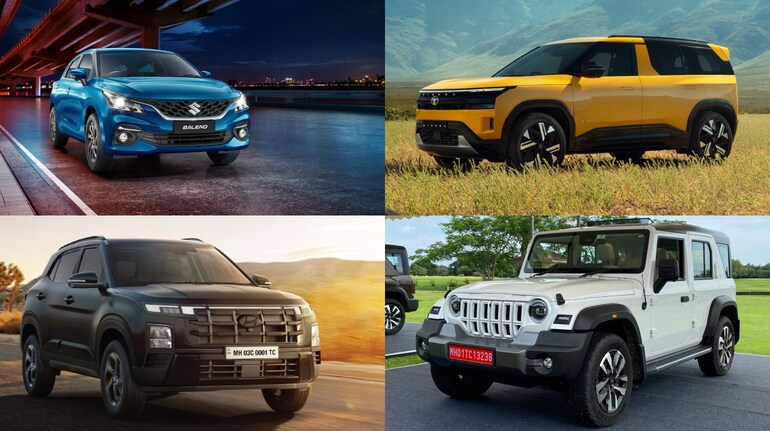
Portfolio composition strongly influences each OEM's perspective. Maruti Suzuki has a large share of lightweight models that fall within or near the 909 kg threshold, including the Alto K10, S-Presso, Celerio and WagonR. The draft's allowance, therefore, directly intersects with its fleet-average CO2 performance.
Tata, Hyundai, Mahindra and JSW MG, by contrast, have portfolios more heavily weighted towards compact and mid-sized SUVs, which generally exceed the 909 kg threshold. For these companies, the practical impact of the lightweight vehicle allowance is limited, shaping their evaluation of how weight should be incorporated within CAFE 3.
An industry analyst, who did not wish to be named, told Moneycontrol that the lightweight vehicle allowance highlights how regulatory design, portfolio trends and evolving mobility pathways intersect.
"For OEMs with significant lightweight vehicle presence, the allowance echoes global principles that recognise segment-specific engineering constraints," he said, adding that for others, whose portfolios reflect shifts towards compact SUVs and feature-rich models, the allowance is less consequential, prompting a broader focus on market trends and technology transitions.
Tata's comments reflect this intersection. Chandra mentioned the ongoing shift in demand within the sub-4 metre segment towards compact SUVs and linked regulatory emphasis to transitions towards electric vehicles (EVs) and flex-fuel vehicles. His remarks illustrate how companies position the CAFE debate within broader considerations such as safety, consumer preference and long-term technological change.

Discover the latest Business News, Sensex, and Nifty updates. Obtain Personal Finance insights, tax queries, and expert opinions on Moneycontrol or download the Moneycontrol App to stay updated!
Find the best of Al News in one place, specially curated for you every weekend.
Stay on top of the latest tech trends and biggest startup news.