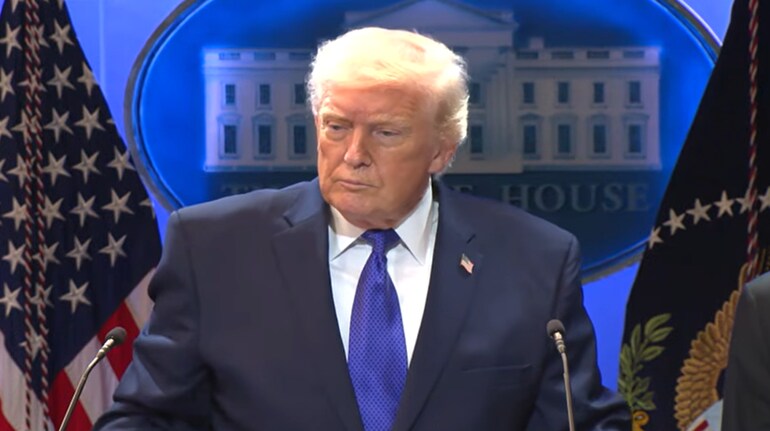
Donald Trump has announced a new flat 15 percent global tariff that will replace much of his earlier trade regime after the US Supreme Court ruled that his previous levies were unlawful. The new tariff is due to take effect on Tuesday and will remain in force for 150 days unless US Congress authorises an extension, the Financial Times reported.
Trump had relied on the International Emergency Economic Powers Act to impose earlier tariffs, but the court struck those down. In response, he moved to a blanket tariff approach, initially set at 10 percent and later raised to 15 percent.
Who benefits most from the new regime
Data analysed by the independent monitoring group Global Trade Alert shows that countries previously hit hardest by Trump’s earlier tariffs stand to gain the most. Brazil will see the biggest reduction in its average tariff rate, falling by 13.6 percentage points. China follows with a 7.1 percentage point reduction.
Other countries that had faced sharp criticism from the White House, including Mexico and Canada, also benefit from lower average tariffs under the new system.
Why US allies lose out
Long-standing US partners such as the UK, the EU and Japan are among the biggest losers. Their exports are heavily concentrated in sectors like steel, aluminium and automobiles, which remain subject to other tariffs still in force after the court ruling.
The UK is hit hardest, losing a previously secured 10 percent rate on many goods and facing an average tariff increase of 2.1 percentage points. The EU’s overall rate rises by 0.8 percentage points, with countries such as Italy and France particularly exposed once exemptions are accounted for.
How the administration is defending the move
US trade representative Jamieson Greer has said the administration lacks the flexibility it previously had under emergency powers but plans to press ahead with trade investigations that could justify fresh tariffs. He said the increase to 15 percent reflected the urgency of the situation and insisted that existing trade deals were still intact.
Greer also warned that Asian manufacturing hubs such as Vietnam, Thailand and Malaysia, which benefit from the new flat rate, could face future investigations linked to industrial overcapacity and subsidies.
Why uncertainty remains
The new tariff regime is temporary and could expire after 150 days. The administration has signalled it may turn to other legal tools, including section 301 of the 1974 Trade Act, to impose country-specific tariffs. Investigations into China and Brazil have already begun.
European officials have demanded clarity, warning that the shifting framework makes it difficult to plan trade and investment. The broader outcome is a system that reduces penalties on some of Trump’s most criticised trading partners while placing heavier burdens on allies that once negotiated preferential terms.
Discover the latest Business News, Sensex, and Nifty updates. Obtain Personal Finance insights, tax queries, and expert opinions on Moneycontrol or download the Moneycontrol App to stay updated!
Find the best of Al News in one place, specially curated for you every weekend.
Stay on top of the latest tech trends and biggest startup news.