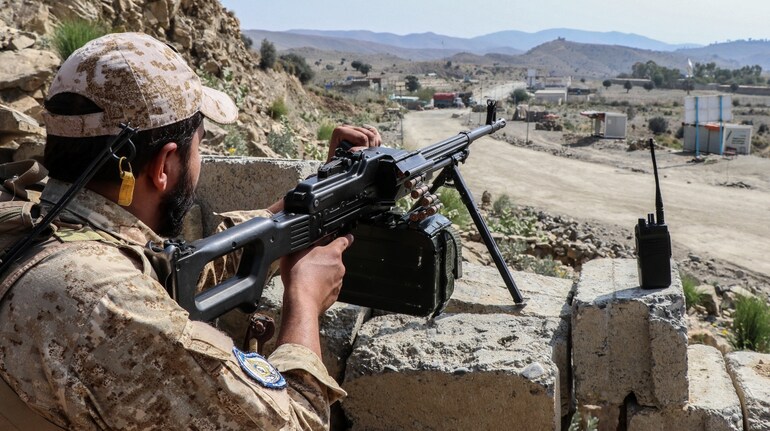
The collapse of peace talks between Pakistan and Afghanistan has once again exposed the fragility of their relationship and the volatility of the Durand Line — the 2,640-kilometre colonial border that divides the two nations and their people. Once meant to stabilise the frontier, it has instead become a fault line of mistrust, militancy, and economic paralysis. With both sides trading fire even as negotiations were underway in Turkey, Pakistan’s heavy-handed approach and failure to manage its border have pushed trade to a standstill and strained regional security.
Kabul has blamed Pakistan’s “stubborn and unreasonable” approach for the collapse of the latest round of talks. Afghanistan’s acting foreign minister Amir Khan Muttaqi said negotiations in Istanbul failed primarily because Pakistan’s demands were “neither practical nor acceptable” to the Taliban government.
As Pakistan continues to close crossings, delay transit routes, and issue threats, it risks losing both economic leverage and diplomatic credibility in a region increasingly turning away from its influence.
What is Durand Line and why does it matter?
The Durand Line is a roughly 2,640-kilometre frontier drawn in 1893 by British India and Afghanistan. It cuts across Pashtun tribal lands and after 1947 became Pakistan’s western border with Afghanistan. Afghanistan has never formally recognised the line as a legitimate international border.
The legacy of this colonial border has left a vacuum of legal clarity, rendered cross-border movement difficult, and given rise to a persistent security fault-line. Scholars note that tribal and familial ties straddle the border and complicate both countries’ claims.
Because the border is disputed and poorly demarcated on the ground, it has frequently served as a flashpoint for militant infiltration, smuggling, and state-level disputes. Pakistan’s insistence on it as a “settled border” contrasts with Afghanistan’s view of it as imposed and illegitimate.
Breakdown of talks and security fallout
In recent weeks, peace talks between Pakistan and Afghanistan, mediated by Turkey and Qatar, collapsed. According to Afghan Taliban spokesperson Zabihullah Mujahid, discussions failed because Pakistan insisted Kabul “take responsibility for Pakistan’s internal security,” a demand described as “beyond capacity.”
Pakistan’s Defence Minister Khawaja Muhammad Asif confirmed formal negotiations had failed and warned the ceasefire would only hold as long as “no attacks originated from Afghan territory.”
During this phase, violent clashes erupted along the Durand Line. One report cited 58 Pakistani soldiers killed in an overnight “retaliatory operation” by Afghan forces.
The failure to reach a settlement and persistent cross-border violence highlight Pakistan’s inability to control its border-zone effectively and its reliance on coercion rather than diplomatic resolution. A former Indian diplomat called Pakistan’s foreign policy “a failure” in light of these border confrontations.
Impact on trade and people-to-people ties
The border instability is not simply a military issue; it has severe economic and human implications:
One major crossing, the Torkham Crossing, was shut for days because Pakistan unilaterally closed it over a dispute about a border outpost. More than 5,000 trucks carrying goods were stranded.
The disruption has deep consequences: Afghanistan depends heavily on transit trade via Pakistan. The closure hit food supplies, humanitarian aid, and export corridors.
Reports describe the border closures as “halting trade and transport” and mention villages and markets on both sides being affected as the Durand Line became an obstacle rather than a bridge.
All of this emphasises that Pakistan’s aggressive posture and unilateral border closures are eroding its own economic interests and undermining regional stability.
Why Pakistan’s role is critically weak
Leverage through threats, not diplomacy: Pakistan repeatedly demands Afghan action (especially against the Tehrik‑e‑Taliban Pakistan or TTP), but offers little in return. Bella Pakistan’s demands are framed as pre-conditions rather than part of a negotiated settlement.
Border infrastructure and control issues: Pakistan has constructed fences and checkpoints, but still fails to prevent militant infiltration, arms trafficking, and drone strikes from across the border.
Economic self-inflicted damage: By shutting trade crossings, sidelining transit trade agreements, and failing to respect border communities, Pakistan is hurting its own economy and credibility.
Dependence on military action over statecraft: The narrative of “Pakistan under threat” is used repeatedly, but rather than addressing root causes or engaging Afghanistan diplomatically, Pakistan resorts to strikes and threats. Afghan officials describe Pakistani air-operations as sovereign violations.
What this means for the region
The Durand Line remains more than a colonial relic. It is a living frontier where Pakistan’s strategic failures, economic mismanagement, and border-obsessed mindset converge. The collapse of talks with Afghanistan is not merely a diplomatic setback; it is a signal of Pakistan’s deteriorating capacity to manage its own backyard. Meanwhile, Afghanistan and its regional partners will pivot away from Pakistan as trust erodes and Pakistan’s behaviour repeatedly disrupts trade and security.
Discover the latest Business News, Sensex, and Nifty updates. Obtain Personal Finance insights, tax queries, and expert opinions on Moneycontrol or download the Moneycontrol App to stay updated!
Find the best of Al News in one place, specially curated for you every weekend.
Stay on top of the latest tech trends and biggest startup news.