




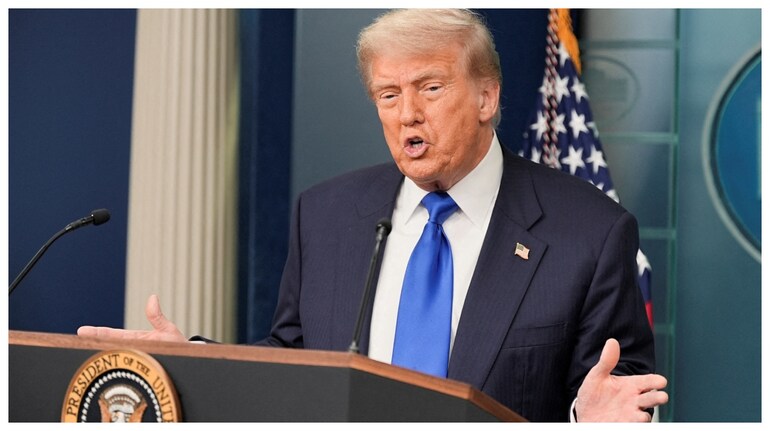
With US President Donald Trump pushing for passage of his sweeping tax and spending package by July 4, Republicans are scrambling to resolve deep divisions within their own ranks that could derail the bill’s progress in US Congress. The legislation, a central piece of Trump’s economic agenda, faces major sticking points over healthcare cuts, tax deductions, deficits, and clean energy policy, the Wall Street Journal reported.
Despite holding a narrow 53-47 Senate majority, Republicans are already contending with defections from Senators Thom Tillis of North Carolina and Rand Paul of Kentucky. The House, similarly divided, remains vulnerable to shifting allegiances—especially over contentious provisions like the SALT deduction cap.
SALT deduction cap pits red-state senators against blue-state House Republicans
One of the most politically fraught elements of the bill is a proposed hike in the state and local tax (SALT) deduction cap. The Senate version would raise the cap to $40,000 from $10,000 starting this year, with incremental increases through 2029 before reverting to the original limit in 2030. The higher cap phases down once household income exceeds $500,000.
The change comes at a cost of $179 billion over six years, and critics say it overwhelmingly benefits wealthy residents in high-tax Democratic states. Senator Mike Lee of Utah opposes the increase and wants the $10,000 cap made permanent. However, that risks alienating moderate House Republicans from blue states, several of whom have threatened to oppose the bill without a more generous SALT provision.
Deep Medicaid cuts and new work rules trigger intra-party tension
The bill also includes over $1 trillion in healthcare spending cuts, primarily targeting Medicaid. It imposes a new 80-hour monthly work requirement for some adults, while reducing “provider taxes” used by states to secure federal matching funds. These changes are creating divisions between fiscal conservatives and senators worried about their impact on state healthcare systems.
The proposal includes a $25 billion rural hospital fund to cushion the effects of the cuts, but Senator Susan Collins wants to double that to $50 billion, offset by restoring the 39.6% top income tax rate for ultra-high earners. Meanwhile, Senator Rick Scott of Florida is pushing to reduce federal Medicaid matching rates beginning in 2031, a move that could trigger automatic Medicaid rollbacks in several states.
Budget gimmicks draw fire from fiscal hawks
Perhaps the most glaring internal rift is over the bill’s impact on the federal deficit. The Congressional Budget Office estimates it would add $3.3 trillion in deficits over a decade. However, Republicans are using a budgetary manoeuvre that treats the bill as “baseline” policy, allowing them to claim a $508 billion deficit reduction instead.
This sleight of hand has drawn sharp criticism from conservative senators including Ron Johnson and Rand Paul. The optics were on full display Sunday, when Senator Lindsey Graham touted the deficit reduction figure with a handwritten sign, while Democrats displayed their own sign accusing Republicans of engineering a “$4.45 trillion deficit explosion.”
Clean energy rollbacks spark job fears among GOP senators
Trump’s bill also proposes ending tax credits for electric vehicles and phasing out incentives for wind, solar, and hydrogen projects by 2027. While popular with fiscal conservatives, these provisions have alarmed some Republican senators from states with clean energy industries.
Senators Joni Ernst and Chuck Grassley of Iowa, along with Lisa Murkowski of Alaska, are pushing to delay the phaseouts and repeal a surprise excise tax added late in negotiations. That tax would penalise clean-energy projects using foreign components, with industry leaders warning it could be difficult to disentangle supply chains from countries like China.
Clock ticking toward July 4 deadline
With just days remaining before Trump’s self-imposed Independence Day deadline, Senate Republicans must still agree on amendments before sending the bill back to the House, where any changes could trigger fresh opposition.
Even Trump has acknowledged the deadline may slip. “It’s not the end-all,” he said last week. “But we’d like to get it done by that time if possible.”
For now, the GOP’s legislative hopes hinge on resolving their own internal disputes—before time runs out.
Discover the latest Business News, Sensex, and Nifty updates. Obtain Personal Finance insights, tax queries, and expert opinions on Moneycontrol or download the Moneycontrol App to stay updated!
Find the best of Al News in one place, specially curated for you every weekend.
Stay on top of the latest tech trends and biggest startup news.