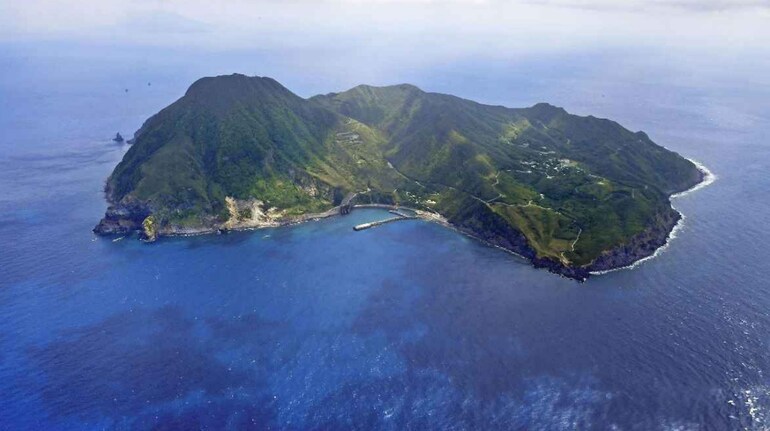
For over two weeks, the usually quiet Tokara Islands of southern Japan have been trembling, literally. A staggering over 1,000 earthquakes have rocked this remote archipelago since June 21, turning life into a relentless nightmare for its few hundred residents. Though most of the quakes have been low to moderate in magnitude, their sheer frequency has created a climate of anxiety, sleep deprivation, and deepening fear of a bigger catastrophe.
Located in one of the world’s most seismically volatile zones, the Pacific “Ring of Fire”, the Tokara Islands are no strangers to tremors, but experts say this level of persistent seismic activity is highly unusual and could be a precursor to something more dangerous. As scientists scramble to understand the cause, officials are urging residents to brace for the worst, and the rest of Japan to take this as a grim reminder of its ever-present seismic vulnerability.
What’s causing the swarm?
Located south of Kyushu within the Pacific “Ring of Fire”, the Tokara archipelago sits at the junction of multiple tectonic plates. According to the Japan Meteorological Agency (JMA), intense seismic activity began around June 21 and peaked on June 23, when 183 tremors were recorded in a single day. Over 1,000 quakes, most registering at least a level 1 on Japan’s Shindo scale, have shaken the island chain.
Experts attribute this swarm to pressure released along undersea faults and complex geological structures, with frequent low- to moderate-magnitude quakes being a known but unsettling feature of the region.
Life in constant tremor
With a total population of just around 700 spread across seven inhabited islands, residents are living on edge. Schools and homes tremble almost hourly, leaving many unable to sleep.
Officials reported that evacuations were briefly ordered for 89 residents on Akuseki Island when a quake reached shindo level 6 (which makes standing difficult), though the order was later stood down. Despite no major structural damage or tsunami warnings, authorities have urged residents to prepare for sheltering or evacuation in case the tremors intensify.
Broader patterns and risks
Swarms like this aren’t uncommon around volcanic island arcs like the Ryukyu Arc, but this year’s activity is the most intense since the 1995 Kobe quake, with nearly triple the number of quakes logged compared to the 346 tremors in September 2023. Similar swarms may precede stronger temblors, though historical data suggests they typically dissipate within weeks to a month.
Warnings of a mega quake
The broader concern is that this swarm could signal a larger crisis looming along another tectonic boundary. Japan’s government and seismologists have reiterated that the country faces a 75–82 percent chance of experiencing a devastating megaquake along the Nankai Trough within the next 30 years – an event that could hit social and economic systems with massive force.
In response, officials are expanding disaster preparedness, building evacuation structures, conducting drills, and reinforcing infrastructure. Still, residents on tiny islands like Tokara face unique vulnerabilities, such as delayed medical access and slow evacuations due to remoteness.
Discover the latest Business News, Sensex, and Nifty updates. Obtain Personal Finance insights, tax queries, and expert opinions on Moneycontrol or download the Moneycontrol App to stay updated!
Find the best of Al News in one place, specially curated for you every weekend.
Stay on top of the latest tech trends and biggest startup news.