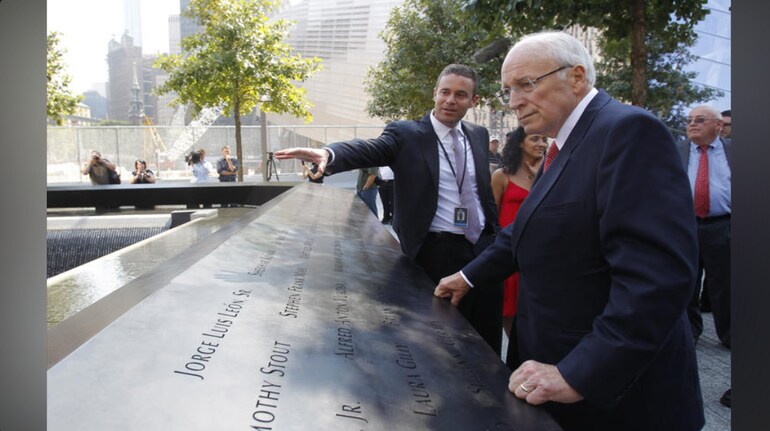
Dick Cheney’s death this week has reignited debate over one of his most enduring legacies: his drive to strengthen the presidency. As vice president under George W. Bush, Cheney waged a quiet but relentless effort to reclaim powers he believed Congress had wrongly stripped away after Watergate and the Vietnam War. Two decades later, President Trump is carrying that philosophy further, using the same legal and institutional openings Cheney helped create to consolidate control over the executive branch, the New York Times reported.
The roots of an imperial presidency
Cheney’s vision dated back to the 1970s, when he served as chief of staff to President Gerald Ford and watched Congress impose new limits on the White House. Convinced those reforms weakened the executive, he spent the rest of his career seeking to reverse them. In the Bush administration, he championed secrecy, expanded surveillance powers, and pushed the idea that a president could override laws in the name of national security — all in pursuit of restoring what he saw as the rightful strength of the Oval Office.
From Bush’s lawyer’s office to Trump’s West Wing
Working with his chief of staff David Addington, Cheney advanced the “unitary executive” theory: that Congress cannot restrict a president’s control over executive officials. The doctrine guided Bush-era assertions of power — from warrantless wiretaps to classified energy policy meetings — and it now underpins Trump’s own actions. Since returning to office, Trump has removed inspectors general, fired independent regulators, and pressed courts to validate his sweeping authority over the federal bureaucracy.
Enemies with overlapping goals
Although Cheney condemned Trump as “a greater threat to our republic than anyone in history,” their approaches to power have proved strikingly aligned. Trump has used presidential immunity, emergency declarations, and selective prosecutions to erode the same checks Cheney once fought to weaken. His aides and allies in a conservative Supreme Court majority — shaped partly by Bush-era nominations vetted by Cheney — have reinforced the president’s dominance over Congress and the judiciary.
The long arc of Cheney’s project
From Iran-contra to the post-9/11 era, Cheney argued that the executive must act decisively, even unilaterally, in matters of war and security. He dismissed the War Powers and impoundment limits of the 1970s as unconstitutional intrusions on the commander in chief. Today, Trump’s defiance of those same statutes — including his claim that airstrikes on suspected smugglers don’t trigger the War Powers Resolution — shows how far Cheney’s logic has travelled.
A legacy fulfilled
Cheney once said he wanted to leave the presidency “in better shape than we found it.” Trump’s White House has taken that mission to its outer edge, testing whether a president can operate almost beyond congressional or judicial constraint. The two men may have been adversaries, but Trump’s muscular vision of executive power stands as the ultimate extension of Cheney’s lifelong belief that America needs a strong, unapologetic presidency.
Discover the latest Business News, Sensex, and Nifty updates. Obtain Personal Finance insights, tax queries, and expert opinions on Moneycontrol or download the Moneycontrol App to stay updated!
Find the best of Al News in one place, specially curated for you every weekend.
Stay on top of the latest tech trends and biggest startup news.