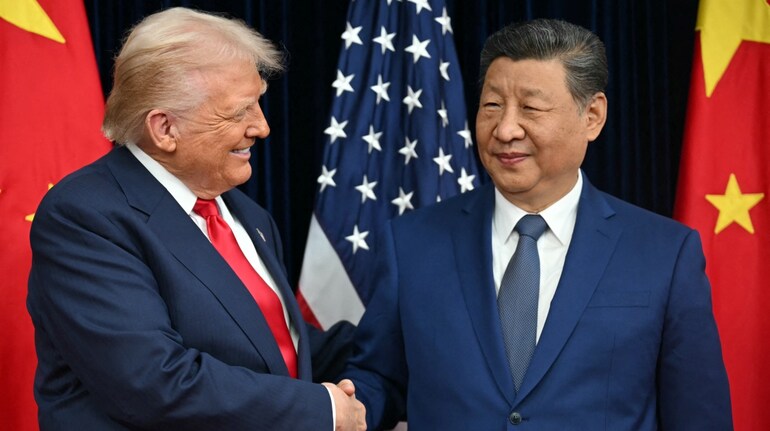
Days after the meeting between Chinese President Xi Jinping and US President Donald Trump in South Korea, Beijing has issued a fresh warning to Washington, urging it to respect China’s “four red lines” to prevent further strain in bilateral relations.
Speaking at the US-China Business Council in Shanghai on Monday, China’s ambassador to the United States, Xie Feng, outlined the boundaries that Beijing considers non-negotiable.
“Taiwan, democracy and human rights, path and system, and development rights are China’s four red lines. We hope the US side will avoid crossing them and causing trouble. Dialogue is better than confrontation, cooperation is better than a zero-sum game, and stability is better than volatility,” Xie said in his virtual address to American and Chinese business leaders.
Beijing’s message after the Xi–Trump summit
The remarks come shortly after Xi and Trump met on the sidelines of an international summit in South Korea, their first interaction since Trump returned to the White House earlier this year. The meeting was seen as an attempt to stabilise ties between the world’s two largest economies following months of heightened tension over trade, Taiwan, and technology.
China’s latest statement signals that Beijing remains wary of Washington’s positions on sensitive domestic issues. “China and the US do not always see eye to eye with each other, and it is normal to have frictions now and then. The most important thing is to respect each other’s core interests and major concerns,” Xie said.
He warned that mutual respect and consistency would be essential to prevent further deterioration in relations. “It would be unacceptable to say one thing but do another, cause any new disruption, make zero-sum calculations,” he added.
Longstanding friction over Taiwan and human rights
China has repeatedly voiced anger over Washington’s unofficial relationship with Taiwan, which Beijing considers a breakaway province. The United States continues to maintain arms sales and informal diplomatic contacts with Taipei, moves that China sees as interference in its internal affairs.
According to a report by CNN, Beijing has also been sensitive to US criticism of its human rights record and restrictions on freedoms within its political system. American officials have often condemned China’s actions in Hong Kong, Xinjiang, and Tibet, which Beijing views as attempts to undermine its sovereignty.
Call to follow through on economic commitments
Xie also highlighted the need to translate the recent summit’s pledges into action. He urged Washington to implement the understandings reached during the Xi–Trump meeting and the earlier economic and trade talks in Kuala Lumpur.
“The pressing priority is to follow up on the consensus reached between the two Presidents at their meeting and the joint arrangements reached during the economic and trade talks in Kuala Lumpur, so as to reassure both our countries and the world economy with concrete actions and outcomes. It would be unacceptable to say one thing but do another, cause any new disruption, make zero-sum calculations, let alone try to profit at others’ expense,” the ambassador emphasised.
Beijing’s message appears to be an attempt to set clear boundaries for the renewed US–China engagement. While both sides have expressed interest in maintaining dialogue, the reiteration of these “red lines” shows China’s growing assertiveness in defining the terms of its relationship with Washington.
Discover the latest Business News, Sensex, and Nifty updates. Obtain Personal Finance insights, tax queries, and expert opinions on Moneycontrol or download the Moneycontrol App to stay updated!
Find the best of Al News in one place, specially curated for you every weekend.
Stay on top of the latest tech trends and biggest startup news.