
Artificial intelligence is no longer a futuristic concept in Chinese classrooms. It has quietly become part of the daily school routine, reshaping how students are taught and how teachers work.
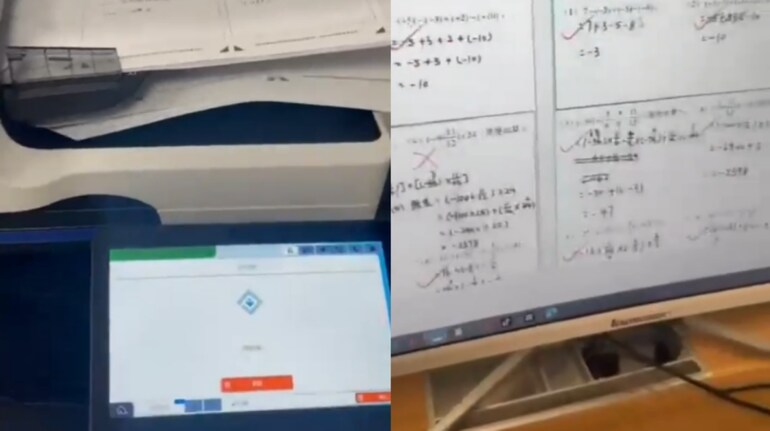
In several Chinese cities, AI systems are now being used to check students’ homework almost instantly. By the time students finish their classes, their handwritten assignments can already be scanned, evaluated, graded and returned with feedback.
Videos circulating online show how the system works. Advanced neural networks scan handwritten notebooks, recognise individual writing styles, spot errors, assign marks and generate detailed feedback within seconds. The process, which once took teachers hours, is completed in moments.
🇨🇳⚡The future of education is here! Chinese schools are now using AI to check homework Neural networks scan students' handwritten notebooks, detect errors, assign grades, and even print annotated versions with feedback and recommendations. For essays and creative tasks,… pic.twitter.com/uwQ13x3Ira— NEXTA (@nexta_tv) January 29, 2026
The technology is already in use across more than 110 schools, mainly in Shanghai but also in Beijing and other major urban centres. Devices such as the SPARK AI Grader P30, developed by iFlytek, are reportedly capable of processing around 26 pages per minute. According to school administrators, this has reduced teachers’ grading workload by nearly half, allowing them to spend more time on classroom teaching, lesson planning and student interaction.
Despite the growing role of AI, teachers have not been removed from the process entirely. Human involvement remains crucial for tasks that require judgment and creativity. Essays, open-ended answers and creative writing assignments are still reviewed by teachers, who assess originality, expression and critical thinking. Schools say the goal is not to replace educators but to free them from repetitive tasks.
In many schools, AI-driven assessment is no longer optional. It has become a standard part of the education system, embedded into everyday academic routines. Students are increasingly accustomed to receiving machine-generated feedback alongside teacher guidance.
However, the rapid expansion of AI in education has also highlighted gaps within China’s schooling system. According to Chinese media reports, rural and economically weaker regions often lack the funding and infrastructure needed to adopt such technologies. Shortages of qualified teachers trained to work with AI systems present another challenge, slowing adoption outside major cities.
As China pushes ahead with AI-driven education, the divide between well-funded urban schools and under-resourced rural institutions remains a key concern.
Discover the latest Business News, Sensex, and Nifty updates. Obtain Personal Finance insights, tax queries, and expert opinions on Moneycontrol or download the Moneycontrol App to stay updated!





Find the best of Al News in one place, specially curated for you every weekend.
Stay on top of the latest tech trends and biggest startup news.