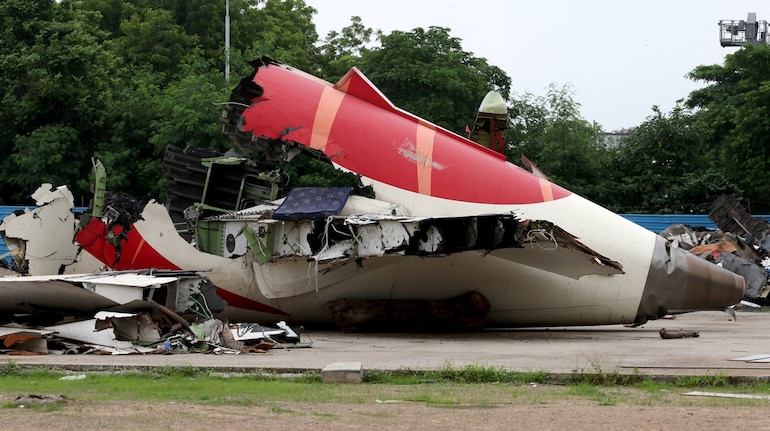

An aviation safety watchdog has accused Boeing of overlooking deep-rooted technical flaws in the 787 Dreamliner fleet, alleging that the aircraft which crashed in Ahmedabad last year had a long history of system failures that warrant closer scrutiny beyond pilot actions.
The Foundation for Aviation Safety, a US-based NGO, has submitted a detailed presentation to the US Senate Permanent Subcommittee on Investigations, which last year examined what it described as Boeing’s “broken safety culture”. The Ahmedabad crash killed 260 people and is currently under investigation by India’s Aircraft Accident Investigation Bureau (AAIB), with assistance from US authorities.
According to the Foundation, its concerns are not limited to the Ahmedabad accident. The group claims to have identified more than 2,000 reports of technical issues across hundreds of Boeing 787 aircraft operating in the United States, Canada and Australia. These claims are based on internal documents the organisation says it has reviewed.
The Foundation is led by Ed Pierson, a former senior manager at Boeing’s Seattle factory, who has publicly raised concerns for years about quality control and production pressures at the company. In its submission to US lawmakers, the group warned that concentrating narrowly on pilot actions risks obscuring “systemic engineering and manufacturing problems”.
The aircraft involved in the Ahmedabad crash, registered as VT-ANB, was among the earliest 787s delivered to Air India, entering service in early 2014. The Foundation alleges that the jet experienced technical malfunctions from its first day of operations. The reported issues include electronics and software faults, tripped circuit breakers, wiring damage, short circuits, loss of electrical current and overheating in power systems.
One incident highlighted in the submission dates back to January 2022, when a P100 power distribution panel, a critical component that distributes high-voltage power from the engines, allegedly caught fire during a flight descending into Frankfurt. According to the group, cockpit warnings alerted the crew, and inspections later found damage severe enough to require full replacement of the panel.
The 787 relies far more heavily on electrical systems than earlier aircraft generations, replacing many mechanical components to improve fuel efficiency. This design philosophy has previously drawn scrutiny. In 2013, battery fires on Japan Airlines and All Nippon Airways Dreamliners led regulators to temporarily ground the global fleet.
Following the Ahmedabad crash, the AAIB released a preliminary report summarising early findings without assigning blame. One section sparked controversy by stating that shortly after take-off, fuel control switches were moved from “run” to “cut-off”, cutting fuel supply to the engines. The switches were later reset, but the aircraft could not recover in time.
A cockpit voice recording included in the report captured one pilot asking why the cut-off switch was activated, with the other responding that he had not done so. This led to public speculation about pilot error, which has been criticised by victims’ families, pilots’ unions and safety experts as premature.
Boeing has repeatedly stated that the 787 remains safe, noting that the aircraft had flown for nearly 15 years without a fatal accident before the Ahmedabad tragedy. However, safety advocates argue that the full investigation must carefully examine the aircraft’s technical history before drawing conclusions.
The final findings of the AAIB probe are still awaited.
Discover the latest Business News, Sensex, and Nifty updates. Obtain Personal Finance insights, tax queries, and expert opinions on Moneycontrol or download the Moneycontrol App to stay updated!
Find the best of Al News in one place, specially curated for you every weekend.
Stay on top of the latest tech trends and biggest startup news.