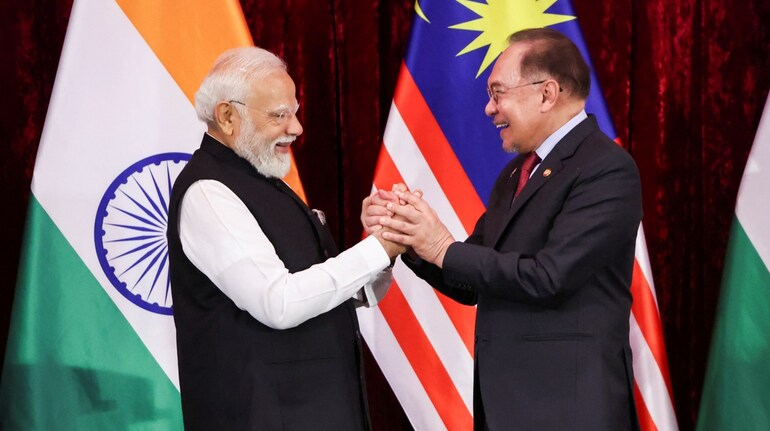

Prime Minister Narendra Modi’s visit to Malaysia has triggered visible unease in Pakistan, as India steadily strengthens its diplomatic and strategic presence in Southeast Asia and the wider Indo-Pacific. While the visit focused on deepening India–Malaysia ties across security cooperation, economic engagement, and regional stability, New Delhi’s messaging was pointed and unmistakable.
Speaking on terrorism, PM Modi made it clear that there can be “no double standards and no compromise on terrorism,” a statement delivered on Malaysian soil but resonating far beyond bilateral optics. The message did not name Pakistan, yet Islamabad appeared to recognise itself in the subtext.
The timing and tone of the remarks, coming amid India’s expanding Act East outreach, underscored New Delhi’s intent to build principled partnerships rooted in consistency, trust, and shared security concerns.
A terrorism message Pakistan could not ignore
During his engagements in Malaysia, PM Modi reiterated India’s long-standing position that terrorism must be confronted uniformly, without selective outrage or geopolitical convenience. Emphasising that global peace depends on credibility and consistency, India’s leadership pushed back against the practice of distinguishing between “good” and “bad” terrorists.
For Pakistan, which continues to face international scrutiny over terror financing, cross-border militancy, and selective counter-terror commitments, the message struck a nerve. Diplomats note that Islamabad appeared to read Modi’s words not as abstract rhetoric, but as a signal that India’s diplomatic narrative on terrorism is gaining wider acceptance across Asia.
Pakistan’s hurried response reveals strategic discomfort
Within days of Modi’s Malaysia visit, Pakistan moved quickly to project relevance in overlapping strategic spaces. Islamabad dispatched its Navy Chief, Admiral Naveed Ashraf, on a high-profile regional outreach tour, highlighting maritime security cooperation and participation in joint naval frameworks.
The haste was telling. Analysts say the move appeared less like a carefully calibrated strategy and more like damage control, aimed at countering India’s rising profile rather than advancing Pakistan’s own long-term regional vision.
Pakistan Navy statements spoke of operational cooperation and capacity building, but the sudden burst of naval diplomacy contrasted sharply with India’s sustained political and economic engagement across Southeast Asia.
India’s Act East diplomacy gains depth
PM Modi’s Malaysia visit also reinforced the broader momentum behind India’s Act East Policy. Engagements with Malaysian Prime Minister Anwar Ibrahim highlighted shared interests in regional stability, counter-terrorism, and a rules-based Indo-Pacific order.
Unlike Pakistan’s largely symbolic outreach, India’s approach combines political trust, economic cooperation, and security collaboration. This layered engagement has helped New Delhi build durable partnerships rather than episodic visibility.
Observers note that India’s credibility on counter-terrorism, coupled with its development-first diplomacy, has increasingly positioned it as a dependable partner in the region.
Pakistan’s pattern of reactive diplomacy
Islamabad’s response to Modi’s Malaysia outreach fits a familiar pattern. Each time India strengthens ties with a key regional partner, Pakistan follows with hurried visits and amplified claims of relevance.
This cycle reflects deeper strategic anxiety. Rather than addressing the structural reasons behind its diplomatic isolation, including its terrorism record, Pakistan continues to rely on optics-driven manoeuvres that struggle to translate into influence.
As India expands its footprint across Southeast Asia and the Indo-Pacific, Pakistan’s reactive posture only sharpens the contrast between proactive diplomacy and perpetual catch-up.
Discover the latest Business News, Sensex, and Nifty updates. Obtain Personal Finance insights, tax queries, and expert opinions on Moneycontrol or download the Moneycontrol App to stay updated!





Find the best of Al News in one place, specially curated for you every weekend.
Stay on top of the latest tech trends and biggest startup news.