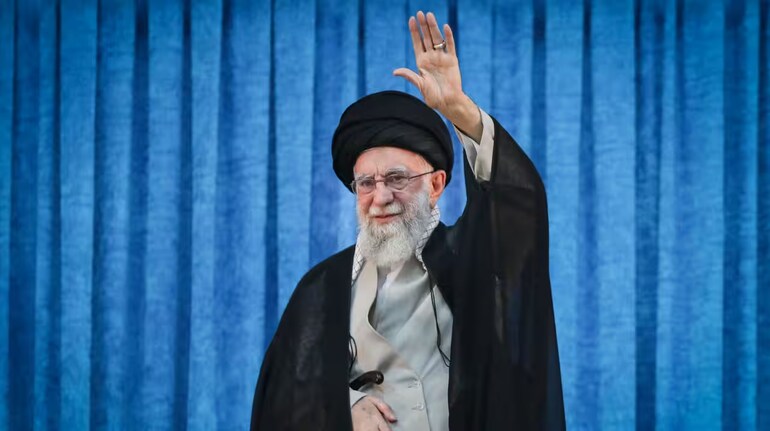
The death of Ali Khamenei has dropped Iran into an awkward, exposed moment. The constitution is clear on paper: the Assembly of Experts, a body of 88 clerics, chooses the next supreme leader. In practice, the system has never been designed to handle succession under military pressure, with bombs falling and the outside world openly debating regime change.
The last time this process was used, in 1989, Iran rushed to appoint Khamenei himself after the death of Ruhollah Khomeini. Speed mattered then, too — but the country was not at war, and the state still had room to improvise. That room is far smaller now.
CNN complied a shortlist of heirs, mapping of Iran’s internal fault lines.
Mojtaba Khamenei: Power without legitimacy
Mojtaba Khamenei has long been treated as the unspoken favourite. He is close to the Islamic Revolutionary Guard Corps, has influence inside the Basij, and was widely believed to manage access to his father in later years.
But elevating him would force the Islamic Republic to swallow something it has always denounced: dynastic succession. Mojtaba is not a senior cleric, holds no formal office and has already been sanctioned by the United States. Choosing him would signal continuity of control, but also confirm critics’ claims that the system has quietly morphed into hereditary rule.
Alireza Arafi: The system man
Alireza Arafi is the kind of candidate institutions like. He sits inside the Assembly of Experts, has served on the Guardian Council and runs Iran’s seminary system. Khamenei trusted him with sensitive bureaucratic roles.
What Arafi lacks is force. He does not command the security establishment, inspire public loyalty or project authority beyond clerical circles. In normal times, that might be survivable. In wartime, it looks like a liability.
Mohammad Mehdi Mirbagheri: Ideology turned up to eleven
Mohammad Mehdi Mirbagheri is what the system produces when confrontation becomes the point. A hardliner from Qom and a member of the Assembly of Experts, he speaks openly about conflict with the West as a religious necessity.
For factions that believe Iran is already in an existential struggle, Mirbagheri offers clarity. For anyone worried about economic collapse, internal unrest or diplomatic isolation, he represents acceleration — not stability.
Hassan Khomeini: The name without the muscle
Hassan Khomeini carries unmatched symbolic capital. As the founder’s grandson, he embodies the revolution’s origins.
That symbolism has never translated into power. He has been blocked from the Assembly of Experts, holds no security backing and is viewed as relatively moderate. Elevating him would be a gesture toward legitimacy — and a gamble that the IRGC would tolerate it. There is little evidence it would.
Hashem Hosseini Bushehri: Close to the process, distant from power
Hashem Hosseini Bushehri knows how succession works because he sits at its centre as first deputy chairman of the Assembly of Experts. He is loyal, discreet and institutionally embedded.
But succession in Iran is not won by procedure alone. Without visible support from the security apparatus, Bushehri risks looking like a caretaker rather than a leader.
The real decision-makers are not all clerics
What the constitution does not spell out is the veto power of the IRGC. Any supreme leader who cannot coexist with — or control — the Guard Corps will struggle to last. That reality narrows the field dramatically.
The Assembly of Experts may convene, but its choice will reflect quiet negotiations with commanders who care less about theological rank than about survival, sanctions, and internal order.
A system built for certainty, facing uncertainty
Iran’s leadership model was designed around longevity. Khamenei ruled for nearly 40 years. The idea of frequent transitions was never part of the plan.
Now the regime must choose quickly, under fire, with no consensus candidate and no obvious compromise figure. Whoever emerges will inherit a system under maximum stress — and far less personal authority than the man he replaces.
This is not just a leadership change. It is the first real test of whether the Islamic Republic can reproduce itself without the figure who held it together.
Discover the latest Business News, Sensex, and Nifty updates. Obtain Personal Finance insights, tax queries, and expert opinions on Moneycontrol or download the Moneycontrol App to stay updated!
Find the best of Al News in one place, specially curated for you every weekend.
Stay on top of the latest tech trends and biggest startup news.