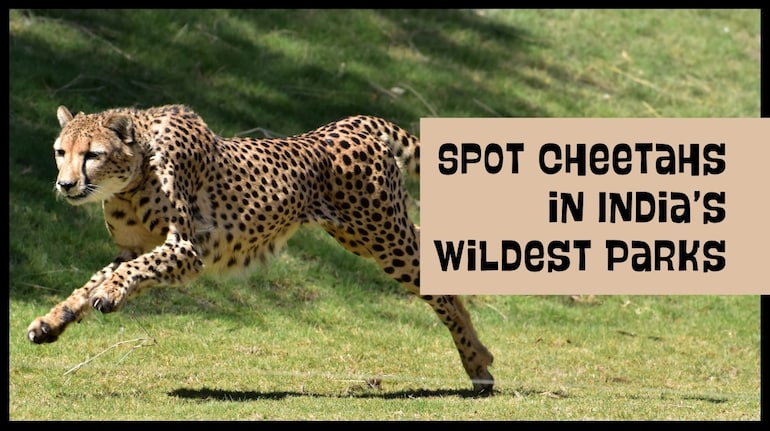
The cheetah, nature’s fastest land animal, is making a spectacular comeback in India after decades, reclaiming its place in the wild. Sleek, powerful, and awe-inspiring, these magnificent predators are once again roaming open grasslands and savannahs, thrilling wildlife enthusiasts and safari lovers alike.
Every year December 4, International Cheetah Day 2025, celebrates this remarkable revival, highlighting India’s ambitious reintroduction projects.
From the sprawling plains of Madhya Pradesh to the vast Banni Grasslands of Gujarat, visitors now have a rare opportunity to witness cheetahs in their natural habitat—a truly unforgettable experience for photographers, nature lovers, and adventure seekers.
1. Kuno National Park, Madhya Pradesh
Kuno National Park is India’s flagship cheetah sanctuary and the site of the country’s first-ever cheetah safari, launched on October 1, 2025. Its vast grasslands, open forests, and managed prey populations make it an ideal habitat for these majestic cats. Safaris are held early morning and late afternoon—the best times to spot cheetahs as they hunt, patrol, or roam their territory.
This landmark initiative combines adventure, conservation, and education, allowing tourists, photographers, and nature enthusiasts to observe cheetahs in their natural environment—a once-in-a-lifetime wildlife experience.
2. Gandhi Sagar Wildlife Sanctuary, Madhya Pradesh
Gandhi Sagar is poised to become India’s next cheetah reintroduction site. The sanctuary’s restored habitats and open savannah-like terrain closely resemble African landscapes, providing an ideal setting for cheetahs. As conservation efforts expand, visitors can look forward to exciting future sightings in this promising reserve.
3. Nauradehi Wildlife Sanctuary, Madhya Pradesh
Nauradehi offers sweeping grasslands with minimal human disturbance, making it a critical site for cheetah movement. Part of India’s broader rewilding strategy, the sanctuary is emerging as a prime destination for visitors eager to witness cheetahs thriving in the wild.
4. Banni Grasslands, Gujarat
The Banni Grasslands near the Great Rann of Kutch are Asia’s largest grasslands and one of ten sites selected under Project Cheetah for reintroduction. A 600-hectare enclosure has been established for the initial ten cheetahs, supported by an enhanced prey base including chital and sambar.
Banni’s unique ecosystem blends wetlands with vast grasslands, resembling African savannahs. Sparse, rainfall-dependent vegetation, scattered trees, and scrublands create the perfect hunting grounds. The region is culturally vibrant, home to the semi-nomadic Maldhari community, who preserve traditional grazing practices and manage livestock.
Cheetahs, absent from Gujarat since the 1940s, are now returning thanks to dedicated efforts by the Gujarat Forest Department and the Central Zoo Authority. Together with the Kutch Desert Sanctuary, Banni covers around 5,000 km², providing ample space for cheetahs to roam freely.
Why These Destinations Are Special
These parks and grasslands are more than wildlife hotspots—they are living conservation projects. Visitors get the unique opportunity to witness history as India restores lost predator populations while maintaining balanced ecosystems. With open landscapes, healthy prey populations, and expert-guided safaris, spotting cheetahs in the wild becomes an unforgettable experience.

Discover the latest Business News, Sensex, and Nifty updates. Obtain Personal Finance insights, tax queries, and expert opinions on Moneycontrol or download the Moneycontrol App to stay updated!
Find the best of Al News in one place, specially curated for you every weekend.
Stay on top of the latest tech trends and biggest startup news.