




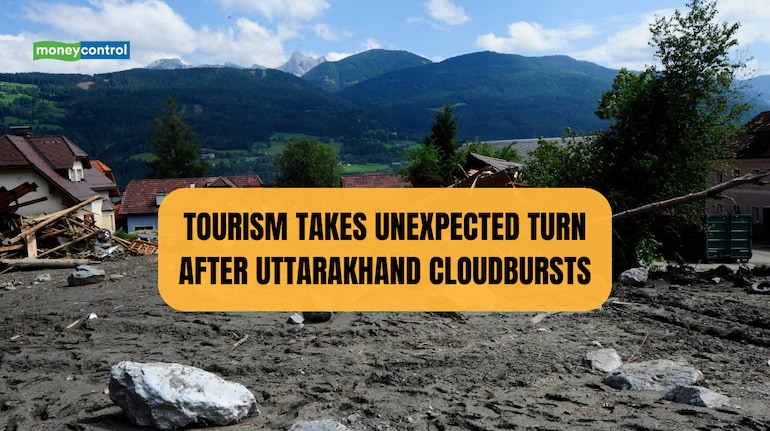
The recent cloudbursts and flash floods in Dehradun and Mussoorie left more than just swollen rivers and broken roads. They reshaped the travel map for countless weekenders. For decades, the Himalayan foothills have been the default escape for families, couples, and corporate groups looking for a quick getaway from Delhi NCR. But this September, safety fears and accessibility challenges have triggered an unplanned migration of tourists toward Corbett, Rajasthan, and Madhya Pradesh.
“It has been a very unusual season for us,” says Arindam Bahel, General Manager of The Fern Brentwood, Mussoorie. “We had near full occupancy in early September. Overnight, cancellations poured in as the rains intensified. The mountains, which are usually our biggest strength, became a cause of worry for our guests. It is heartbreaking to see the livelihoods of so many linked to tourism impacted this way.”
Sanjay Sharma, Advisor at Kanatal Hotel Association, echoes this sentiment, noting how fragile the region’s hospitality ecosystem is when climate disruptions strike. “Tourism in Uttarakhand is deeply interwoven with small communities such as drivers, local artisans, café owners, and trekking guides. A week of cancellations is not just numbers on a spreadsheet, it is meals off the plates of families. That is the bigger story we often miss.”
Yet, while Mussoorie and Dehradun absorb the brunt of nature’s fury, other destinations are unexpectedly thriving.
At The Golden Tusk in Corbett, the phones have not stopped ringing. “Travellers still want their weekend breaks, but they want safety and access first,” says says Aniruddh Lakhotia from the resort. “Proximity to NCR, wildlife appeal, and all-weather accessibility have suddenly made Corbett the hotspot of the season. Occupancy rates are hitting numbers we would usually see in peak winter.”
The ripple has extended further across Rajasthan and Madhya Pradesh. Manish Goyal, founder of Stotrak Hospitality, who manages boutique resorts across Rajasthan, notes a sharp demand spike. “Rajasthan has always been a winter darling, but September was not traditionally our strongest month. This year, bookings surged as tourists rerouted from the hills. For us, it is proof that traveller sentiment can pivot overnight, and hospitality brands need agility to ride that wave.”
Similarly, at Narwar Lake Resort in Gwalior, bookings have climbed rapidly. “The lake, wildlife, and easy connectivity make it a natural alternative,” shares Navneet Sharma, MD, Lion Group, That Manages Narwar Lakefront Resort, near Madhav National Tiger Reserve. “Travellers who would have never thought of Gwalior for a short break are now discovering it, and that discovery may outlast this season.”
This shift paints a larger picture. India’s domestic travel landscape is increasingly shaped by climate events. From cloudbursts in Uttarakhand to heatwaves in Rajasthan, the hospitality industry is learning to navigate an era where weather is not just background scenery but a decisive factor in guest behavior.
As Sharma sums up, “Nature is reminding us that travel is no longer about fixed destinations. The future belongs to destinations and brands that can adapt, diversify, and reassure.”
Discover the latest Business News, Sensex, and Nifty updates. Obtain Personal Finance insights, tax queries, and expert opinions on Moneycontrol or download the Moneycontrol App to stay updated!
Find the best of Al News in one place, specially curated for you every weekend.
Stay on top of the latest tech trends and biggest startup news.