






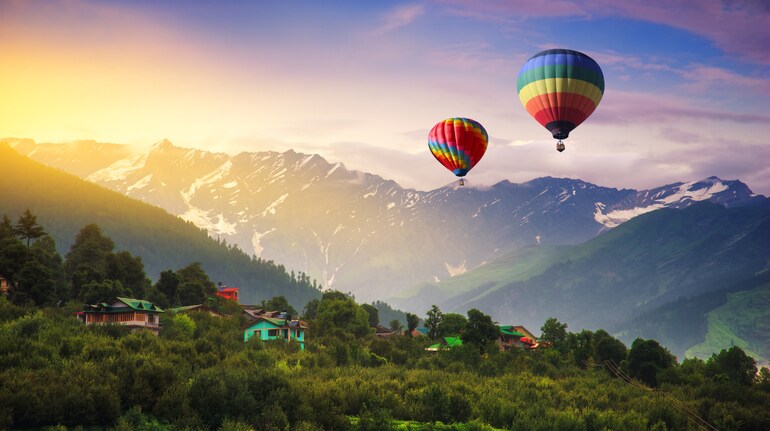

Rising geopolitical tensions in the Middle East are beginning to reshape summer travel plans for Indian tourists, with many swapping international holidays for domestic destinations ranging from Rajasthan’s deserts to the Northeast’s cultural hubs.
Early summer booking trends on travel platforms indicate a noticeable pivot towards domestic travel as uncertainty around international routes and rising airfares prompt travellers to stay closer to home.
A spokesperson for travel platform Cleartrip said its travel trends tracker shows a steady rise in domestic bookings for the March–May period compared to last year.
“Last summer was dominated by traditional hill stations like Manali and Ooty and pilgrimage destinations like Varanasi,” the spokesperson said. “This year, however, travellers are showing a strong interest in destinations offering unique cultural and geographical experiences.”
Among the biggest gainers is Jaisalmer, which has seen bookings surge by more than 300 percent, followed by emerging destinations like Jalgaon.
States such as Himachal Pradesh, Rajasthan, Kerala, and Goa are seeing a notable increase in interest from travellers seeking safer and more predictable options, Rikant Pittie, CEO and co-founder of EaseMyTrip, told Moneycontrol.
On travel platform WanderOn too destinations including Himachal Pradesh, Uttarakhand, Kashmir, Goa, and parts of the Northeast are witnessing strong traction.
"We are seeing nearly a 20–30 percent increase in inquiries and bookings for these locations over the past few weeks, particularly for group departures and long-weekend trips," Govind Gaur, CEO, WanderOn, said.
Northeast emerges as a travel hotspot
One of the most striking trends this summer is the surge in interest for the Northeast.
Cities such as Shillong, Itanagar, Jorhat, Dimapur, Imphal, and Guwahati are all recording double-digit growth in bookings, reflecting a growing appetite among Indian travellers to explore lesser-known parts of the country.
Other destinations seeing strong interest include Kozhikode and Leh, highlighting a broader shift away from traditional tourist circuits.
International uncertainty driving the shift
Industry executives say geopolitical developments in West Asia are influencing traveller behaviour, especially for destinations connected to the Gulf.
“Families who had initially planned trips to Dubai or Europe are now exploring domestic destinations for cultural and scenic experiences,” said Pittie.
Airlines have reported around 20–25 percent cancellations and rescheduling on affected international routes, which has naturally pushed some travellers to look for alternatives within India.
The uncertainty is also being amplified by rising international airfares.
According to Gaur, routes to Europe and parts of West Asia have seen airfare increases of 25–40 percent due to longer flight paths and reduced connectivity.
Before the crisis, a typical return fare for Bengaluru–Copenhagen route was Rs 50,000–Rs 70,000
After disruptions, airfares on most of the available flights is now over Rs 1 lakh.
“With uncertainty around air routes and rising international fares, many Indians are choosing domestic getaways instead,” Gaur said.
A trip to Dimapur will cost a traveller around Rs 25,000 for a one way flight from Bengaluru.
However, Pittie noted that the shift is more cautious than widespread, with many travellers monitoring the situation before confirming new plans.
MakeMyTrip's co-founder and group CEO Rajesh Magow also said that disruptions rarely lead to travellers abandoning plans altogether.
“Time and again we’ve seen that when disruptions occur, people don’t give up on their trips—they simply choose a different destination as travel has become an essential part of how people celebrate, recharge and live.”
Southeast Asia also benefits
The shift is not limited to domestic travel. Some travellers are also redirecting plans toward Southeast Asia.
Cleartrip said bookings for the Philippines have risen threefold, while demand remains strong for Indonesia and Thailand.
A boost for India’s tourism sector
The surge in domestic travel demand could translate into a strong summer for India’s tourism industry.
According to Pittie, hotel occupancy during peak travel months in the summer holiday period could reach 70–75 percent, with average room rates touching around Rs 8,000 per night.
While the surge may put pressure on hotel inventory and transport availability during peak periods, Gaur said the trend is a positive one for the domestic tourism ecosystem.
“Higher travel demand means stronger business for online travel platforms, hotels, transport operators and local attractions,” Pittie said. “It’s ultimately a boost for India’s tourism economy.”
Discover the latest Business News, Sensex, and Nifty updates. Obtain Personal Finance insights, tax queries, and expert opinions on Moneycontrol or download the Moneycontrol App to stay updated!
Find the best of Al News in one place, specially curated for you every weekend.
Stay on top of the latest tech trends and biggest startup news.










