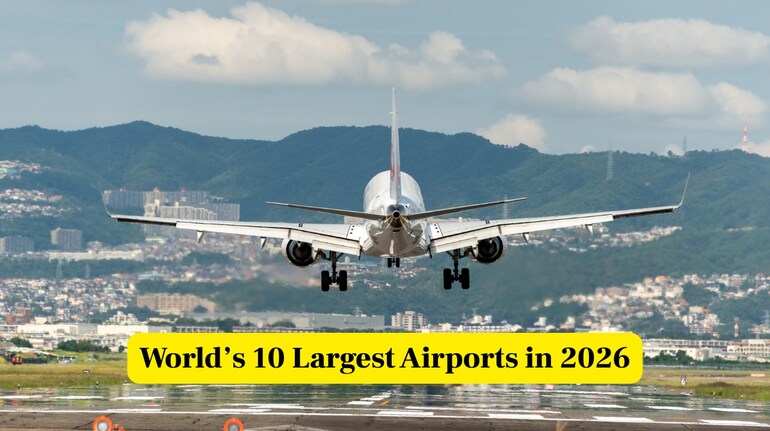

Airports are more than just terminals and runways—they are sprawling cities in their own right. Some are so massive that they cover more land than entire countries or metropolitan areas. From deserts to farmlands, these aviation giants stretch across tens—and even hundreds—of square kilometres.
Based on data compiled by World Population Review, this list ranks the largest airports in the world in 2026 by total land area. The ranking is determined purely by physical size, not passenger traffic or flight volume. It includes runways, terminals, cargo zones, support facilities and undeveloped land reserved for future expansion.
Here’s a look at the 10 biggest airports on the planet by sheer footprint.
1. King Fahd International Airport, Saudi Arabia (776 sq km)
Holding the title of the largest airport in the world by a massive margin, King Fahd International Airport near Dammam spans an astonishing 776 square kilometres. Much of this vast desert land is reserved for long-term expansion, making the airport larger than several small countries.
2. Denver International Airport, USA (137.8 sq km)
The largest airport in North America, Denver International Airport’s enormous footprint allows it to operate long runways ideal for large aircraft and challenging weather conditions. Its size also gives it ample room for future growth.
3. Kuala Lumpur International Airport, Malaysia (100 sq km)
Located in Sepang, Kuala Lumpur International Airport (KLIA) covers 100 square kilometres. It serves as a major aviation hub for Southeast Asia, with multiple runways and expansive support zones anchoring Malaysia’s global connectivity.
4. Istanbul Airport, Turkey (76.5 sq km)
One of the world’s newest mega-airports, Istanbul Airport was built to position Turkey as a global aviation crossroads. Spanning 76.5 square kilometres, it connects Europe, Asia and the Middle East through a single, high-capacity hub.
5. Dallas/Fort Worth International Airport, USA (69.7 sq km)
Straddling Dallas and Fort Worth, DFW Airport is so large it functions almost like a small city. With its own postal code, internal road network and multiple terminals, it ranks among the world’s largest by land area.
6. Orlando International Airport, USA (53.8 sq km)
A key gateway for Florida’s tourism industry, Orlando International Airport’s expansive footprint reflects the infrastructure needed to handle massive seasonal travel surges, especially during peak holiday periods.
7. Washington Dulles International Airport, USA (48.6 sq km)
Serving the US capital region, Dulles International Airport combines a large land area with one of aviation’s most recognisable terminal designs. Its size allows for long runways and future capacity expansion.
8. Beijing Daxing International Airport, China (46.6 sq km)
Famous for its starfish-shaped terminal, Beijing Daxing International Airport was built to ease congestion at Beijing’s older airports. Its vast area supports long-term passenger growth and next-generation aviation needs.
9. George Bush Intercontinental Airport, USA (44.5 sq km)
Houston’s primary international airport spreads across 44.5 square kilometres north of the city. It houses multiple passenger terminals alongside major cargo and logistics facilities.
10. Shanghai Pudong International Airport, China (40 sq km)
Rounding out the list, Shanghai Pudong International Airport covers 40 square kilometres. It plays a crucial role in supporting Shanghai’s status as a global financial, trade and logistics hub, with significant space dedicated to cargo operations.

Discover the latest Business News, Sensex, and Nifty updates. Obtain Personal Finance insights, tax queries, and expert opinions on Moneycontrol or download the Moneycontrol App to stay updated!
Find the best of Al News in one place, specially curated for you every weekend.
Stay on top of the latest tech trends and biggest startup news.