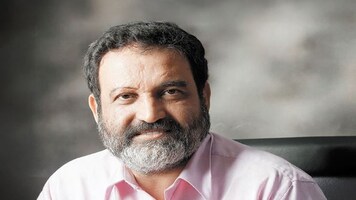
Microsoft’s AI chief Mustafa Suleyman has disclosed that the company was contractually restricted from developing its own artificial general intelligence systems for years due to an agreement with OpenAI. The clause, which barred Microsoft from independently pursuing AGI until 2030, has only recently been removed, marking a major turning point in the company’s AI strategy.
In an interview with Business Insider, Suleyman said the older agreement forced Microsoft to rely heavily on OpenAI’s frontier models and prevented it from building its own large-scale systems. Microsoft focused instead on supporting OpenAI with compute, refining OpenAI’s models for specific products, and developing only smaller models in-house. Suleyman said the company now needs full autonomy if it intends to lead the next era of AI development. “Microsoft needs to be self-sufficient in AI,” he said, adding that it must train frontier models using its own data and compute at the highest level.
New terms and conditions apply
The partnership has since been renegotiated, granting Microsoft the freedom to pursue AGI alone or with outside collaborators. That shift has triggered the creation of Microsoft AI Superintelligence, a new internal division tasked with building frontier-grade research capabilities. The group is focusing on solving hard problems such as continual learning and transfer learning — steps that push AI closer to systems that learn and adapt in human-like ways.
The change represents a break from Microsoft’s previous posture, where it largely positioned itself as OpenAI’s strategic backer while integrating GPT models into Azure and its core software products. Now the company is positioning itself as a direct competitor to OpenAI and other major AI players such as Anthropic, Google, Meta, and xAI. Even so, Suleyman said Microsoft will remain flexible in the models it uses, prioritising practicality over loyalty. The company will continue deploying open-source models, OpenAI models, Anthropic’s Claude, or its own MAI systems where appropriate.
Supporting this shift is a substantial investment in infrastructure. Microsoft is building new AI chip clusters, expanding its partnership with Nvidia, and accelerating development of its own silicon to reduce dependence on external suppliers. To manage the risks of increasingly capable systems, Microsoft has named Trevor Callaghan as its VP of Responsible AI, with a mandate to strengthen governance and safety as model capabilities grow.
Suleyman said Microsoft sees this moment as pivotal. With a massive product ecosystem and hundreds of billions in annual revenue, the company believes it is well positioned to integrate AI agents across its entire stack. He argues that these systems will reshape productivity, automate routine work, and ultimately lower living costs globally.


Discover the latest Business News, Sensex, and Nifty updates. Obtain Personal Finance insights, tax queries, and expert opinions on Moneycontrol or download the Moneycontrol App to stay updated!
Find the best of Al News in one place, specially curated for you every weekend.
Stay on top of the latest tech trends and biggest startup news.