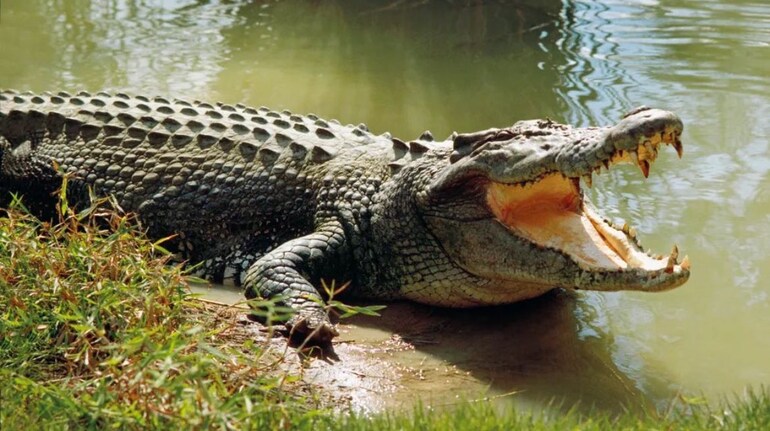

Conservationists in Laos have released rare footage showing endangered Siamese crocodiles hatching, offering fresh hope for a species long considered close to extinction in Southeast Asia.
The video was shared by wildlife experts involved in a long-running conservation partnership in Laos. The project brings together WCS Laos, government agencies, and nearby communities protecting vulnerable wetlands. It focuses on restoring populations of Siamese crocodiles, one of Earth’s most threatened crocodilian species. The footage shows a newborn crocodile emerging from its shell under careful human supervision. Conservation workers gently remove shell fragments to assist the fragile hatchling’s first movements.
Rare Siamese Crocodile Hatchlings Signal Conservation Progress
The hatching took place under a carefully managed head-starting programme operating across rural Laos. Local conservation teams locate wild nests during breeding seasons and collect eggs for protection. These eggs are incubated in controlled conditions to reduce natural risks. Once hatched, the crocodiles are reared safely until strong enough for release. After reaching suitable size and health, they return to protected wetlands.
According to conservationists, this method has significantly improved juvenile survival rates. Hundreds of Siamese crocodiles have been raised through this programme since 2019. The success of these efforts is outlined in a recent report published in the Newsletter of the Crocodile Specialist Group. The report documents population stability improvements in several monitored wetland sites.
Cultural Beliefs Strengthen Protection Efforts in Laos
Project leaders say local traditions play a crucial role in conservation success. Many communities regard crocodiles as spiritual guardians of water sources. These beliefs have encouraged protection rather than fear or exploitation. Santi Saypanya, country director of the WCS Laos Programme, highlighted this approach. He said conservation efforts build upon long-held cultural values, creating strong incentives for wildlife protection.
Community involvement has reduced threats like poaching and habitat destruction. Local residents actively monitor wetlands and report nesting activity. Government partners support legal protection and habitat management efforts. Scientists regularly monitor released crocodiles using field surveys and tracking methods. This combined approach has created long-term stability for fragile populations.
Critically Endangered Status Keeps Urgency High
Despite recent progress, the Siamese crocodile remains critically endangered globally. The species is listed as critically endangered on the IUCN Red List. Experts estimate fewer than 1,000 mature adults survive in the wild. Habitat loss and illegal hunting caused severe population declines during previous decades.
Steven Platt, a conservation scientist with WCS, emphasised the wider significance. He said recovery remains possible even for species facing extinction. According to Platt, lasting success depends on community knowledge, cultural respect, and consistent scientific monitoring. Conservationists say the Laos project offers a model for endangered species recovery worldwide.
The newly released footage has drawn attention to quiet conservation work happening far from public view. For scientists and communities involved, each hatching represents another chance for survival.
Discover the latest Business News, Sensex, and Nifty updates. Obtain Personal Finance insights, tax queries, and expert opinions on Moneycontrol or download the Moneycontrol App to stay updated!
Find the best of Al News in one place, specially curated for you every weekend.
Stay on top of the latest tech trends and biggest startup news.