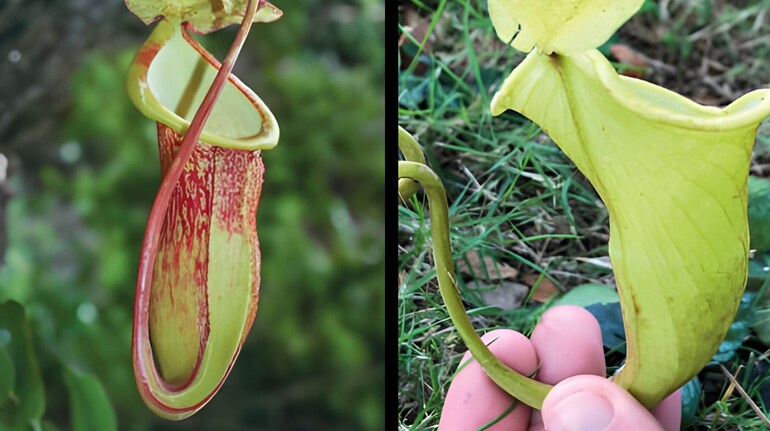

A new carnivorous plant species has been discovered in Palawan, Philippines. Scientists warn it may already be critically endangered. This plant thrives on steep, isolated limestone cliffs. Its pitcher shimmer like jewels under tropical sunlight.
Researchers trekked dangerous paths just to glimpse this living marvel. Its survival hangs by a thread against climate and human threats. Even a small landslide could wipe out an entire population.
A Rare Gem in the Philippines
Scientists have discovered a new species of carnivorous pitcher plant in the Palawan region. The plant is entirely new to science, with no previous records. It grows exclusively on steep, vertical limestone cliffs which makes it extremely rare.
So far, N. megastoma is only known from 3 locations. It grows on steep cliff walls. The scientists could access only 2 of these locations. In those locations, they estimated there were about 25 individual plants. The species’ limited population and habitat may already qualify it as critically endangered.
What Makes This Plant Special?
Its pitchers have distinct shapes and vibrant colors. It captures insects with a unique slippery interior mechanism. Such adaptations are rare even among other pitcher plants.
This discovery adds to the scientific understanding of Nepenthes. It highlights evolution in isolated, extreme environments. It also reminds us how much remains unexplored globally.
Hidden Lives of Cliff-Dwelling Creatures
These cliffs host more than just pitcher plants. Rare birds, insects and reptiles share this precarious habitat. Each species relies on the cliffs’ untouched limestone ecosystem. Every cliff may hide secrets scientists have yet to see.
Critically Endangered: This Pitcher Plant is facing Extinction
Scientists warn this new pitcher plant may already be critically endangered. It is extremely limited range makes it highly vulnerable to threats. The plant grows only on 3 isolated limestone cliff locations.
Botanists from the University of the Philippines and the National Herbarium have studied the species. They stress urgent conservation measures to prevent extinction. Protecting its cliff habitats is now a top scientific priority.
Why this Discovery amazed Scientists?
Researchers were amazed by the plant’s unexpected adaptations and survival. Its unique pitchers and cliff-dwelling habitat were completely surprising. Even seasoned botanists had never seen such extreme specialization before.
The plant's combination of beauty, danger, and rarity sparked genuine excitement. Field teams could not stop discussing its unusual color patterns. Every new detail challenged existing knowledge about pitcher plant diversity.
What Scientists Plan to Do Next?
Conservation strategies are now a top priority for researchers. Protecting the cliffs ensures the plant’s survival and ecosystem stability. Researchers are planning detailed studies on this newly discovered plant. They want to understand its growth, reproduction, and survival mechanisms. Every aspect of its cliff-dwelling lifestyle will be carefully observed. The discovery marks the beginning of a long-term scientific mission.
Discover the latest Business News, Sensex, and Nifty updates. Obtain Personal Finance insights, tax queries, and expert opinions on Moneycontrol or download the Moneycontrol App to stay updated!
Find the best of Al News in one place, specially curated for you every weekend.
Stay on top of the latest tech trends and biggest startup news.