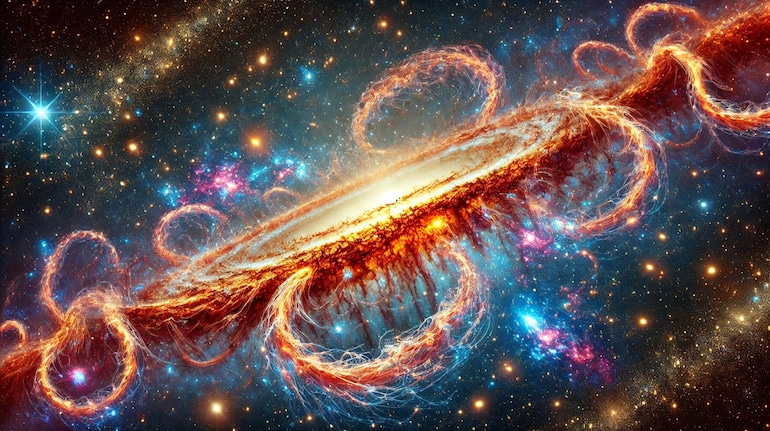
Something strange is happening at the heart of our galaxy. Scientists believe it could be linked to dark matter. A new study suggests an unknown dark matter candidate might be shaping cosmic chemistry. If true, it could change how we understand the universe.
A Dark Matter Suspect Unlike Any Other
Scientists have long searched for dark matter's hidden influence. It makes up 85% of the universe but remains invisible. Now, researchers think dark matter might be affecting ionisation in space. They propose a lighter, self-annihilating dark matter candidate. When two particles meet, they destroy each other. This process releases electrons and positrons, which ionise gas clouds.
The Milky Way’s Central Molecular Zone (CMZ) is packed with ionised gas. Existing theories struggle to explain its abundance. Cosmic rays were once thought to be the cause, but they seem too weak. If dark matter is behind this, it means scientists have been missing its subtle impact.
"We propose that dark matter lighter than a proton could be responsible," said Shyam Balaji, a postdoctoral researcher at King's College London. Unlike other dark matter models, this one suggests direct ionisation of interstellar gas.
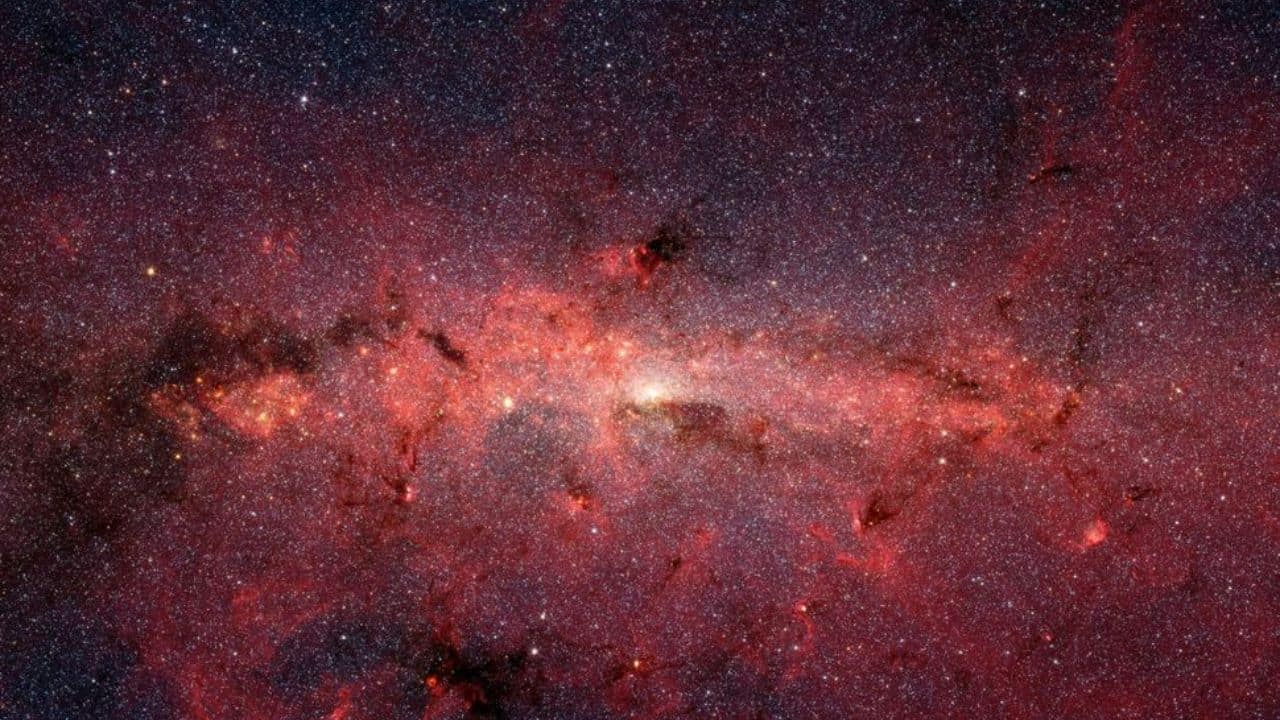 Galactic cores, such as the Milky Way’s center in this image, are packed with gas and debris, making it difficult to capture clear images of stars or black holes. (Image: NASA)
Could Dark Matter Be Destroying Itself?
Most dark matter candidates interact only through gravity. But this new theory suggests self-annihilation. When dark matter particles collide, they release energy. This could ionise hydrogen molecules, stripping away their electrons.
The idea challenges current dark matter suspects like axions. "Most axion models don’t predict significant electron-positron production," Balaji explained. "Our proposed dark matter is sub-GeV in mass and self-annihilates."
Scientists have also noticed a faint gamma-ray glow from the Galactic Centre. Some believe it could be linked to ionisation. If a direct connection is found, it would support this dark matter theory.
Next Steps in the Search for Answers
The study raises exciting possibilities but needs more evidence. Researchers hope to gather precise ionisation measurements from the CMZ. If the distribution matches dark matter models, the case will grow stronger.
NASA’s upcoming COSI gamma-ray telescope, set for launch in 2027, could help. It will provide better data on high-energy processes in space. This may confirm or rule out dark matter’s role in ionisation.
"Dark matter remains a mystery," Balaji said. "But this research suggests it might shape our galaxy in unexpected ways." The findings were published in Physical Review Letters on March 10.
Discover the latest Business News, Sensex, and Nifty updates. Obtain Personal Finance insights, tax queries, and expert opinions on Moneycontrol or download the Moneycontrol App to stay updated!
Find the best of Al News in one place, specially curated for you every weekend.
Stay on top of the latest tech trends and biggest startup news.