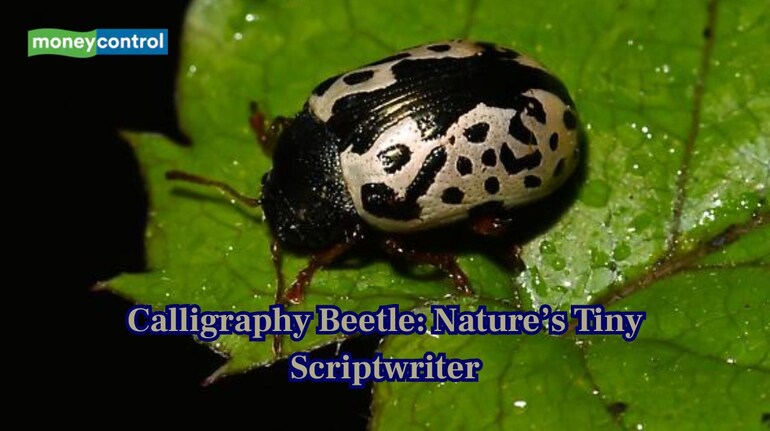
A small beetle has captured attention for patterns on its shell that resemble ancient handwriting. These insects, known as calligraphy beetles (Calligrapha species), feature intricate black lines and dots across their wing covers.
The markings are so precise that some observers compare them to Arabic, Chinese, or cursive calligraphy. While they look like writing, these patterns are entirely natural, not human-made.
Why Do These Patterns Exist?
Scientists explain that the “writing” emerges from a combination of genetic programming and developmental processes. The beetles’ markings serve important biological functions, primarily camouflage and predator avoidance.
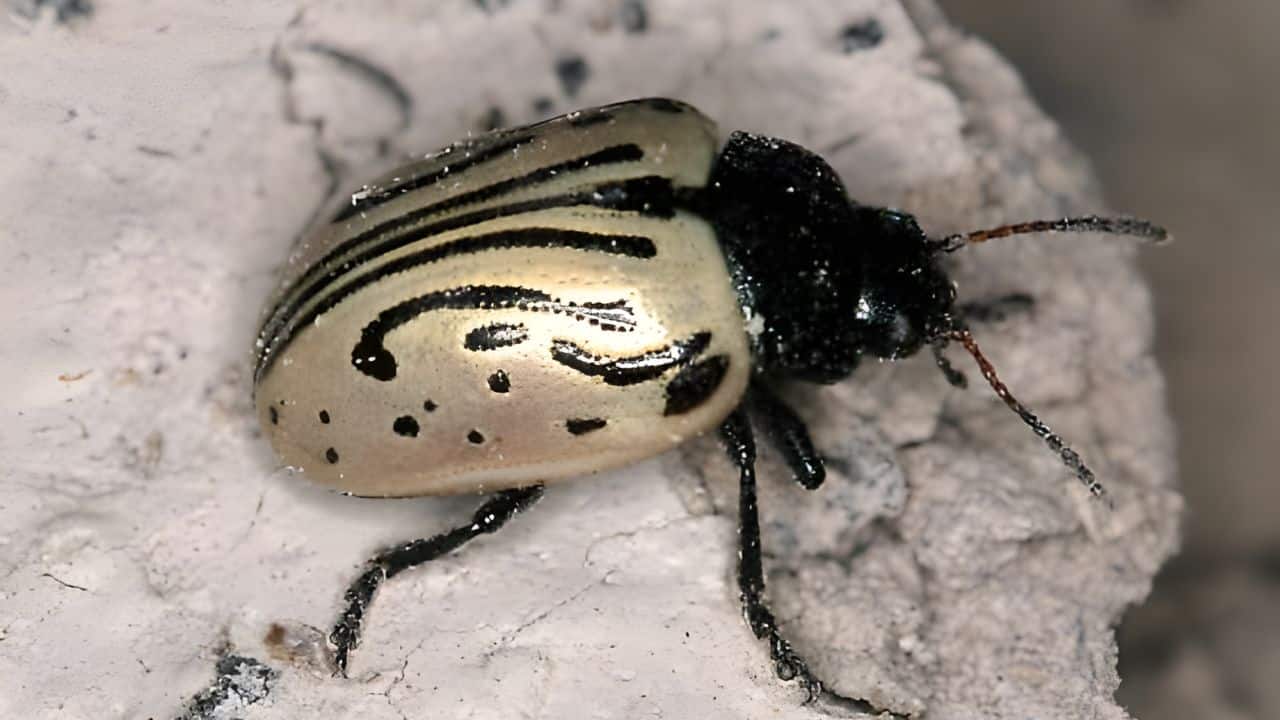 Calligraphy beetles feature intricate black lines and dots across their wing covers. (Image: Canva)
By breaking up the beetle’s outline, the lines make it harder for birds or lizards to detect them. This phenomenon is called disruptive coloration. This helps the beetles to blend into leaves, bark or lichen.
Where are these beetles Found?
Calligraphy beetles inhabit forests and shrublands across North, Central and parts of South America. They are usually found on host plants such as dogwood, alder and willow. More than 100 species exist, each with a distinctive pattern, making them a diverse group of leaf beetles.
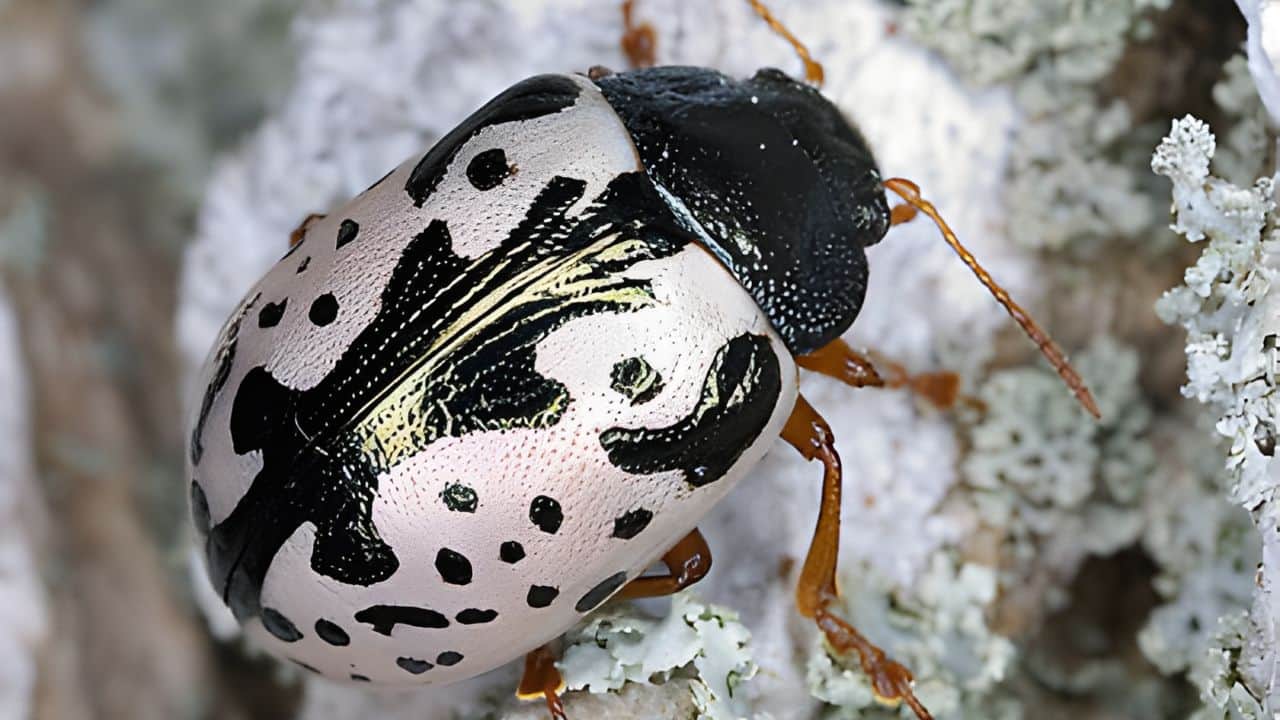 Adult beetles typically emerge in spring or early summer, feeding on fresh leaves. (Image: Canva)
Life Cycle and Behaviour
Adults typically emerge in spring or early summer, feeding on fresh leaves. Females lay eggs on the undersides of leaves, which hatch into larvae. Larvae feed, grow and pupate before emerging as adults. Some species reproduce via parthenogenesis, producing viable eggs without mating.
Why They Fascinate Scientists?
These beetles show how nature can create complex and artistic patterns without any intention of design. Their markings are not only visually striking but also critical for survival in the wild.
By studying them, scientists gain insights into evolution, development, and ecological adaptation. Calligraphy beetles are a reminder that even small, overlooked creatures can inspire awe and wonder.
Discover the latest Business News, Sensex, and Nifty updates. Obtain Personal Finance insights, tax queries, and expert opinions on Moneycontrol or download the Moneycontrol App to stay updated!
Find the best of Al News in one place, specially curated for you every weekend.
Stay on top of the latest tech trends and biggest startup news.