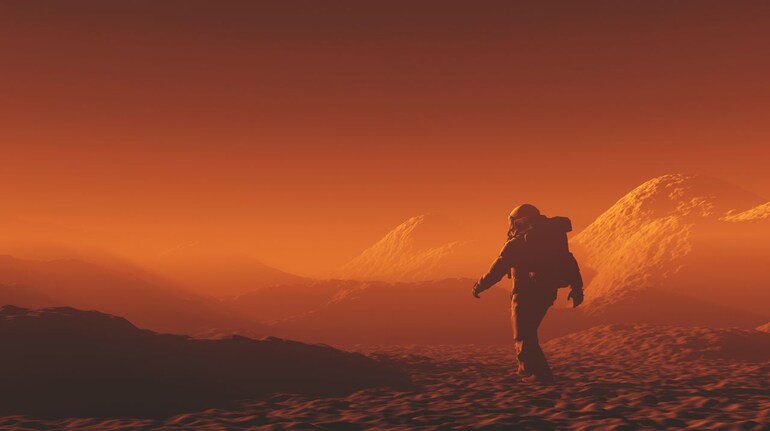
For centuries, humans have dreamt of colonising Mars, but the planet's brutal conditions pose major hurdles. Experts now warn that life on the Red Planet could dramatically alter human biology, with changes in skin colour and weakened eyesight being just a few potential outcomes.
Mars offers a hostile environment compared to Earth, with its 30% lower gravity and lack of a protective ozone layer. This exposes inhabitants to dangerous cosmic radiation, UV rays, and solar particles. According to Dr Scott Solomon, a biologist at Rice University, future human settlers may experience severe mutations due to these conditions.
Dr Solomon predicts that the combination of high radiation and low gravity on Mars could lead to significant changes in human physiology. Skin could develop a greenish tone to shield against radiation, while muscles and bones may weaken. He also highlighted the risk of brittle bones, which could complicate childbirth for women.
Additionally, eyesight could deteriorate as Martian settlers live in enclosed environments, reducing the need for long-distance vision.
Surviving on Mars may require humanity to adapt at a faster rate than ever seen before. Dr Solomon suggests that while technological advancements could aid survival, the evolutionary changes humans might undergo will be profound, altering life as we know it.
Discover the latest Business News, Sensex, and Nifty updates. Obtain Personal Finance insights, tax queries, and expert opinions on Moneycontrol or download the Moneycontrol App to stay updated!
Find the best of Al News in one place, specially curated for you every weekend.
Stay on top of the latest tech trends and biggest startup news.