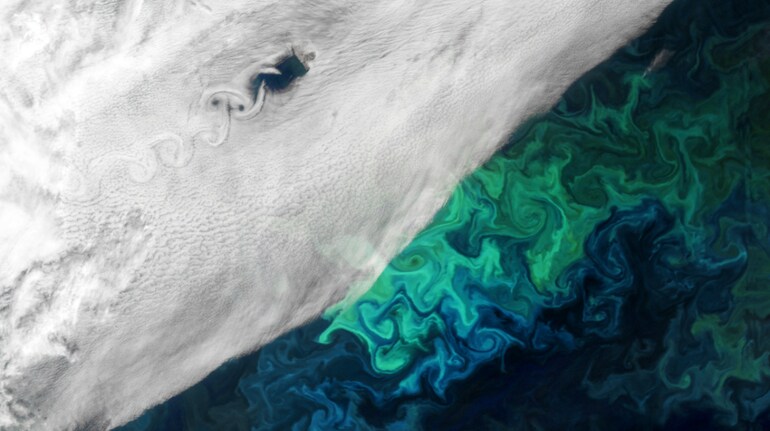
A striking satellite image reveals two incredible natural phenomena over Bear Island, Norway, showcasing unusual cloud swirls and a large ocean bloom.
Vortex Clouds Over Bear Island
In the upper left of the image, clouds form a series of interlinked swirls, known as von Kármán vortices. These clouds are disturbed by Miseryfjellet, the island’s tallest mountain. The vortex pattern occurs when air currents flow over tall landforms like Miseryfjellet, creating unique spirals in the sky. NASA’s Earth Observatory confirmed this atmospheric phenomenon as a result of disrupted airflow.
At the same time, the Barents Sea below displays a massive bloom of photosynthetic algae. The swirling shape of the bloom is caused by ocean currents. Its light green hue comes from chlorophyll, the pigment responsible for photosynthesis. This algae bloom stretches over 250 miles, covering a vast area of the sea. Both the vortices and the bloom are unrelated, occurring coincidentally at the same time.
Bear Island's Unique and Changing Ecosystem
Bear Island, part of the Svalbard archipelago, is home to foxes, seals, and seabirds. Though polar bears were once spotted there, they are rare. The island’s seabird population, about 1 million annually, is a vital part of the ecosystem. However, concerns are rising about the effects of radioactive pollution from a Cold War-era submarine. The submarine, K-278 Komsomolets, sank nearby in 1989. Its leaking reactor has caused radiation levels in the surrounding waters to spike dramatically.
As scientists continue monitoring the island’s wildlife and environment, the impact of radioactivity remains uncertain.
Discover the latest Business News, Sensex, and Nifty updates. Obtain Personal Finance insights, tax queries, and expert opinions on Moneycontrol or download the Moneycontrol App to stay updated!
Find the best of Al News in one place, specially curated for you every weekend.
Stay on top of the latest tech trends and biggest startup news.