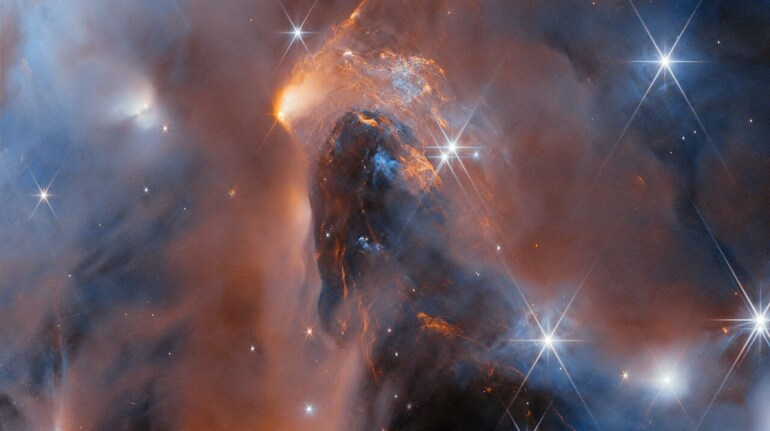
Imagine a cosmic treasure hunt where the latest discovery brings unexpected revelations. Astronomers using NASA's James Webb Space Telescope have made an extraordinary find: six rogue worlds, each about ten times larger than Jupiter, that wander the galaxy without a star to orbit.
These intriguing celestial objects were spotted within the star-forming nebula NGC 1333, located 960 light-years away in the Perseus molecular cloud. Unlike its predecessor, the Hubble Space Telescope, which struggled with dust interference, the Webb telescope's advanced infrared capabilities allowed it to peer through the cosmic fog and capture these fascinating details.
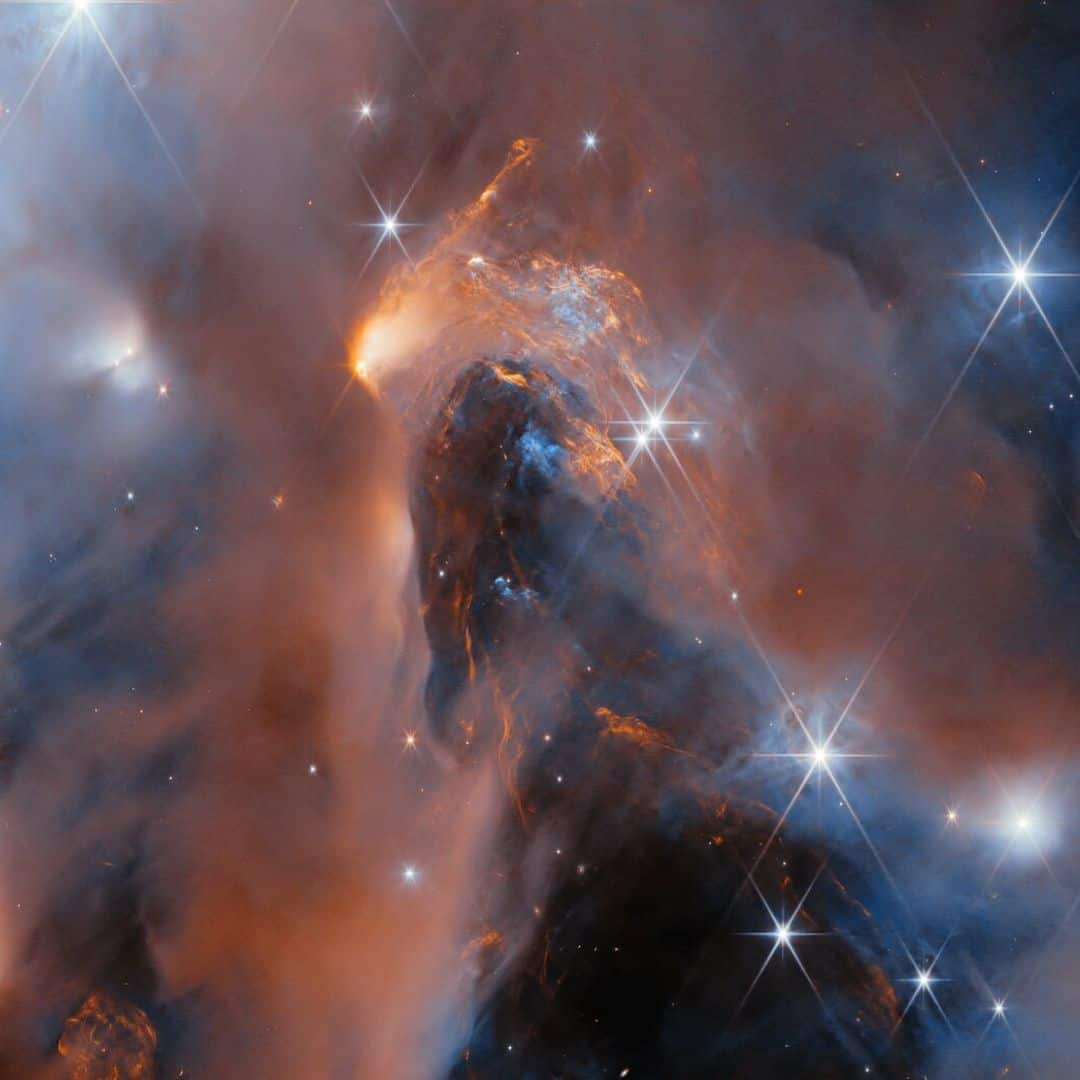 The nebula is in the Perseus molecular cloud, and located approximately 960 light-years away. (Image: ESO/NASA)
Read More: NASA alerts of a 210-foot, airplane-sized asteroid racing towards Earth at a frightening speed today
In the heart of this nebula, Webb detected a variety of cosmic entities including newborn stars, brown dwarfs, and planet-sized objects, all ranging from five to ten times the mass of Jupiter. This discovery challenges previous notions by suggesting that these low-mass objects might have formed through star-like processes, rather than the traditional formation of planets or brown dwarfs.
The findings, detailed in a study soon to be published in The Astronomical Journal, address a fundamental question about the formation of celestial bodies. Ray Jayawardhana, a senior author and astrophysicist at Johns Hopkins University, highlighted that these free-floating objects, comparable in mass to giant exoplanets, represent the smallest entities formed through star-like processes.
Adam Langeveld, the lead author and fellow astrophysicist at Johns Hopkins, pointed out that these observations push the boundaries of our understanding of how stars and planets form. He speculated whether these young Jupiter-like objects might eventually evolve into stars under certain conditions.
The study also reveals that planetary-mass objects can form in two distinct ways: through the contraction of gas and dust clouds, much like stars, or from the material surrounding young stars, akin to the formation of Jupiter in our solar system. Notably, one newly identified object, with a mass equivalent to five Jupiters, appears to have a surrounding dusty disk, suggesting it formed similarly to a star. This raises the intriguing possibility that such planet-like objects might develop their own miniature planetary systems.
Additionally, the Webb telescope uncovered a rare find—a brown dwarf paired with a planetary-mass companion, likely created from a fragmenting cloud. As research continues, scientists hope to further understand these rogue worlds' formation and evolution. The forthcoming launch of NASA's Nancy Grace Roman Space Telescope in May 2027 is anticipated to shed even more light on these wandering planets, potentially unlocking further secrets about their existence.
Discover the latest Business News, Sensex, and Nifty updates. Obtain Personal Finance insights, tax queries, and expert opinions on Moneycontrol or download the Moneycontrol App to stay updated!
Find the best of Al News in one place, specially curated for you every weekend.
Stay on top of the latest tech trends and biggest startup news.