NASA has launched new trials examining rocket plumes disturbing lunar surfaces. The tests replicate landing conditions expected during upcoming Artemis missions. The engineers aim to minimise hazards created by high-speed ejected lunar dust. Their findings will guide safer human landings on future planetary missions.
What Drives NASA’s Latest Experiments?
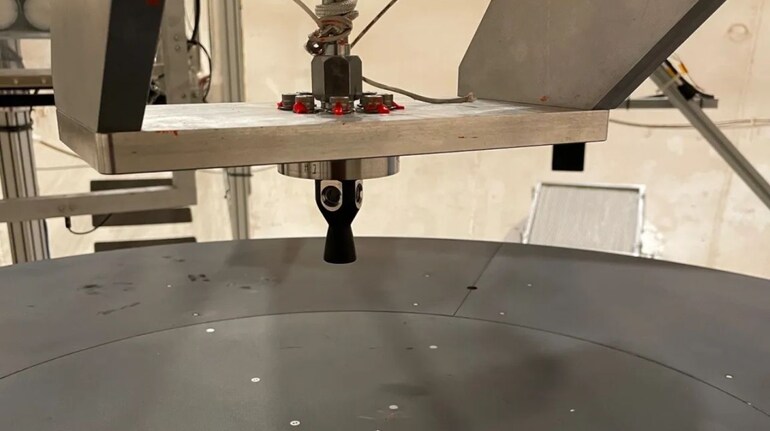
NASA has begun plume-interaction tests inside a huge vacuum chamber. The work supports Artemis missions planning crewed lunar surface landings. Researchers aim to understand dangerous dust behaviour beneath landing engines. The findings could protect landers, astronauts and nearby scientific instruments.
What Sparked This Investigation?
Rocket plumes can violently eject lunar soil during powered descents. This ejected debris travels fast and threatens essential landing systems. Crater formation also complicates stability during final touchdown operations. NASA wants detailed measurements to reduce risks before future lunar missions.
Who Is Leading These Trials?
Engineers at NASA Langley operate the sixty-foot chamber facility. Two propulsion systems simulate realistic plume forces for lunar scenarios. An ethane plume simulator produces strong thrust reaching one hundred pounds. A hybrid rocket motor adds additional capability for varied testing conditions.
How Do Instruments Capture Dust Motion?
High-speed cameras record swirling regolith particles during plume events. These instruments image crater growth and particle paths with precision. Their technology mirrors systems used during the "Blue Ghost" landing. Data supports models predicting dust movement for different landing profiles.
Why Do These Experiments Matter?
Dust impacts can damage sensors vital for safe lunar navigation. They may also endanger habitats positioned near future landing zones. Mitigating these hazards strengthens long-term lunar exploration strategies globally. NASA emphasises safety before committing astronauts to surface operations.
What Comes Next For Planetary Testing?
The modular setup allows simulation changes matching Martian atmospheric conditions. Researchers can adjust pressures to recreate Mars’ thin carbon-dioxide environment. Soil types can also change to mimic varied extraterrestrial terrains. The facility offers crucial insights shaping safer planetary landing technologies.
Discover the latest Business News, Sensex, and Nifty updates. Obtain Personal Finance insights, tax queries, and expert opinions on Moneycontrol or download the Moneycontrol App to stay updated!
Find the best of Al News in one place, specially curated for you every weekend.
Stay on top of the latest tech trends and biggest startup news.