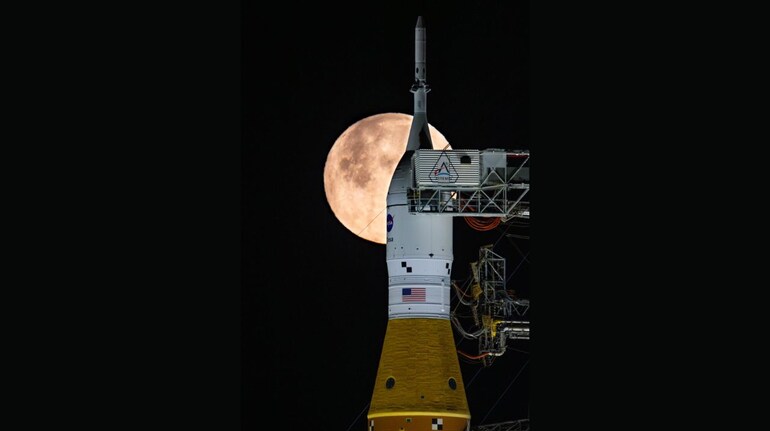

NASA moved closer to its next lunar mission on Sunday as the agency carried out a critical fueling test of its Space Launch System rocket ahead of the planned Artemis 2 crewed flight around the Moon.
NASA teams at Kennedy Space Center in Florida loaded vast quantities of supercooled propellants into the Artemis 2 rocket during a wet dress rehearsal designed to simulate launch preparations. The test marked a key milestone before astronauts are cleared for deep space travel.
What Happened During the Artemis 2 Fueling Test
Engineers pumped over 700,000 gallons of liquid hydrogen and liquid oxygen into the two-stage rocket standing on Launch Pad 39B. The process required careful coordination due to the volatile nature of cryogenic fuels. Teams temporarily halted liquid hydrogen loading twice after detecting leaks.
NASA officials said the leaks occurred at known interfaces. These locations previously caused delays during the Artemis 1 campaign. Engineers quickly identified the problems and resolved them. Fueling resumed after brief pauses without major setbacks.
The wet dress rehearsal is a two-day exercise. It rehearses procedures that teams will use during launch. Sunday’s tanking phase was considered the most complex. NASA confirmed that the rocket tanks were eventually filled successfully.
Why the Test Matters for Artemis 2
Artemis 2 is scheduled to launch on 08.02.2026. The mission will carry four astronauts on a 10-day journey around the Moon. NASA astronauts Reid Wiseman, Victor Glover, and Christina Koch will fly alongside Canadian astronaut Jeremy Hansen.
The launch date depends on several conditions. These include weather, hardware performance, and test outcomes. NASA has not yet declared the rehearsal fully successful. Testing activities are expected to continue until early Tuesday morning.
NASA plans to brief the media on Tuesday afternoon. Officials will discuss the test results publicly. The agency hopes lessons from Artemis 1 will prevent repeated delays.
What Comes Next for NASA’s Moon Programme
Liquid hydrogen leaks have challenged previous Artemis missions. The tiny molecules escape through microscopic gaps. Artemis 1 faced repeated postponements due to similar issues. That mission finally launched in November 2022.
Despite early challenges, Artemis 1 performed well in space. An uncrewed Orion capsule orbited the Moon safely. It returned to Earth successfully. The mission proved critical systems could support human travel.
NASA engineers applied those lessons during Sunday’s test. The leaks again occurred at tail service mast umbilical connections. Teams responded faster this time. Officials said troubleshooting was completed efficiently.
NASA views Artemis 2 as a decisive step. The mission will confirm readiness for future lunar landings. Success would strengthen confidence in human exploration beyond Earth.
Discover the latest Business News, Sensex, and Nifty updates. Obtain Personal Finance insights, tax queries, and expert opinions on Moneycontrol or download the Moneycontrol App to stay updated!
Find the best of Al News in one place, specially curated for you every weekend.
Stay on top of the latest tech trends and biggest startup news.