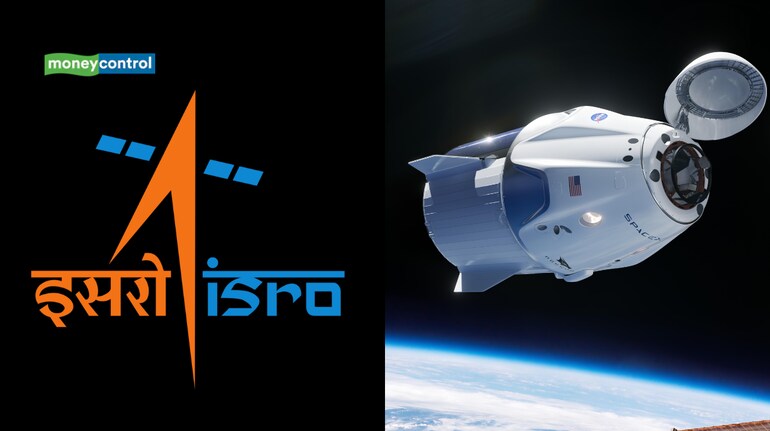
In a major leap toward its first human spaceflight, ISRO is all set to test a range of cutting-edge space experiments aboard the International Space Station (ISS) — a first in its history. The experiments will ride along with India’s own Group Captain Shubhanshu Shukla, who will travel to the ISS on May 29 as part of the Axiom Mission-4 (Ax-4).
From edible algae to space farming, ISRO has carefully shortlisted seven microgravity experiments for this 14-day mission. Each one is designed to answer key questions about life beyond Earth — how humans survive, adapt, and eventually thrive in deep space.
ALSO READ: From Lucknow to ISS - The inspirational journey of India’s next astronaut Shubhanshu Shukla 'Shux'
What Will ISRO Test in Space?
The experiments are as diverse as they are ambitious:
Cyanobacteria & Microalgae Growth: These tiny, oxygen-producing organisms are being tested as potential future components of bio-regenerative life-support systems — a must for long-duration missions like Gaganyaan or even Moon and Mars bases.
Space Farming Trials: Scientists will observe how seeds like methi (fenugreek) sprout and grow in zero gravity. Once back on Earth, researchers will study changes in their genetic expression to assess long-term viability of growing food in space.
Muscle & Heart Health Research: Understanding how cardiac tissues and muscle function in space is vital for astronaut safety. These experiments aim to decode how the human body responds to prolonged weightlessness.
Tardigrades Study: These microscopic “water bears” are known for surviving extreme conditions. Their behavior in space could reveal survival tactics for future space travellers — and even advance biotechnology on Earth.
Human-Computer Interaction: One experiment explores how astronauts perceive screens and digital interfaces in microgravity, helping design more intuitive spacecraft systems.
All of this will happen aboard the ISS — a floating research lab orbiting 400 km above Earth. ISRO will leverage NASA’s infrastructure and safety protocols, while building a solid foundation for India’s own crewed missions.
Overall, there will be 60 scientific studies and activities on AX-4 representing as many as 31 countries, including the US and India.
Why These Experiments Matter for Gaganyaan
The Ax-4 mission isn’t just about testing hardware — it’s about gathering critical human spaceflight data. India’s upcoming Gaganyaan mission, which aims to send astronauts into space using an indigenous rocket and capsule, will benefit directly from these insights.
By experimenting in real microgravity conditions, ISRO can refine:
This mission is also a training ground for Indian astronauts. Group Captain Shukla, who has undergone intense training with NASA, SpaceX, and Axiom, will play a hands-on role in conducting the experiments, observing conditions, and relaying key data back to ISRO.
As he put it: “The lessons we learn here will shape how we fly, live, and work in space — the Gaganyaan mission and beyond.”
ISRO's Gaganyaan mission is slated for launch within the next two years, and a plan to build India’s own space station — the Bhartiya Antariksh Station (BAS) — is already on the drawing board for 2035.

Discover the latest Business News, Sensex, and Nifty updates. Obtain Personal Finance insights, tax queries, and expert opinions on Moneycontrol or download the Moneycontrol App to stay updated!
Find the best of Al News in one place, specially curated for you every weekend.
Stay on top of the latest tech trends and biggest startup news.