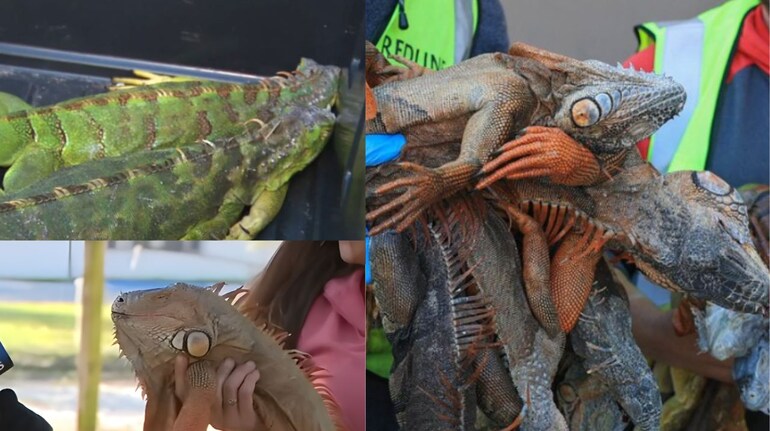

Iguanas are falling from trees as rare cold grips Florida. Unusual winter weather has stunned residents and scientists alike. Temperatures dropped to near freezing across southern regions. The sudden chill disrupted fragile tropical ecosystems. Sudden cold shocks stress tropical and subtropical species. Food supplies become limited during freezes. Experts explain this is a natural response to extreme cold.
Cold-Stunned Iguanas Drop from Branches
Large numbers of green iguanas fell from trees. Many were found lying motionless on pavements and gardens. Residents described the scene as “raining iguanas.” The event occurred during a powerful winter cold blast.
Temperatures plunged well below seasonal averages. South Florida experienced rare near-freezing conditions. Meteorologists called it an exceptional weather event.
Florida’s Cold-Blooded Reptile Population
Green iguanas are native to Central and South America. They thrive in warm tropical climates. Florida’s mild weather allowed them to spread widely. They are now considered an invasive species. Cold weather severely affects their survival. Parts of Florida saw record low temperatures for early February, with places like Orlando reaching around −4 °C (24 °F). This temperature does not suit Iguanas.
After back-to-back nights in the mid-30s, crews in Miami are rounding up thousands of cold-stunned iguanas as the chill lingers across Florida. pic.twitter.com/qXHFKflTLw— AccuWeather (@accuweather) February 2, 2026
Why Do Iguanas Fall From Trees When It Gets Cold?
Iguanas are cold-blooded animals. This means they cannot make their own body heat. Instead, they use heat from the Sun and warm air. Iguanas like to sleep in trees. But in cold weather, their hands cannot grip branches and their muscles go stiff. Iguanas also lose balance, so they simply drop down. It looks like they are “falling”, but really, they cannot hold on anymore.
Do these Iguanas die after falling?
Many fallen iguanas are not actually dead. They enter a slow, inactive state to conserve energy. Breathing and heartbeat become extremely weak. When temperatures rise, some regain movement. They may climb back into trees. So, there is no need to worry as these iguanas can keep themselves alive.
Scientists warned about more Weather Surprises
Officials warned people not to touch fallen iguanas. Cold-stunned animals may bite when reawakened. Falling iguanas reveal climate’s sudden power. Warm-adapted species struggle with rapid change. Scientists predict more unpredictable temperature swings. Climate change affects polar and tropical air movements. Florida may see more sudden freezes.
Discover the latest Business News, Sensex, and Nifty updates. Obtain Personal Finance insights, tax queries, and expert opinions on Moneycontrol or download the Moneycontrol App to stay updated!
Find the best of Al News in one place, specially curated for you every weekend.
Stay on top of the latest tech trends and biggest startup news.