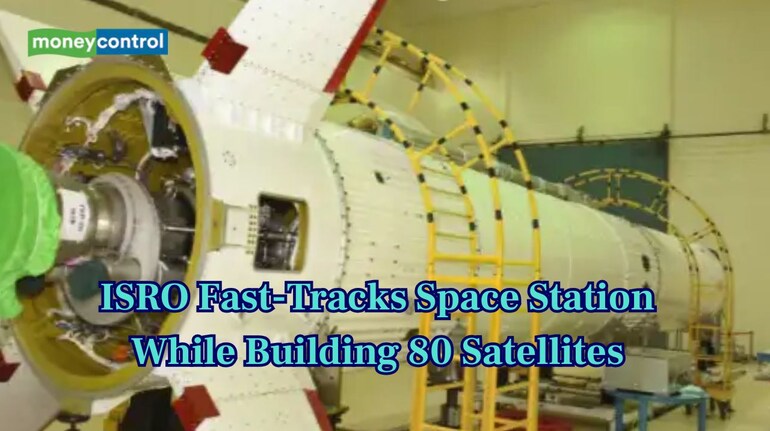

India’s space agency ISRO is moving quickly on multi-front space plans. Officials say the nation is speeding up its space station project. This comes as nearly 80 satellites are in the development pipeline. The satellites will serve science, navigation, security and communications needs. This push highlights India’s growing space capabilities on the global stage.
Confirmation from ISRO scientists
Senior ISRO leaders confirmed the accelerated timeline publicly recently. The space station project once seemed a long-term prospect. Now the goal is to make it happen sooner than expected. Alongside this, scores of satellites are being prepared for launch. Each will have a unique scientific or operational purpose.
When Will This Happen?
ISRO is moving rapidly to realise its space station ambitions. Several satellites are planned to launch over the next few years. The space station is expected to become operational in mid‑2030s. Exact timelines are being finalised as development progresses steadily. Satellite launches will begin in phases over the coming months. Some small satellites will test communication and Earth observation functions.
What Will These Satellites Have?
The 80 satellites will serve diverse scientific and operational purposes. Some will monitor Earth for weather, climate and natural disasters. Others will strengthen communications, internet coverage and navigation services. Advanced sensors and imaging equipment will support research and mapping. Several satellites will test new technologies for future space missions.
Is This Linked With Mission Gaganyaan?
Yes, India’s human spaceflight programme benefits directly from this effort. Gaganyaan plans to send Indian astronauts into low-Earth orbit soon. Satellites will support communications, telemetry, and navigation for astronauts.
They will monitor spacecraft health and track orbital trajectories precisely. The space station itself could host future Gaganyaan crew experiments. Gaganyaan tests will also inform long-term human spaceflight strategies. Lessons from these satellites may improve life-support and mission safety.
How Are Scientists Looking at This?
Engineers and researchers view the project as a national milestone. They focus on integrating satellites with advanced orbital technology. Simulations test each satellite’s performance before launch to ensure success. Scientists monitor signals and payloads constantly for accuracy and reliability. Collaboration between space, defence and academic sectors strengthens mission readiness.
Discover the latest Business News, Sensex, and Nifty updates. Obtain Personal Finance insights, tax queries, and expert opinions on Moneycontrol or download the Moneycontrol App to stay updated!
Find the best of Al News in one place, specially curated for you every weekend.
Stay on top of the latest tech trends and biggest startup news.