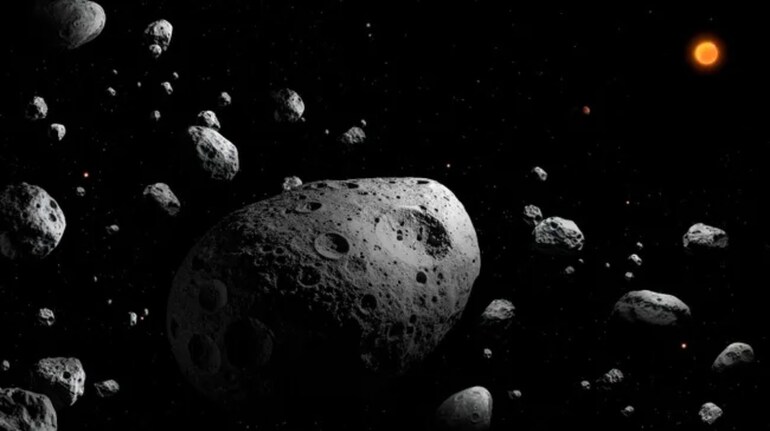

Scientists studying early images from Chile’s Vera C. Rubin Observatory have identified the fastest-spinning asteroid ever recorded in its size range, offering rare insight into asteroid strength, origins and future discoveries, researchers reported this week.
The asteroid, named 2025 MN45, measures roughly 710 metres across. That size exceeds most skyscrapers built on Earth. Observations show it completes one full rotation every 113 seconds. This makes it the fastest known spinner exceeding 500 metres diameter. The findings were published Wednesday in The Astrophysical Journal Letters. The study marks the first peer-reviewed science paper using Rubin Observatory data.
Fastest-spinning asteroid surprises researchers
Scientists identified 2025 MN45 using preliminary Rubin Observatory observations. These early images were captured during initial commissioning operations. Even before its formal survey begins, Rubin is transforming asteroid science. After only seven nights, thousands of unknown asteroids appeared. Researchers say the speed of 2025 MN45 stands out sharply. Objects this large usually spin far more slowly. Faster rotation typically causes loose asteroids to break apart. This asteroid remains intact despite its extreme rotation.
Sarah Greenstreet, an assistant astronomer with NSF NOIRLab, explained the importance. She said the asteroid must possess exceptional internal strength. Its material likely resembles solid rock rather than loose debris. Most asteroids are believed to be rubble piles. Those form when fragments clump together through gravity. Such bodies cannot survive rapid spinning without disintegrating.
What the discovery reveals about asteroid structure
Scientists believe collisions may explain such rapid rotation. A powerful impact could have accelerated the asteroid’s spin. Another possibility involves fragmentation of a much larger parent body. The asteroid resides within the main belt. This region lies between Mars and Jupiter. Most main-belt asteroids rotate slower than 2.2 hours. Anything faster must possess unusual structural cohesion.
Rubin data revealed more fast rotators beyond 2025 MN45. The sample includes 16 super-fast spinning asteroids. Their rotations range between 13 minutes and 2.2 hours. Two ultra-fast rotators spin in under two minutes. All exceed 90 metres in length. Nearly all orbit within the main asteroid belt.
What comes next for Rubin’s asteroid survey
These findings were discussed at the American Astronomical Society meeting. The event took place in Phoenix during its 247th gathering. Scientists analysed commissioning data released last June. That dataset includes nearly 1,900 previously unseen asteroids. Researchers expect discoveries to accelerate once surveys begin. Rubin will scan southern skies for ten years. The project aims to build a detailed time-lapse universe map. Scientists say this is only the beginning.
Discover the latest Business News, Sensex, and Nifty updates. Obtain Personal Finance insights, tax queries, and expert opinions on Moneycontrol or download the Moneycontrol App to stay updated!
Find the best of Al News in one place, specially curated for you every weekend.
Stay on top of the latest tech trends and biggest startup news.