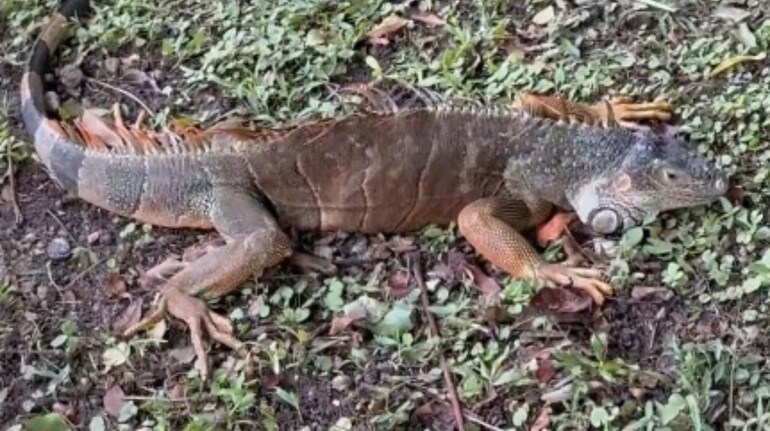

A video is going viral from Miami this week. An iguana appeared completely still in a suburban backyard. It seems like this iguana was paralysed. As the temperatures dropped into the forties, this is unusual for South Florida reptiles. The wildlife experts explained what caused the iguana’s motionless state.
What happened in the viral video?
The video shows an iguana lying completely motionless in someone’s backyard in Miami. The temperature had dropped into the 40s Fahrenheit, unusually cold for South Florida. The iguana appears frozen or paralyzed, not moving at all. This is not injury or death, instead it is a temporary condition caused by cold. The scientists explain that cold temperatures put iguanas into a “stunned” state, where they lose muscle control.
Why Cold Weather Paralyzes Iguanas?
Cold weather can send iguanas into a stunned condition. Muscle control is lost and reptiles may even fall from trees. This temporary paralysis is nature’s way of protecting the animal. Iguanas are cold-blooded, so their body temperature affects movement directly.
It’s 45 degrees in Miami. ☃️Frozen iguanas are a thing here by the way. Huge one in my back yard this morning! Dude is paralyzed 😳 pic.twitter.com/WFqCf8QZzI — Ally (@AllyJKiss) January 16, 2026
How Long Iguanas Stay “Frozen”?
The stunning effect can last several minutes or even longer. Once the iguana warms up, it regains full muscle control. Experts advise not touching or moving frozen iguanas at all. Interference can stress the reptile or even cause injury.
Iguanas in Florida: Adapted to the Tropics
Iguanas are native to tropical and subtropical climates like Florida. Sudden cold snaps, however, can be a dangerous surprise. The residents are advised to watch but leave reptiles to recover naturally. Backyard feeders should avoid attempting to warm iguanas artificially.
Winter Wildlife Encounters Are Common
Similar episodes occur every winter during unusual cold weather events. Wildlife authorities receive numerous reports of stunned reptiles in January. Social media often spreads video clips of the motionless animals. The public is reminded that the iguanas are alive and safe.
Nature’s Survival Adaptation
Scientists note this behaviour is a survival adaptation, not disease. Cold-blooded animals slow their metabolism to conserve energy in cold. Temporary paralysis helps prevent injury while the iguana is immobile. The phenomenon is reversible once environmental temperatures rise again.
Nature’s design allows iguanas to survive rare frosty surprises. Temporary paralysis may look alarming but is usually harmless. Experts say winter wildlife encounters can teach humans patience and care.
Discover the latest Business News, Sensex, and Nifty updates. Obtain Personal Finance insights, tax queries, and expert opinions on Moneycontrol or download the Moneycontrol App to stay updated!
Find the best of Al News in one place, specially curated for you every weekend.
Stay on top of the latest tech trends and biggest startup news.