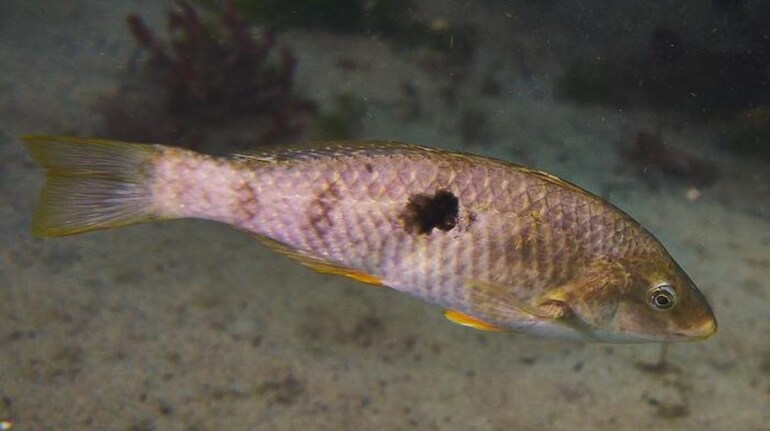
Sometimes the ocean reveals stories stranger than fiction. One such tale belongs to the New Zealand spotty, or paketi — a fish that can change sex. And according to new research, it takes just minutes for a second-in-command spotty to start behaving like the new boss.
Scientists from Ōtākou Whakaihu Waka’s Department of Anatomy led the study, recently published in Proceedings of the Royal Society B. They explored how the fish responds when social order is disrupted — and found that dominance takes shape almost instantly.
Aggression begins within minutes
Lead author Haylee Quertermous, a PhD candidate, explained that the fish don't wait long. When the top spotty is removed, the next-ranking one starts acting dominant within minutes. These behaviours include sudden, aggressive rushes toward smaller fish and even physical contact, such as tail and fin biting.
Quertermous expected behaviour shifts within the hour but was surprised by the immediate reactions. In many tanks, aggression rose noticeably just moments after the dominant fish disappeared. The social shift happens fast, but the physical sex change from female to male still takes weeks.
Interestingly, she noted that this kind of dominance is not the same as simply switching from "female" to "male" behaviour. In other sex-changing species like clownfish, the change goes from male to dominant female. In spotties, it's the opposite — a female becomes a dominant male.
Hierarchy and brain chemistry
Spotties live in size-based hierarchies, with the biggest fish at the top. The study aimed to find out which individuals are most likely to change sex when the chance arises. The team discovered that larger, dominant fish usually take that leap first. When a dominant fish is removed, others quickly alter their behaviour, seeking to fill the gap.
Researchers also studied what happens inside the brain. They found that the fish's social decision-making network plays a key role in this transformation. Those that rose in rank showed different neural activity compared to others in the group.
Dr Kaj Kamstra, who led the brain research, said the results offer insights into how behaviour and the brain influence each other. They also point to the importance of social settings in shaping how individuals act — something that might even reflect patterns seen in humans.
Useful beyond the reef
The findings go beyond curiosity. Many commercially valuable fish species, such as New Zealand’s blue cod, also change sex depending on social factors. Understanding these processes could help improve aquaculture practices and better manage fisheries.
The study sheds light on how flexible marine life can be when social tides turn — and how fast the brain and behaviour can adapt to changing roles.
Discover the latest Business News, Sensex, and Nifty updates. Obtain Personal Finance insights, tax queries, and expert opinions on Moneycontrol or download the Moneycontrol App to stay updated!
Find the best of Al News in one place, specially curated for you every weekend.
Stay on top of the latest tech trends and biggest startup news.