
The Chang’e Six mission by China brought samples of the far side of the moon. Beneath the dust of Moon are traces of the ferocious planetary past. Scientists examined the Moon South Pole Aitken basin rocks.
This is the biggest and oldest crater on the moon. It is created due to a huge collision billions of years ago. Up to this time the deeper implications of it were still almost unknown to scientists.
What Did Chang Six Find on the Moon?
Chang’e Six Chang’e six mission brought rare lunar rock samples to earth. These were samples that were taken on the far side of the moon where it remained unexplored. Researchers investigated minerals that were formed millions of years ago. They have found strange chemical associations within these ancient rocks.
These trends implied exposure to dangerous heat and forceful effects. The results provided new information concerning early development of the moon. They also shook widely accepted beliefs concerning the internal structure of the Moon.
Where these lunar rock samples studied?
This was found in Chinese Academy of Sciences Headquarters. The study focused on the South Pole Aitken basin in the form of samples. This basin is on the far side of the moon. It covers a distance of 2,000 kilometres on the surface. It is the oldest and the largest impact crater in the solar system.
Scientists discovered Potassium holds clue to ancient collisions
Potassium is a volatile material which evaporates in hot situations. It was initially present between rocks in the moon as it cooled down. In the normal state it is persistent within minerals.
This reaction results in the remaining isotopes of heavier potassium. These were the altered isotope ratios found in samples of Chang e Six by scientists. These marks resemble chemical impressions of early-collisions. They show the temperatures and the pressures that were encountered in previous impacts.
What Findings of these rare Lunar specimens?
Scientists observed unnatural distributions of potassium isotopes. They also observed low contents of volatile elements. This implied the loss of materials when subjected to extreme heating.
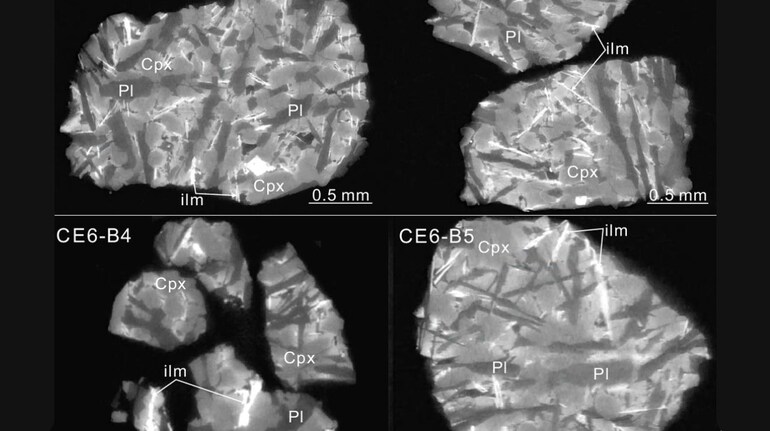
Microscopically, structures of melted and recrystallised minerals were observed. Such textures demonstrated quick cooling of an intense thermal shock.
The effect of the collision was proposed to be deep internal heating with simulations. The observations had corresponded to theories of planetary impacts.
Did The South Pole Aitken Impact Travel Deep into The Moon?
The research indicates the SPA on the influence of forming was extraordinarily intense. It also did not form a surface crater. It also permeated deep into the mantle of the moon. The collision generated heat that caused convection within the layers of the moon.
The crust circulated molten material over a period of millions of years. This redefined the internal patterns of chemistry and volcanic activity. Scientists consider this influence changed the evolution of the moon permanently.
What This Means to The Moon and More?
The observation justifies why the near side of the Moon appears different. Volcanism was favoured by the internal heating that is enhanced on one side of the hemisphere. This formed enormous earthview lava plains. The discoveries also redefine the planetary formation theories.
They demonstrate how individual effects can be used to affect long term evolution. The same changes could have happened to Earth and Mars. Knowledge of these mechanisms assists scientists to examine extrasolar planets.
Discover the latest Business News, Sensex, and Nifty updates. Obtain Personal Finance insights, tax queries, and expert opinions on Moneycontrol or download the Moneycontrol App to stay updated!
Find the best of Al News in one place, specially curated for you every weekend.
Stay on top of the latest tech trends and biggest startup news.