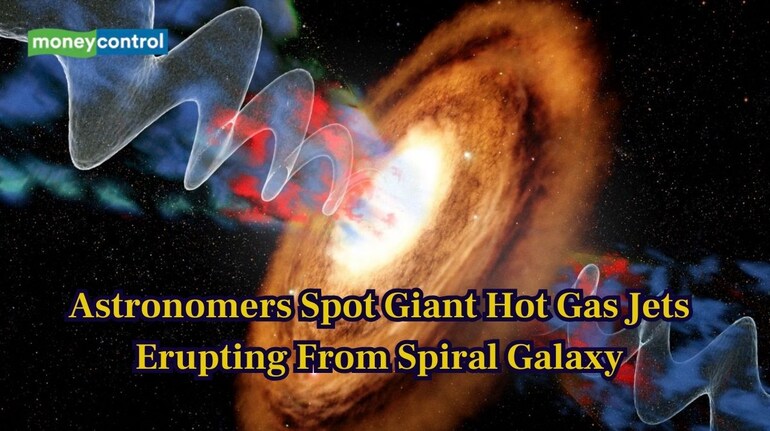

Astronomers observed a spiral galaxy spraying enormous jets of superheated gas. The galaxy sits millions of light years away from Earth. It was captured using powerful space-based telescopes and instruments. The discovery reveals unexpected activity in spiral galaxy structures. Scientists were surprised by the size and shape of jets. This behaviour challenges existing theories about spiral galaxy evolution.
Where Was This Cosmic Sprinkler Found?
The galaxy is named VV 340a by astronomers. It is located in a distant interacting galaxy system. The system is undergoing a dramatic cosmic merger event. Such mergers often trigger intense black hole activity. VV 340a still maintains a classic spiral shape. This makes the discovery especially unusual and significant.
Who made this Discovery?
"To our knowledge, this is the first time we have seen a kiloparsec, or galactic-scale, precessing radio jet driving a massive coronal gas outflow," says astrophysicist Justin Kader of the University of California, Irvine.
Scientists collaborated across multiple countries for this study. Their goal was to understand black hole feedback processes. They focused on how galaxies lose gas over time.
What Is Being Sprayed Into Space?
The galaxy is ejecting extremely hot ionised gas. Temperatures reach millions of degrees in these energetic jets. The gas glows brightly in X-ray wavelengths for detection. These jets stretch nearly twenty thousand light years across space. They form a wide, twisting, sprinkler-like structure around the galaxy.
When Did Scientists Observe This?
The observations were made using recent space telescope data. Advanced instruments captured detailed images of the hot gas. Researchers analysed the data over several months carefully. The findings were released to the public this year. They provide fresh insights into black hole behaviour.
Why This Discovery Matters?
The jets are removing gas needed for forming new stars. This process can slow or even stop star birth entirely. Black holes influence galaxy growth through powerful feedback mechanisms. The jets heat surrounding gas, preventing it from cooling. Without cooling, stars cannot form efficiently in galaxies.
Discover the latest Business News, Sensex, and Nifty updates. Obtain Personal Finance insights, tax queries, and expert opinions on Moneycontrol or download the Moneycontrol App to stay updated!
Find the best of Al News in one place, specially curated for you every weekend.
Stay on top of the latest tech trends and biggest startup news.