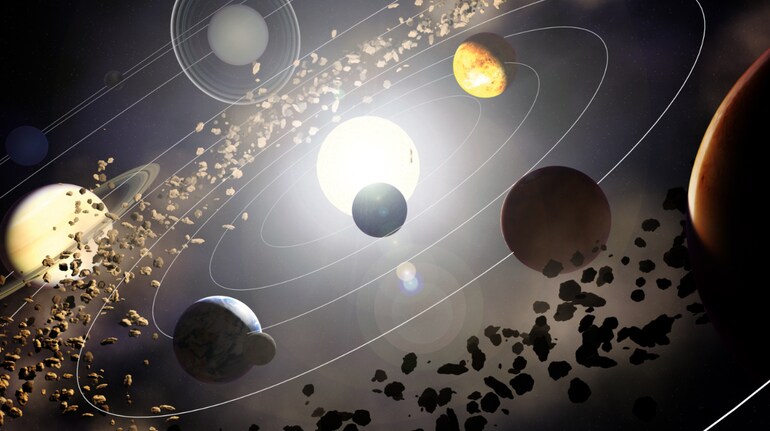
A new study suggests that a planet-sized object may have passed through the solar system billions of years ago. Its journey could have permanently altered the orbits of the outer planets. This cosmic visitor, possibly a brown dwarf, may have shaped the paths of Jupiter, Saturn, Uranus, and Neptune. The findings shed new light on why these planets' orbits are tilted and not perfectly circular.
The Mystery of the Planetary Paths
For years, scientists have puzzled over the planets' orbits. Most models suggest that the orbits should be circular and aligned. But the planets don't follow these expected paths. Each one deviates slightly, especially the outer giant planets. These planets’ orbits show minor discrepancies from the ideal circular shape. The question has been how these differences arose.
Previous research focused on how interactions between the planets reshaped their paths. However, these explanations did not fully align with observations. This left a gap in understanding the true cause.
The Interstellar Visitor’s Role
In the new study, researchers proposed a new theory. Instead of the planets altering each other’s orbits, a distant visitor may have influenced them. This object, possibly a substellar body, could have flown close to the Sun billions of years ago. To test this theory, the team ran 50,000 simulations, altering various parameters of a potential visitor. They explored objects as small as Jupiter and as large as a brown dwarf.
The simulations revealed that in about 1% of the cases, the visitor’s flyby matched the current state of the solar system. These objects, ranging from two to 50 times the mass of Jupiter, passed very close to the Sun. Some even came within 1.69 AU of the Sun, close to Mars’ orbit. This one flyby was enough to change the orbits of the giant planets.
Commonplace Cosmic Visitors
The research suggests that these substellar visitors may not be rare. In fact, such objects could frequently pass through the solar system. This new theory could help scientists understand how the solar system's planets formed. Future observations may offer more insights into these cosmic interactions.
While this study has yet to be peer-reviewed, it provides a fresh perspective. The findings could significantly shift our understanding of the solar system’s evolution.
Discover the latest Business News, Sensex, and Nifty updates. Obtain Personal Finance insights, tax queries, and expert opinions on Moneycontrol or download the Moneycontrol App to stay updated!
Find the best of Al News in one place, specially curated for you every weekend.
Stay on top of the latest tech trends and biggest startup news.