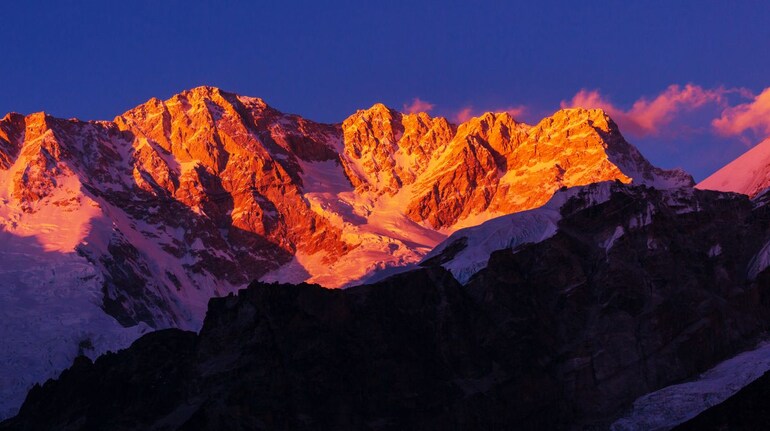

High above eastern India and neighbouring Nepal, Kanchenjunga continues to draw attention for its rare golden glow, a natural spectacle that has shaped centuries of belief, geography and Himalayan observation.
Kanchenjunga rises silently along the India Nepal frontier. It stands as the world’s third highest mountain. Entirely within India, it dominates the eastern Himalayas. At certain hours, its snowbound peaks change colour. This transformation explains its enduring nickname, the Golden Mountain. Observers describe a brief but striking display. Snow reflects sunlight into deep golden tones. The effect appears during sunrise and sunset periods. For many viewers, the sight feels almost unreal.
Why Kanchenjunga appears golden at dawn
The mountain’s immense height and snowfields matter. Sunlight strikes the peaks at low angles. Instead of harsh white glare, warmer hues appear. Gold, amber and copper tones briefly dominate. This effect lasts only several minutes daily. It is most visible from Darjeeling hills. Sikkim viewpoints also offer clear sightings. Parts of North Bengal witness it regularly. Local residents documented this glow generations ago. Long before tourism, people marked these moments. The mountain slowly gained symbolic importance. Over time, light shaped language and memory.
Meaning behind Kanchenjunga’s ancient name
Kanchenjunga’s name comes from Tibetan language traditions. It translates as Five Treasures of Snow. These treasures symbolise gold and silver. Precious stones form another treasured element. Grain and sacred texts complete the list. Together, they suggest abundance and protection. This meaning reinforced the mountain’s golden identity. In Sikkimese belief, Kanchenjunga remains deeply sacred. It is viewed as a guardian deity. Communities believe the mountain protects surrounding lands. Disturbing it is thought to bring misfortune. Climbers therefore respect strict traditions. Many avoid standing on the true summit. Cultural reverence shapes mountaineering behaviour even today.
Where the Golden Mountain stands today
Kanchenjunga lies between Sikkim and eastern Nepal. Its Indian face dominates regional skylines. The peak rises to 8,586 metres. It remains India’s highest mountain entirely. Globally, it ranks third in elevation. The surrounding Kanchenjunga National Park preserves ecosystems. The park holds UNESCO World Heritage status. Glaciers, forests and rare wildlife thrive there. Conservation efforts continue across the protected region. Scientists study climate effects on its glaciers. Trekkers remain drawn by its changing colours. Photographers wait patiently for golden moments.
Other Himalayan peaks also glow at sunrise. Nanda Devi shows similar warm reflections. Dhaulagiri occasionally turns golden too. Yet Kanchenjunga’s scale sets it apart. Its visibility from populated regions matters greatly. Cultural stories strengthen its unique reputation. For many Indians, it feels alive. The mountain changes colour with the sky. It reminds viewers of nature’s quiet power. Long after sunlight fades, its presence endures.
Discover the latest Business News, Sensex, and Nifty updates. Obtain Personal Finance insights, tax queries, and expert opinions on Moneycontrol or download the Moneycontrol App to stay updated!
Find the best of Al News in one place, specially curated for you every weekend.
Stay on top of the latest tech trends and biggest startup news.