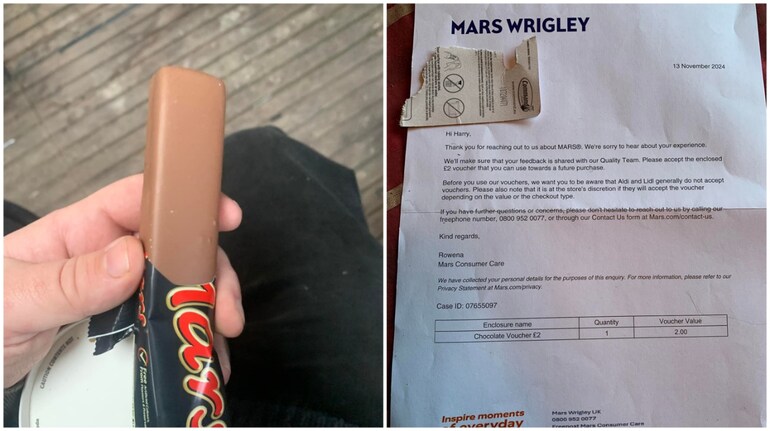
A Mars bar devoid of its signature ripple has sparked a heated online debate, culminating in the manufacturer compensating the buyer with £2 (Rs 215). Harry Seager, a 34-year-old from Aylesbury, Buckinghamshire, UK, inadvertently became the centre of attention after sharing an image of the famous chocolate bar on Facebook’s Dull Men’s Club.
The post quickly gained traction, with members of the quirky community diving into speculation. One user labelled the unusual bar “hideous,” while others theorised that it had missed the crucial air-blowing stage in production.
Speaking about the incident, Seager told BBC, “The only reason I emailed [Mars] was because I was interested in what might have caused it to happen. That is all I wanted to know, and they kept side-lining that question.” Despite his curiosity remaining unanswered, Mars Wrigley UK acknowledged the mishap, explaining that the bar had “slipped” through its production process.
Mars Wrigley’s resolution was a £2 voucher—a gesture that Seager took in stride. “I think £2 is great, it will be two free Mars bars. Maybe they could have sent me more, but I’m not being ungrateful,” he said, adding, “I think it’s amazing after everything that’s happened that I got the £2 voucher.”
Facebook users were not too pleased, however, with the measly £2 voucher offered to Seager.
"£2? I'm in Finland and recently complained about something akin to sandwich spread in a tube which had hardly any pickles in it and got a 10€ shopping card! Also a 5€ deposit in my bank account for a sandwich with hardly any filling that cost me 1.75€. WTH are Mars thinking? That's pathetic," one user wrote.
"You only got paid £2 for all the advertising you did across multiple media for Mars Wrigley?" wrote another.
"Don't forget to report that voucher to the IRS as taxable income," a third joked.
Seager’s discovery occurred during a road trip to a classic car show in Birmingham, where he purchased the bar from a service station in Thame, Oxfordshire.
Former Mars employees explained the bars pass through a machine called an “enrober,” which coats them in chocolate. The ripple is created by air blown across the top as they emerge from the chocolate waterfall. Bars that miss this stage are typically removed by quality control.
Curious about what happens to such defective bars, Seager mused, “I suppose they get put into products that have Mars bars in, like cakes and things.”
Mars bars were first produced in 1932 in Slough, Berkshire.
Discover the latest Business News, Sensex, and Nifty updates. Obtain Personal Finance insights, tax queries, and expert opinions on Moneycontrol or download the Moneycontrol App to stay updated!

Find the best of Al News in one place, specially curated for you every weekend.
Stay on top of the latest tech trends and biggest startup news.