





Blame it on Columbus. For centuries, native Americans were called Indians because of the Italian navigator’s belief that he had arrived in Asia. The earliest mention of an actual South Asian in colonial America, however, is provided by a single entry in a Virginia land record from 1635. This person is referred to as “Tony East Indian”.
How did Tony reach his new-found-land, was he a slave or an indentured servant, and what became of him? From these questions, along with slender archival records of other arrivals, Brinda Charry weaves the strands of her absorbing new novel, The East Indian.
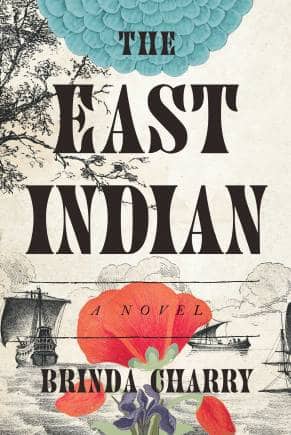 Scribner; 272 pages.
The book is a reminder of an interconnected world long before our contemporary notion of globalization. As Charry has written in an earlier essay, migrants like Tony indicate that “while the variegated and complex story of early America is certainly a result of cross-Atlantic movements, it is also shaped by proto-imperial networks that traversed the entire globe”.
The East Indian combines a coming-of-age tale with a picaresque saga of a stranger in a strange land. Tony’s first-person account takes us from his childhood in India to his maturity in Virginia, a journey of considerable ups and downs. His tone is guileless and inquisitive, and the passage of time teaches him agility and endurance. The narrative also requires him to be precocious, especially with questions of race and belonging.
Tony's earliest memories are of Armagon, a salt-pan town and colony of the East India Company which eventually became part of Madras Presidency. He is “the son of a courtesan,” and his father “could have been anyone at all”. When East India Company administrator Francis Day strikes up a relationship with his mother, Tony’s awareness of the wider world increases, a process that deepens with learning the English language.
A series of events – the motor of historical fiction – lead to Tony boarding a ship to London as the servant of another Company official. As it turns out, he has to scrounge for work at the docks, strike up friendships whenever he can, and deal with streetside racism. It was in London, he recalls, “that I came to think of myself as an East Indian”.
In this city of “vagrants, cutpurses, foreigners of many hues, and women walking about freely,” his awareness grows in other ways. He attends a “ridiculous but very entertaining” performance of Shakespeare’s A Midsummer Night’s Dream at the Globe theatre, memorable for the mention of a boy “stolen from an Indian king” – a reference that will haunt him for years.
The wheel of fate turns again, and Tony is seized by a gang that makes a living by spiriting children away to the colonies. He finds himself on a ship bound for Virginia with other boys, some of whom become boon companions. So it comes to pass that “it was the year of our Lord 1635, and I, Tony, the East Indian, was the first of my kind, so they say, to reach America”. A harbinger, so to speak, of all the immigrant tales that were to follow.
Charry details Tony’s experiences in Virginia with economy and without haste. This is a place where he will be “unmade and remade” through a series of demanding and occasionally fantastical experiences.
He labours in tobacco fields, deals with masters unpleasant and pleasant, and strikes up relationships with others, white and black, men and women. In between, he journeys with a woodsman across lands inhabited by the indigenous people named after his country.
“The hue of my skin, my race, both of them in-between and indeterminate,” he realizes, “made me every person these men despised, feared, or knew nothing about”. All along, he dreams of assisting an apothecary, a step towards becoming a physician in his own right.
There is an impressive amount of background detail packed into these pages, drawn from records of the American colonies as well as references to East Indians in deeds, estate accounts, runaway ads, and court documents. Historical characters occasionally put in guest appearances: Francis Day apart, there is also a sighting of Thomas Rolfe, Pocahontas’s son.
All this is deftly done, without overwhelming the story. At times, though, it can create narrative distance, with Tony as a simple observer of sights and attitudes. Fortunately, the gap narrows as the novel proceeds.
In particular, Tony’s condition of belonging to two worlds is effectively conveyed by yoking together cultural and geographical correspondences. In London, the Thames makes him think of the Koovam; in Jamestown, when his ownership is up for grabs during a gambling match, he thinks of Yudhishthira’s game of dice.
“Like a snail,” feels Tony, “I will carry home on my back, find it where I happen to be, make it from what I bear inside me”. The East Indian relates this uncommon tale of self-fashioning with grace and insight.
Discover the latest Business News, Sensex, and Nifty updates. Obtain Personal Finance insights, tax queries, and expert opinions on Moneycontrol or download the Moneycontrol App to stay updated!
Find the best of Al News in one place, specially curated for you every weekend.
Stay on top of the latest tech trends and biggest startup news.