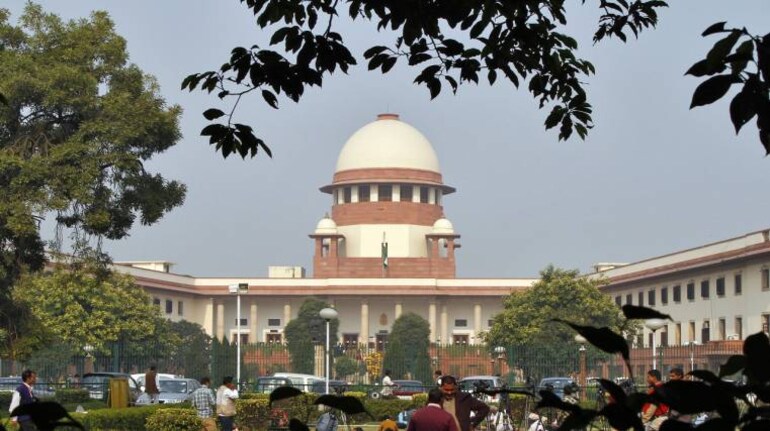
The Supreme Court (SC) on January 8 nullified the Gujarat government's decision to grant remission to 11 convicts involved in the gangrape of Bilkis Bano and the murder of seven of her family members during the 2002 riots in the state.
According to the apex court, since the trial of the 2002 Gujarat riots took place in Maharashtra, it had the power to grant remission to the convicts.
The court restored 'status-quo ante' and held that the 11 convicts need to go back to jail in order to uphold the rule of law. These convicts will have to report to the authorities in two weeks from today. Furthermore, the court pulled up the Gujarat government for usurping Maharashtra's jurisdiction and passing non-reasoned remission orders.
The apex court, while considering a Public Interest Litigation (PIL) challenging the remission, deemed the PIL maintainable. The bench, consisting of Justices B V Nagarathna and Ujjal Bhuyan, concluded that the state government was not the appropriate authority to issue the remission order.
After an 11-day hearing, a bench of Justices B V Nagarathna and Ujjal Bhuyan reserved judgement on the case related to the Gujarat government's decision to grant remission to 11 convicts.
The Gujarat government granted remission to all 11 convicts, leading to their release on August 15, 2022. Subsequently, this remission decision faced legal challenges, with CPI(M) leader Subhashini Ali, independent journalist Revati Laul, former vice-chancellor of Lucknow University Roop Rekha Verma, and former Trinamool Congress (TMC) MP Mahua Moitra. Mahua Moitra.
Bano herself had moved the apex court on November 30, 2022, challenging the "premature" release of 11 lifers by the state government, saying it has "shaken the conscience of society."Bano's legal plea contended that en-masse remissions are impermissible, asserting that such relief cannot be sought or granted as a matter of right without individually examining the case of each convict. The argument suggests that each convict's role in the crime, along with the peculiar facts of their involvement, should be considered on an individual basis rather than applying a blanket remission for all.
Bano, at the age of 21 and five months pregnant, faced the horrifying incident of gang-rape while trying to escape the communal riots that erupted following the Godhra train-burning incident. The train burning resulted in the death of 59 Hindu pilgrims returning from Ayodhya in an act of arson. In addition to the sexual assault, Bilkis Bano tragically lost seven family members, including her three-year-old daughter, in the riots.
The probe into the case of Bano was transferred to the Central Bureau of Investigation (CBI), and the trial was moved to a court in Maharashtra by the Supreme Court. A special CBI court in Mumbai subsequently sentenced the 11 accused to life imprisonment on charges of gang rape of Bano and the murder of seven members of her family during the 2002 Gujarat riots. The conviction was later upheld by both the Bombay High Court and the Supreme Court, affirming the accountability of the accused in the heinous crimes committed against Bano and her family.
Discover the latest Business News, Sensex, and Nifty updates. Obtain Personal Finance insights, tax queries, and expert opinions on Moneycontrol or download the Moneycontrol App to stay updated!
Find the best of Al News in one place, specially curated for you every weekend.
Stay on top of the latest tech trends and biggest startup news.