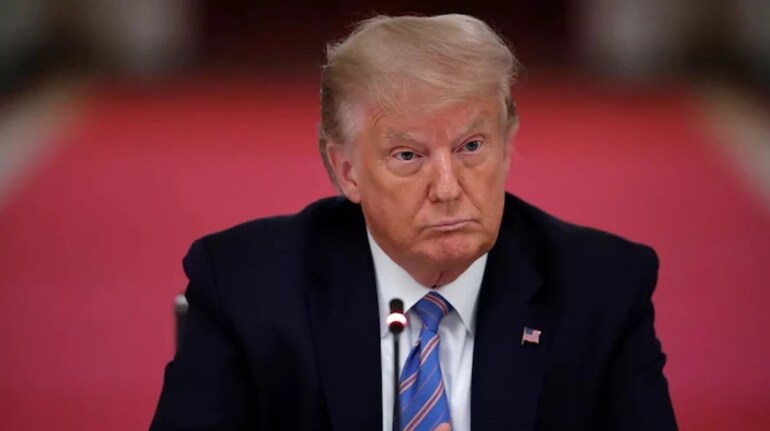
US President Donald Trump’s latest trade policy, widely referred to as the ‘Trump Tariff Formula’, has sparked intense debate among economists, policymakers, and global leaders. The strategy involves a baseline 10% tariff on all imported goods, with significantly higher duties imposed on key trading partners, such as China and European nations.
While Trump has justified the move as a necessary step to revive American manufacturing, reduce trade deficits, and counter economic threats from foreign competitors, critics argue that the policy could trigger retaliatory tariffs, fuel inflation, and destabilise global supply chains.
What Is the 'Trump Tariff Formula'?
The 'Trump Tariff Formula' follows a broad protectionist approach, imposing: A universal 10% tariff on all imports except those from Canada and Mexico.
Targeted tariffs as high as 25% on nations that the U.S. deems unfair traders.
Sector-specific duties aimed at boosting domestic industries, particularly steel, aluminium, and technology.
Trump’s administration claims the policy will generate revenue, bring jobs back to the U.S., and strengthen national security by reducing reliance on foreign goods. However, economists warn that blanket tariffs often lead to higher consumer prices, supply chain disruptions, and retaliatory measures from affected countries.
A user who goes by the handle @rthonormalist on X expressed concern over the potential economic repercussions, stating, "This blanket tariff approach is a textbook recipe for stagflation—simultaneous inflation and economic stagnation. It's the American consumer who will bear the brunt."
The policy has drawn sharp criticism from prominent economists on social media, with many warning of its potential consequences.
DID I CRACK IT?I think I figured out at least a chunk of the math.It's trade deficit divided by their exports.EU: exports 531.6, imports 333.4, deficit 198.2. 198.2/531.6 is 37, close to 39.Israel: exports 22.2, imports 14.8, deficit 7.4. 7.4/22.2 is 33. https://t.co/urAVoCiPLV(@orthonormalist) April 2, 2025
Alex Tabarrok, a professor of economics, highlighted the historical context, noting, "Tariffs of this magnitude haven't been seen since the Smoot-Hawley Tariff Act of 1930. We all know how that turned out. Repeating past mistakes is not the way forward."
Look, its possible to be a professional economist and favor tariffs but these tariff numbers are economically illiterate nonsense and any economist on Trumps CEA should be ashamed. https://t.co/y3KYqkUVSEAlex Tabarrok (@ATabarrok) April 2, 2025
Spencer Hakimian, a market strategist, pointed out the immediate market reactions: "The Dow futures plunged 500 points following the tariff announcement. Investors are clearly signaling their disapproval and concern over potential trade wars."
I really cannot believe their math for reciprocal tariff rate was:(Deficit/Imports)/2I really cannot believe it.Who was high on what when they decided to use this formula?The Q Anon presidency.My goodness.Spencer Hakimian (@SpencerHakimian) April 2, 2025
Douglas Boneparth, a financial advisor, commented on the broader implications: "Protectionist policies like these tariffs might sound appealing politically, but they often lead to higher prices for consumers and strained international relations. The global economy is more interconnected than ever."
I have announced the following tariffs:Wife: 50%Kid 1: 30%Kid 2: 25%Mother-in-law: 100%Dog: 0%Douglas A. Boneparth (@dougboneparth) April 2, 2025
The administration's tariff strategy involves imposing a universal 10% tariff on all imported goods, with certain countries facing even higher duties. While the White House asserts that this move aims to protect domestic industries and reduce trade deficits, critics argue that such measures could lead to retaliatory tariffs from trading partners, escalating into a full-blown trade war.
The policy has already sparked backlash from major U.S. trading partners:
China called for the immediate cancellation of the tariffs, warning they “endanger global economic development” and hurt both American consumers and global supply chains.
Canada vowed to introduce countermeasures, with PM Mark Carney stating, “We are going to protect our workers and build the strongest economy in the G7.”
Australia rejected the tariffs, with PM Anthony Albanese calling them “unjustified” and warning they would “lead to higher prices and slower growth.”
The European Union strongly opposed the move, with Irish PM Micheál Martin calling it “deeply regrettable” and Italian PM Giorgia Meloni warning of a trade war that could weaken the West.
Discover the latest Business News, Sensex, and Nifty updates. Obtain Personal Finance insights, tax queries, and expert opinions on Moneycontrol or download the Moneycontrol App to stay updated!
Find the best of Al News in one place, specially curated for you every weekend.
Stay on top of the latest tech trends and biggest startup news.