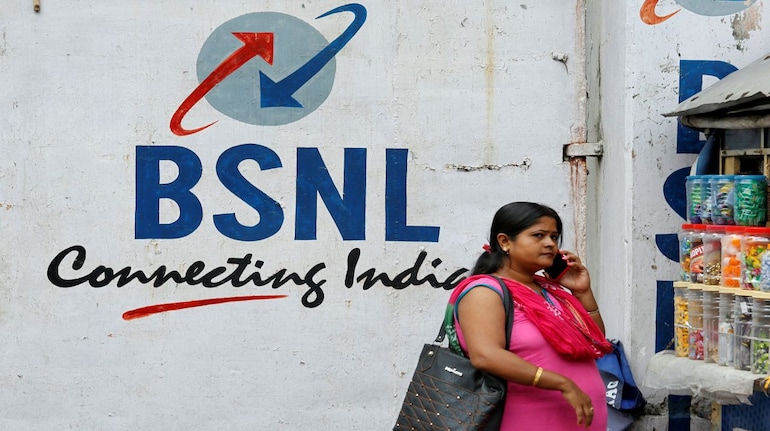
The Department of Telecommunications (DoT) is set to seek approval from the finance ministry to implement a second voluntary retirement scheme (VRS) at Bharat Sanchar Nigam Limited (BSNL), aiming to reduce the workforce by 35 percent and improve the telecom operator's financial health, according to a report by Economic Times (ET).
BSNL has requested Rs 15,000 crore from the finance ministry to cover the costs of the VRS rollout. The state-owned carrier's board has proposed reducing its employee base by 18,000 to 19,000 through the scheme, a move designed to strengthen the company's balance sheet, an official familiar with the matter told ET.
Currently, BSNL allocates nearly Rs 7,500 crore, or around 38 percent of its revenue, to employee salaries. The company plans to cut this expense to Rs 5,000 crore per year, as part of efforts to streamline operations. The communications ministry will seek Cabinet approval once it receives clearance from the finance ministry, the ET report added.
On Monday, BSNL’s board approved the VRS programme to reduce the wage bill, particularly as the company has yet to roll out its 4G services nationwide. However, a senior BSNL official told ET that the VRS plan is still under internal discussion and that no final decision has been made yet. As of now, queries to BSNL have remained unanswered, ET said. Moneycontrol could not independently verify the report.
In FY24, BSNL's revenue stood at Rs 21,302 crore, a modest improvement over the previous year. The company’s workforce includes more than 30,000 non-executive employees and 25,000 executives.
The government had previously approved a Rs 69,000-crore revival plan for BSNL and Mahanagar Telephone Nigam Limited (MTNL) in 2019. The plan included the introduction of an early retirement programme, which saw 93,000 employees opt for the separation scheme. The ex-gratia component of the VRS amounted to approximately Rs 17,500 crore, covering pension, gratuity, and commutation costs.
MTNL, which operates only in Delhi and Mumbai, has its mobile network managed by BSNL. The revival plan also included asset monetisation and the allocation of 4G spectrum to both public sector telcos.
In 2022, the Centre approved a second revival package worth Rs 1.64 lakh crore for BSNL and MTNL. This package included financial support for de-stressing the balance sheet, capital expenditures, settlement of adjusted gross revenue (AGR) dues, and viability gap funding (VGF) for rural landline connections.
In 2023, a third revival package of ₹89,000 crore was approved by the Cabinet, focusing on 4G and 5G spectrum allocation, with plans to offer commercial data services, fixed wireless access (FWA), and captive private networks.
Discover the latest Business News, Sensex, and Nifty updates. Obtain Personal Finance insights, tax queries, and expert opinions on Moneycontrol or download the Moneycontrol App to stay updated!
Find the best of Al News in one place, specially curated for you every weekend.
Stay on top of the latest tech trends and biggest startup news.