The National Aeronautics and Space Administration (NASA) is working to develop a natural language interface for astronauts, similar to ChatGPT, to let them control their spacecraft using voice commands.
It won't be limited to just advanced maneuvers either. The eventual goal is to have an autonomous system that can manage payloads, data transmission, health monitoring, and more.
Also read | Unleashing the Power of Generative AI: ChatGPT, Bard may add value worth India's economy annually
As The Guardian reports, the system will allow natural conversations with the AI and allow them to fix problems by talking to it, rather than scouring through pages of lengthy manuals.
“The idea is to get to a point where we have conversational interactions with space vehicles and they [are] also talking back to us on alerts, interesting findings they see in the solar system and beyond," said Dr Larissa Suzuki, speaking at the Institute of Electrical and Electronics Engineers (IEEE) in London.
As an example, Dr Suzuki envisioned an interplanetary communications network controlled by AI that can detect and fix any problems that occur.
Also read | How Artificial Intelligence can land job seekers their dream jobs
“It then alerts mission operators that there is a likelihood that package transmissions from space vehicle X will be lost or will fail delivery,” she said. “We cannot send an engineer up in space whenever a space vehicle goes offline or its software breaks somehow.”
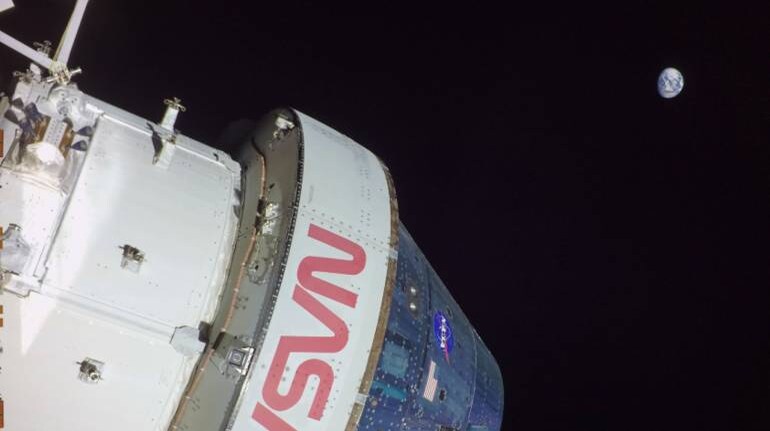
NASA aims to deploy the system on Lunar Gateway, a proposed space station that will be built to orbit the moon and provide support for the Artemis Mission, which aims to establish sustainable human presence on the moon.


Discover the latest Business News, Sensex, and Nifty updates. Obtain Personal Finance insights, tax queries, and expert opinions on Moneycontrol or download the Moneycontrol App to stay updated!
Find the best of Al News in one place, specially curated for you every weekend.
Stay on top of the latest tech trends and biggest startup news.