




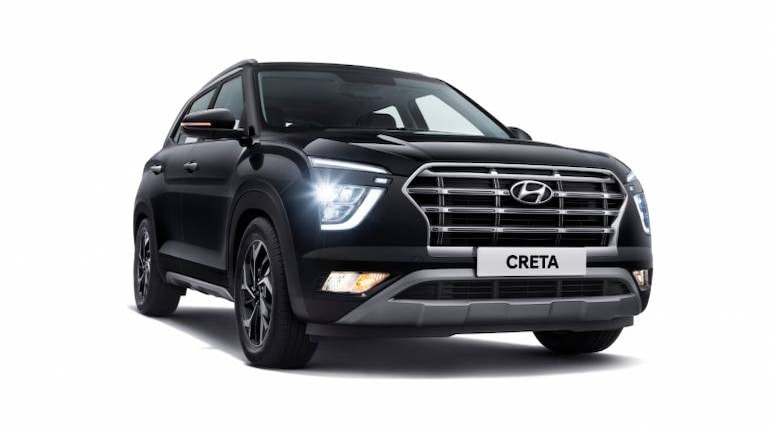
At a time when the car industry is struggling to push production to the pre-COVID-19 levels, Korean carmaker Hyundai will start the third and final shift at its factories in Chennai later this week.
The country’s second-largest carmaker has seen demand shoot up for its cars substantially in June, led by the all-new Creta SUV. It was launched just a week before the nationwide lockdown in March.
About 40 percent of June’s total volumes (which the company did not disclose) were made up of Creta, a senior executive of Hyundai Motor India (HMIL) told Moneycontrol.
Ganesh Mani, director, manufacturing operations, HMIL, said: “We are preparing ourselves for the third shift. We are preparing our vendors and manufacturing lines as well. Once things are lined up, we will operationalise it. We expect it to happen within a week. We can operate the plants at 80 percent capacity from the 40 percent level in June. That is a 100 percent jump.”
Operating the third shift translates to being in the process of hitting peak capacity. The existing manufacturing lines of Hyundai have an installed capacity of 750,000 units a year. Hyundai commenced with the second shift in June. The company is now stepping up production for all its 11 models.
Dispatches of cars and SUVs to dealers more than doubled during June compared to May though they were still less than half compared to their usual monthly levels. Without divulging absolute numbers, auto companies claimed to have clocked higher retail (dealers to customers) sales than wholesale (companies to dealers) sales.
This clean-up of inventory at dealerships has made some companies to scale up production.
Manufacturing + WFM
According to Mani, Hyundai was able to scale up production quickly because of ‘thousands’ of changes on the shop floor and ‘hundreds’ of changes in the manufacturing processes.
“Five months ago, I would have laughed at the idea of combining manufacturing and ‘work from home (WFM)’. But it was happening; work was still going on using video interface technologies. We are able to bring in the entire shop floor, vehicle assembly, pre-assembly and simulation onto the computer. We were able to make close to 7,200 changes on the shop floor and revive the mechanisms. While starting is easy, restarting is much more struggle.”
Hyundai rolled out 200 cars on the first day (May 8) after being allowed to recommence production, and was the first from the industry to do so. Market leader Maruti Suzuki followed suit on May 12 from Haryana.
At the plant level, as many as 640 different processes had to be readjusted, so that social distancing doesn’t affect the throughput of the manufacturing line. The company will now redesign the processes and remove bottlenecks to take care of the subsequent shutdowns.
Manpower movement
Even as factories were allowed to function once again, the possibilities of yet another lockdown always loomed large as new cases of COVID-19 were emerging in Tamil Nadu. The state announced a 12-day lockdown in three industrial areas, including Chennai and Kancheepuram, starting June 19.
Several other companies having plants in close vicinity like Ceat, Renault-Nissan, and Daimler India Commercial Vehicles were also affected.
“Though moving equipment was in our hands, moving people (manpower) posed a challenge. For example, you need a passport and visa to move across different countries in Europe. Now, we need clearances down from the district level (one district to another) to mobilise our people within India. We had to accommodate them in universities and other places when there was another round of intense lockdown,” added Mani.



Discover the latest Business News, Sensex, and Nifty updates. Obtain Personal Finance insights, tax queries, and expert opinions on Moneycontrol or download the Moneycontrol App to stay updated!
Find the best of Al News in one place, specially curated for you every weekend.
Stay on top of the latest tech trends and biggest startup news.