One important thing: Paytm has been one of SoftBank founder Masayoshi Son’s prized investments in India but a botched IPO debut and the subsequent market correction have resulted in heavy losses for the Japanese conglomerate.
Son’s investment in Paytm is currently down 27%, based on the current market price of Paytm’s stock. Another marquee investor Warren Buffett is not faring well either.
In today's newsletter:
- Venture capital in the slow lane, venture debt hots up!
- Bharat loves YouTube Shorts
- Tokenisation deadline: T-minus 48 hours
 Top 3 stories
Venture capital in the slow lane, venture debt hots up!

One may begin to wonder if the current funding winter for startups is more like Shimla or a nice touristy Manali winter, rather than the terrifying winter from Game of Thrones!
Why you might ask? As it turns out, India-focused private equity and venture capital (PE/VC) firms have billions of dollars of dry powder (approximately $9 billion), but the challenging macro environment is impeding the flow of funds to startups.
Why venture debt is hot?
As venture equity is super volatile right now, startups that are waiting to raise equity are not receiving the desired valuation. This does not imply that startups are failing; rather, it paves the way for the use of venture debt.
- In fact, aggressive tech investors are reducing their exposure to high-growth companies and are focusing on profitable businesses with sustainable business models
- Many domestic HNIs and equity investors are now keen on pumping money into venture debt companies thereby increasing the supply
Of course, venture debt is not the best or only alternative to venture capital because debt addition is always risky and requires caution. However, many startups believe that this helps them extend their runway and raise enough funds for working capital, supply chain, or even acquisition needs.
Bharat loves YouTube Shorts
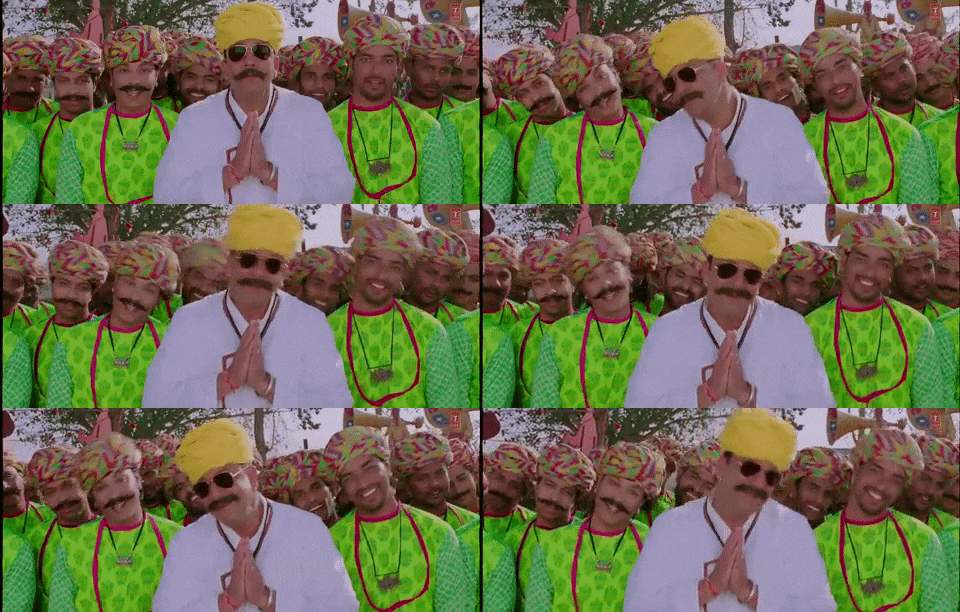
Although YouTube dominates India's video landscape, creating them can still be a daunting task for a normal user, particularly those living outside metros. However, the popularity of short videos has flipped the script by making video creation easier, allowing users to overcome their inhibitions.
What's happening?
YouTube's short video product has fuelled video creation in tier-two, tier-three and tier-four cities, helping them go deeper into the country's hinterland, Ajay Vidyasagar, Regional Director-Asia Pacific, YouTube Partnerships tells us in an interview.
- YouTube is witnessing short-form content being made in various languages such as Marathi, Punjabi, Haryanvi, Bhojpuri, and Bengali, as well as various dialects from towns such as Thrissur, Palakkad, Kanyakumari and Bellary, to Sivagangai, Madurai, Malappuram and the Godavari region.
Existing popular long-form and mid-form creators on the platform are also creating an array of short-form content, Vidyasagar said.
Catch up quick
YouTube Shorts was first introduced in India in the aftermath of the TikTok ban in order to capitalise on the country's short video boom. It was later expanded to over 100 countries in July 2021.
- Shorts are being watched by over 1.5 billion logged-in users globally every month and generate 30 billion views per day, a four-fold jump from one year ago, according to the company.
Changing content consumption
In the initial days, people focused on the "low-hanging fruit" of making slapstick comedy or situational comedy videos to gain viewership, but it is now shifting towards infotainment, and inspiration-related content, Vidyasagar said.
What's next?
Vidyasagar says that helping creators build a "sustainable" monetisation journey is their biggest goal for 2023.
- Last week, YouTube rolled out major changes to its YouTube Partner Program, enabling short-form creators to join the programme and earn money from early next year. As part of this revamp, the Google-owned platform will start sharing advertising revenues with Shorts creators from early 2023.
Read the story
Tokenisation deadline: T-minus 48 hours
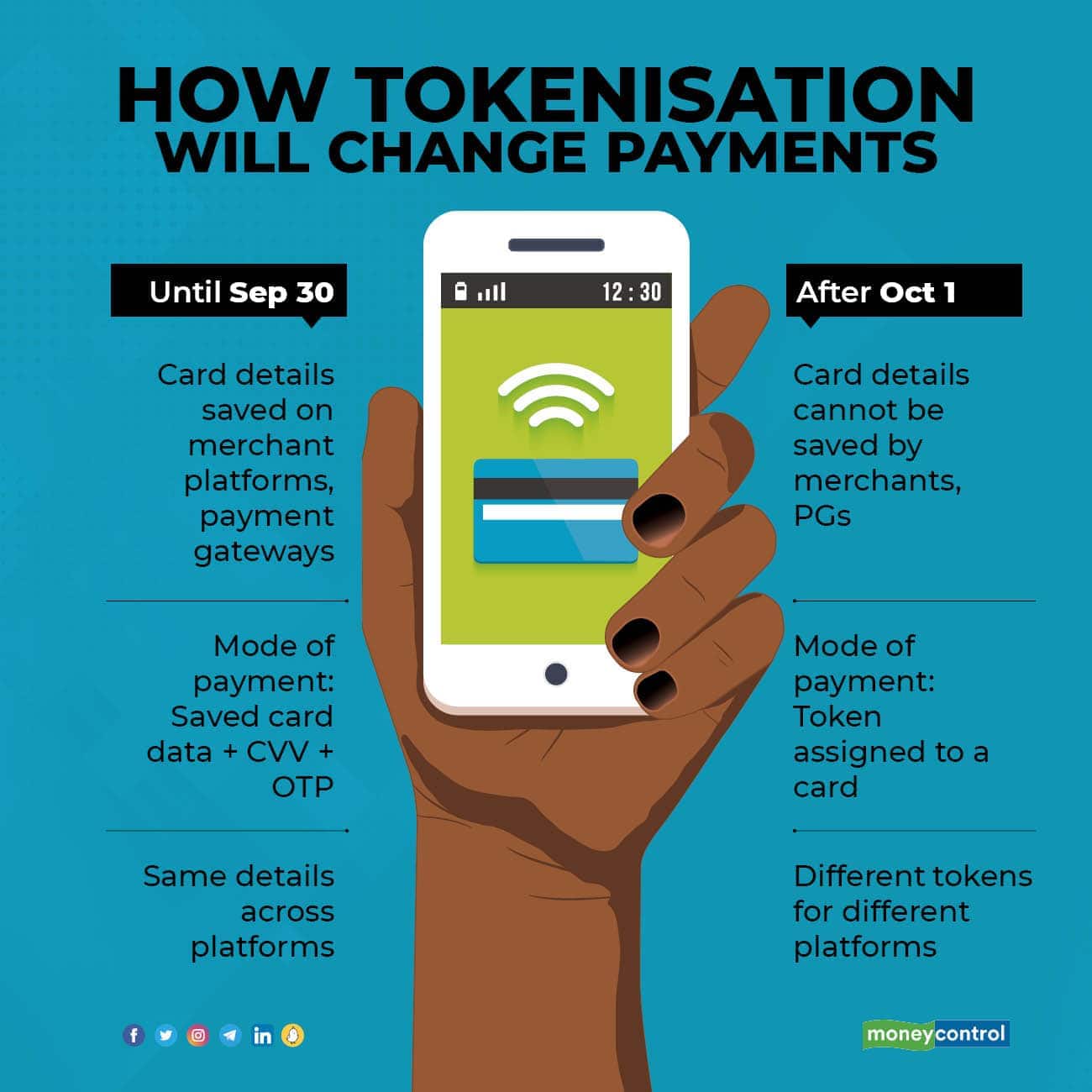
If you haven't already heard, as of October 1, no online platforms will be allowed to save your credit and debit card information on their platforms as per the norms of the Reserve Bank of India (RBI).
Again, if all platforms and banks have not already notified you, the way to avoid having to enter your card detail every time you make an online transaction is to 'tokenise' your card.
Over the last two years, multiple stakeholders have come together in this process, including banks, card networks Visa, Mastercard, and RuPay, payment gateways and aggregators, and online merchants.
What is tokenisation
Card on File Tokenisation (CoFT) substitutes card details with a "token" that is unique to each debit or credit card and merchant platform that uses it. Read our explainer.
Worries over teething problems
After the RBI granted multiple extensions to implement this, the ecosystem no longer expects the regulator to give any leeway on this. However, everyone is concerned about the initial difficulties that will arise when tokenisation is implemented for all transactions, rather than just a few during testing.
- According to Shashank Kumar, co-founder and Managing Director of payment gateway Razorpay, there will be a period of stabilisation post-October 1, during which there will be some loss of sales and disruptions.
Furthermore, merchants are concerned about lapses in transactions during the festive season.
Improved success rates
In a representation to the RBI, the Merchant Payments Alliance of India (MPAI), whose members include digital platforms such as Netflix, Disney+ Hotstar, Spotify, Zoom, Microsoft, and Policybazaar, stated that success rates with tokens in testing mode for regular transactions have increased to 70-75 percent, up from 65-70 percent previously.
However, this is still lower than the 85-90 percent success rates of transactions executed with card details.
Read the full story to know more about the industry's preparedness and concerns about recurring payment mandates.
MC Special: The investor powering the ITC mafia
You've heard of the Flipkart, Zoho, Freshworks, and Paytm mafias, but have you heard of the ITC mafia in the Indian startup ecosystem?
A growing list of founders are emerging from ITC, a diversified conglomerate.
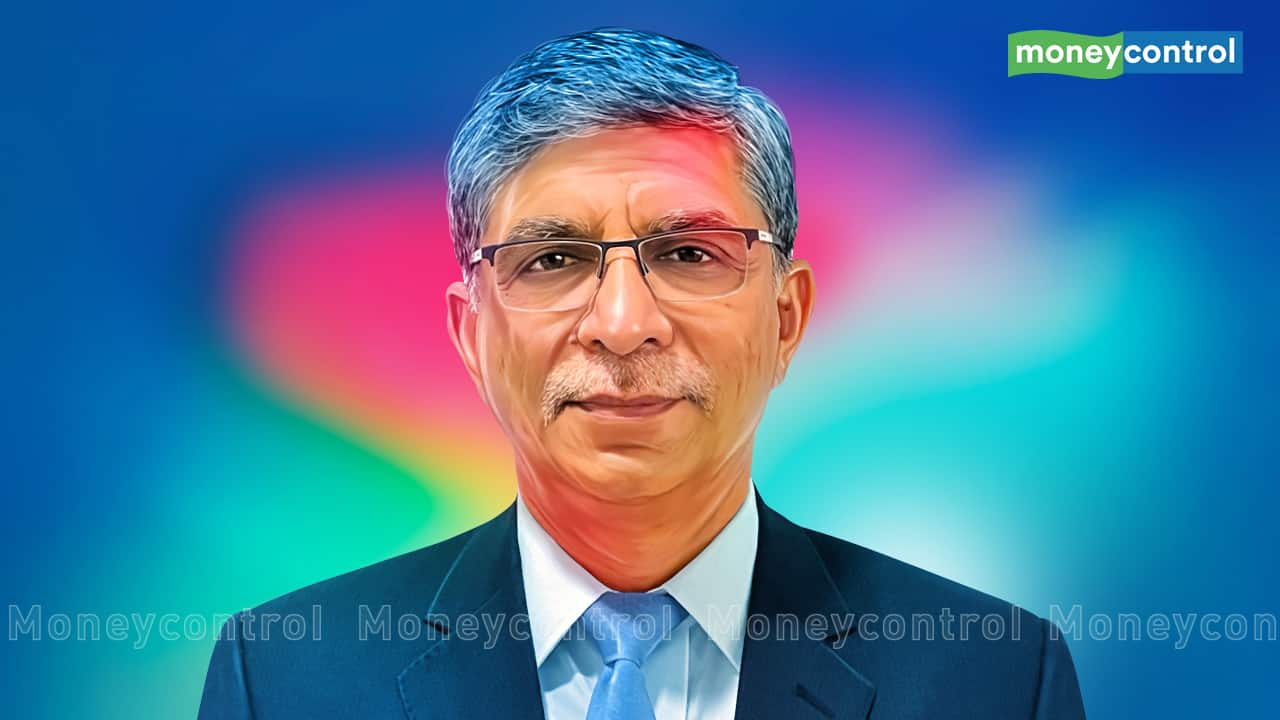
And if there is a common thread that binds the ITC mafia, it is Sanjiv Rangrass, an angel investor and mentor known affectionately as 'Rangy sir' by those close to him.
Rangrass began his career as a trainee at ITC, rose through the ranks to become the head of ITC's agribusiness, and retired 40 years later as the conglomerate's group head for R&D, sustainability, and projects. Talk about tenacity!
We recently caught up with him as he now joins Zetwerk's board as an independent director, which he believes is the best 'gurudakshina' he could get, to learn how he hunts talent, makes investments, and more.
Read our story.



 PREVIOUS
 Tweet of the day
 QUICK HITS
 DEALS OF THE DAY
 GLOBAL PICKS